Chen Clan Ancestral Hall (陈家祠): “Pearl of Lingnan”
Silent Opera on the Rooftops of Guangzhou
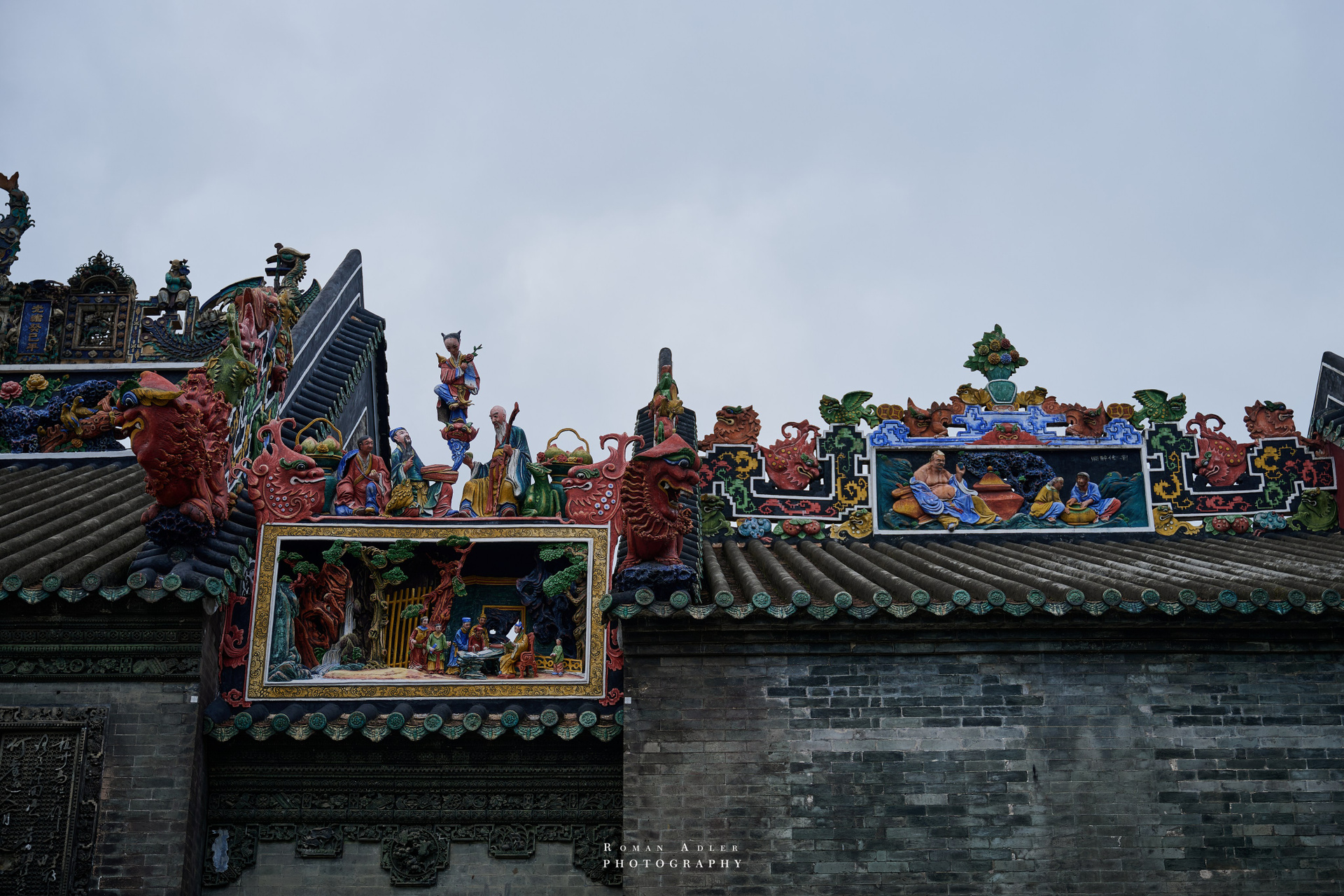
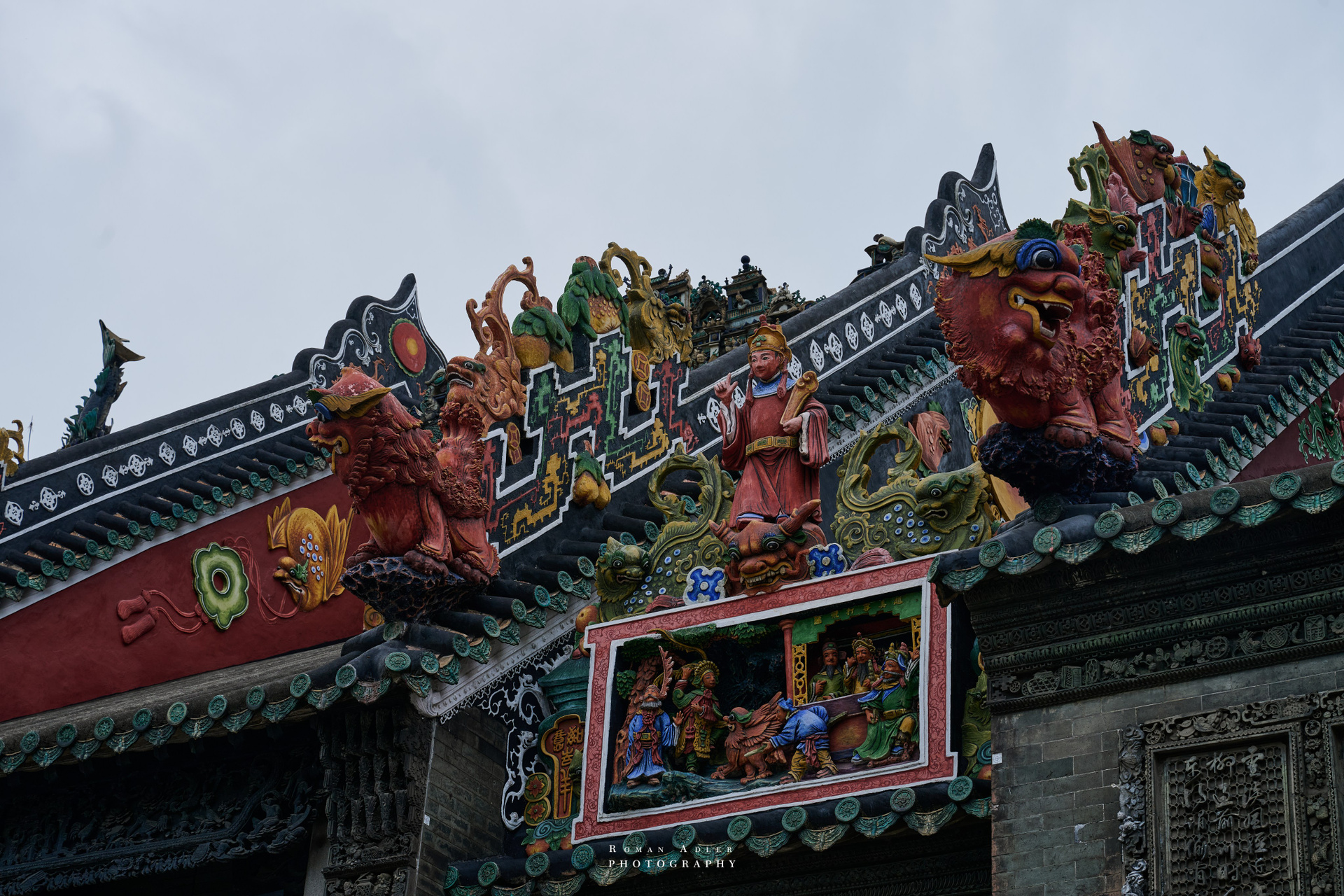
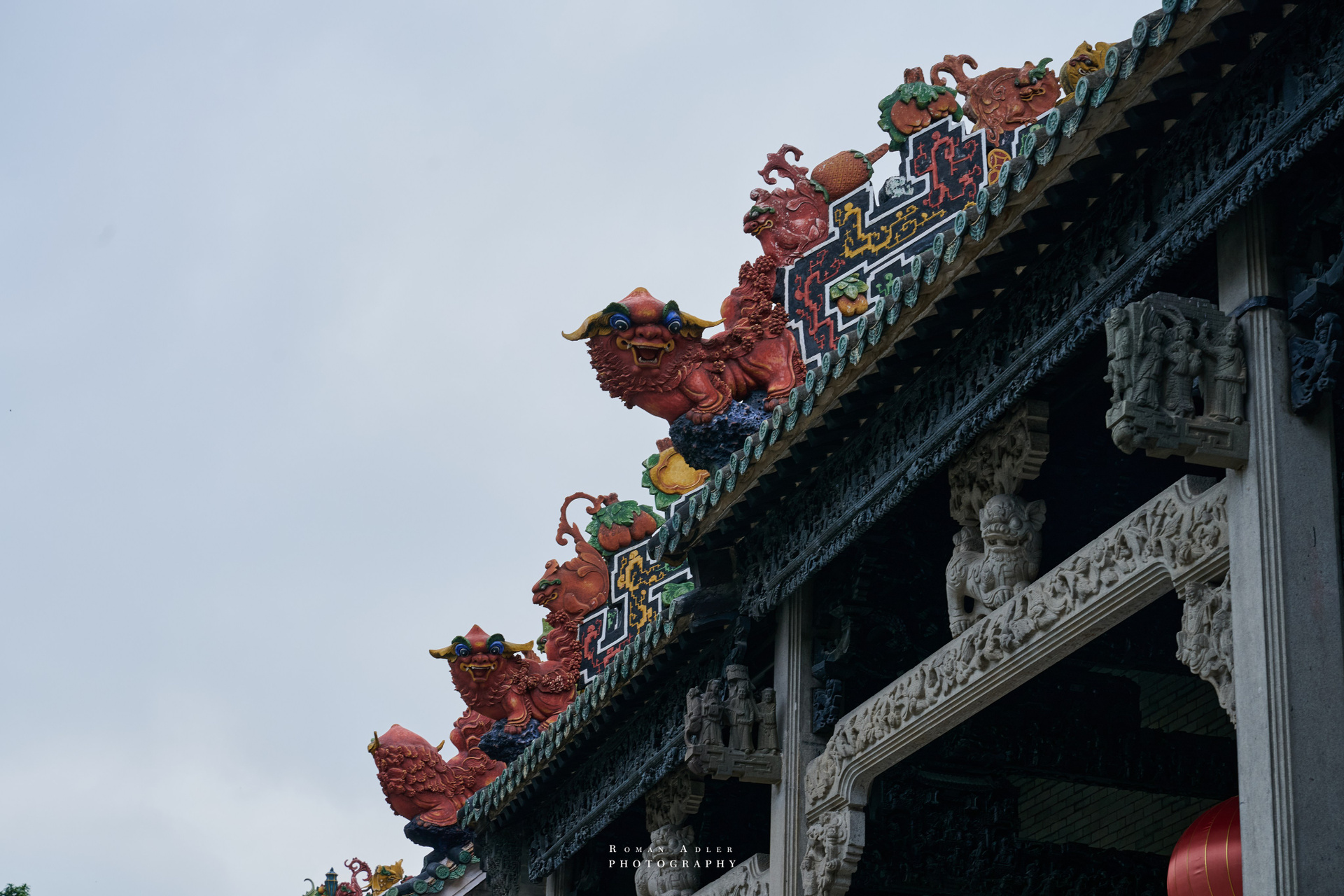
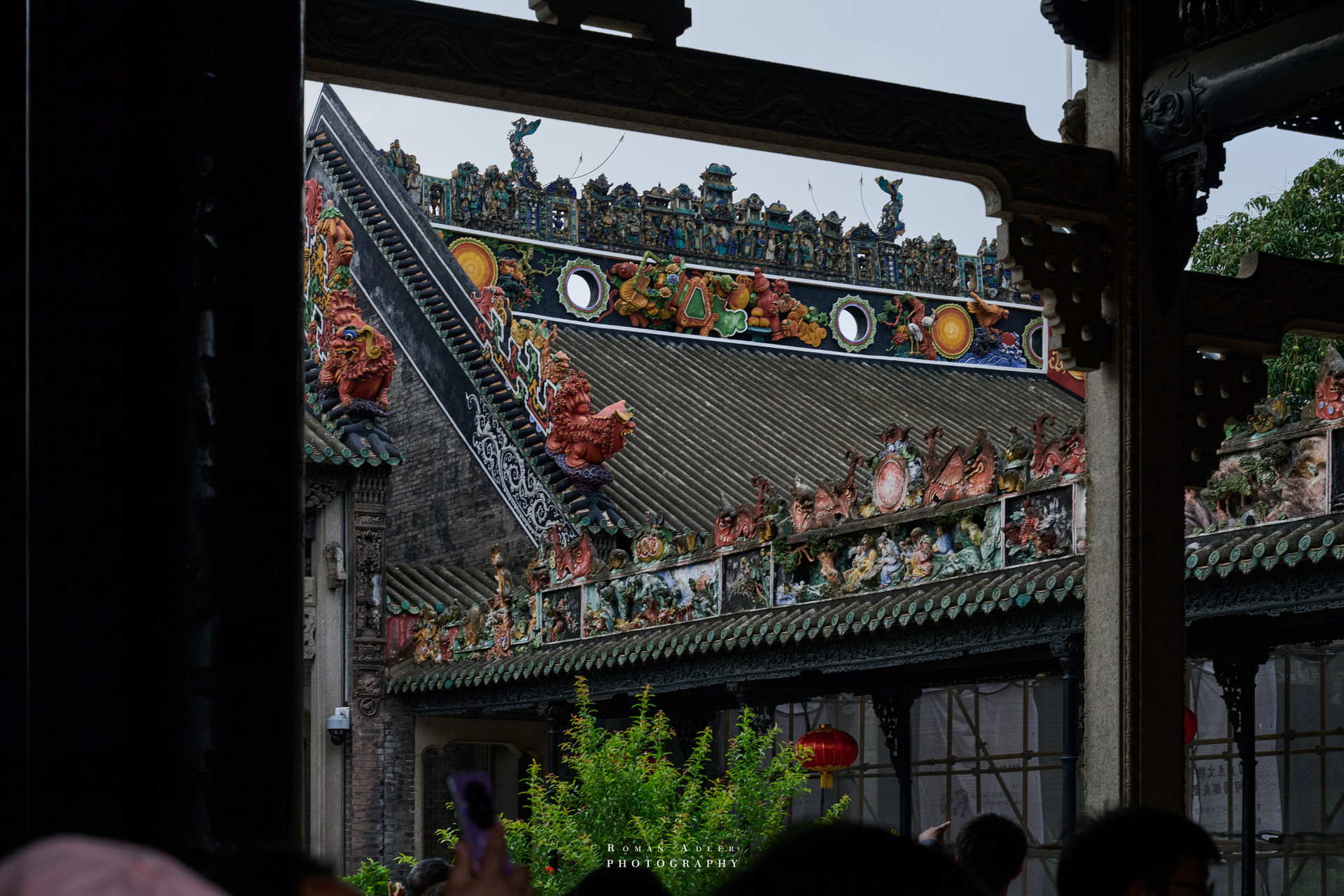
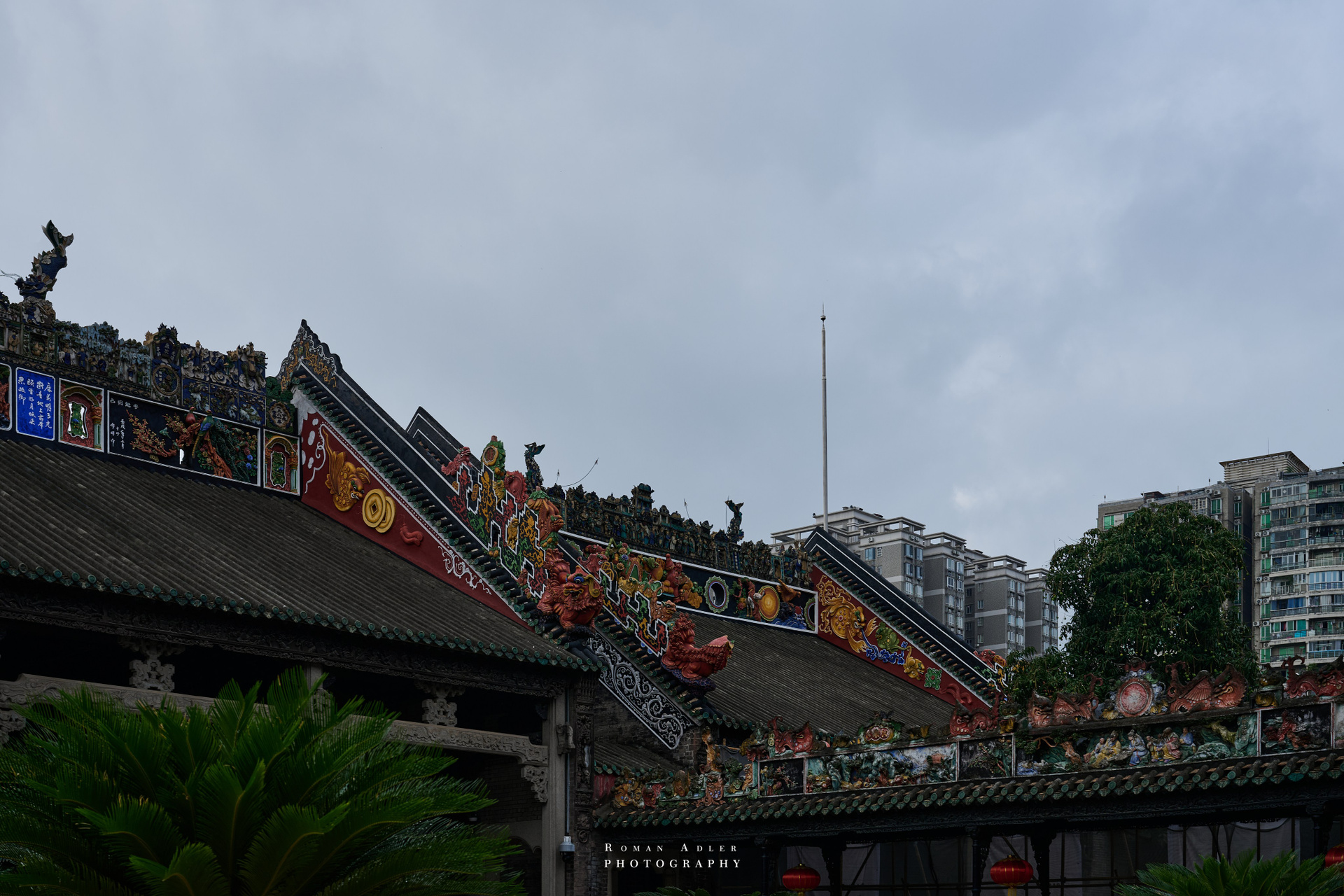
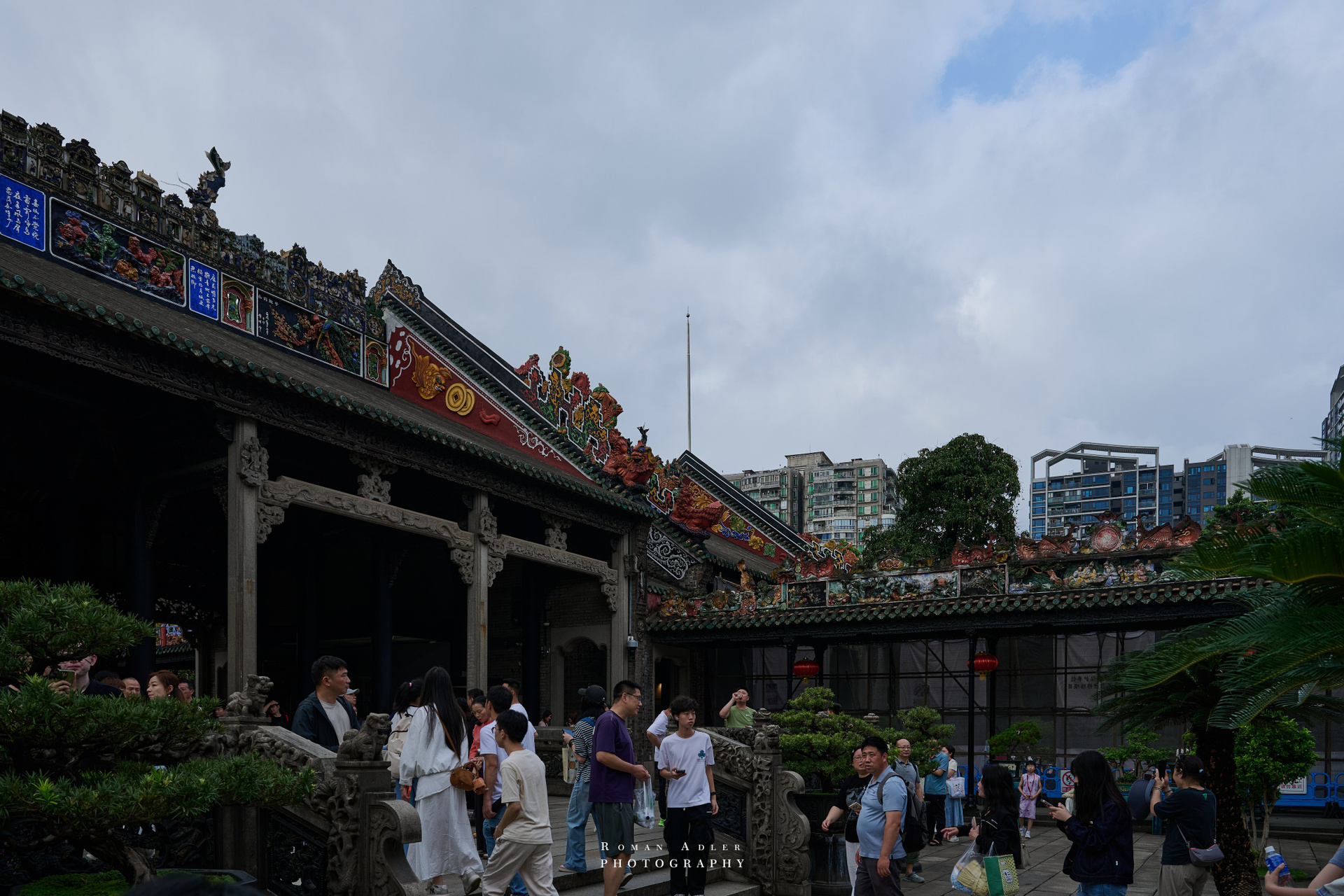
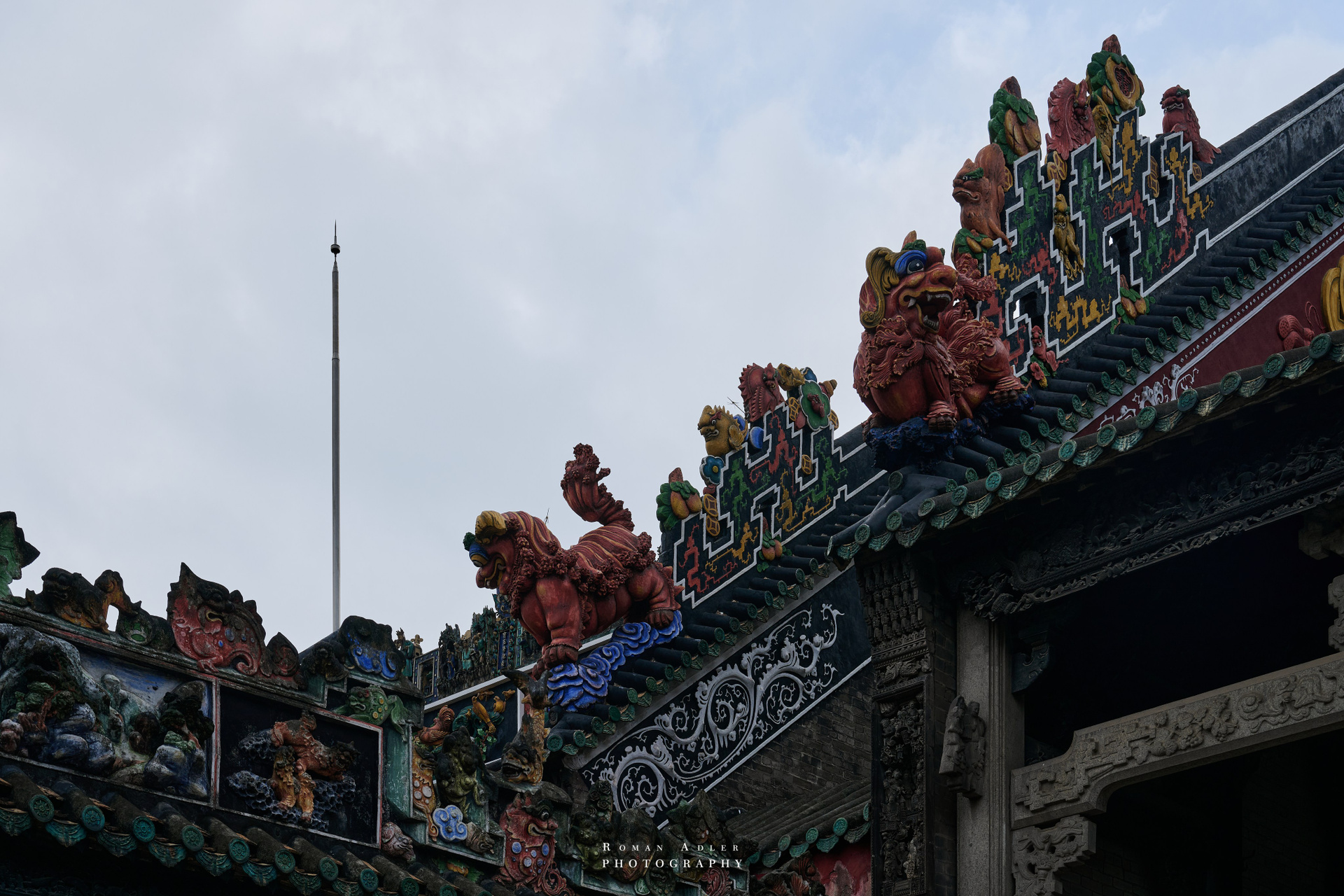
In the very heart of bustling Guangzhou, on Zhongshan Qilu Street, hides a building impossible to forget. Its opulent rooftops seem to float in the air, while thousands of ceramic figures perform ancient plays on the eaves. This is the Chen Clan Ancestral Hall, or the Chen Clan Academy — a place the Chinese call “The Best Clan Ancestral Hall in Guangdong Province” and “The Pearl of Lingnan Architecture.” But behind this beauty lies a dramatic story of survival, cunning, and family pride.
Cunning born of fear: why is the “Academy” actually a temple?
This story began in the late Qing dynasty, in 1888. At that time, 72 counties of Guangdong province, where the descendants of the Chen clan lived, decided to unite and build a common ancestral shrine. Construction took six years, and in 1894 the temple opened its doors. But here’s the catch: officially, the building was called the “Chen Clan Academy” (陈氏书院), although in fact it was a pure clan temple for ancestor worship.
Why the deception?
The answer lies in the policy of the Qing Empire. A few decades earlier, the authorities had banned “united clan temples”, fearing that they would turn into centres of conspiracy and rebellion. To circumvent the ban, the enterprising Chens named their project an “academy” — it sounds educational and loyal. However, inside, everything betrayed its true purpose: rows of ancestral tablets stood there, and young clan members who came to the provincial centre for imperial exams used the temple as a free dormitory. By the way, the fee for a place in the temple was strictly graded: the more generously the family donated, the more honourable the place its lineage tablet received
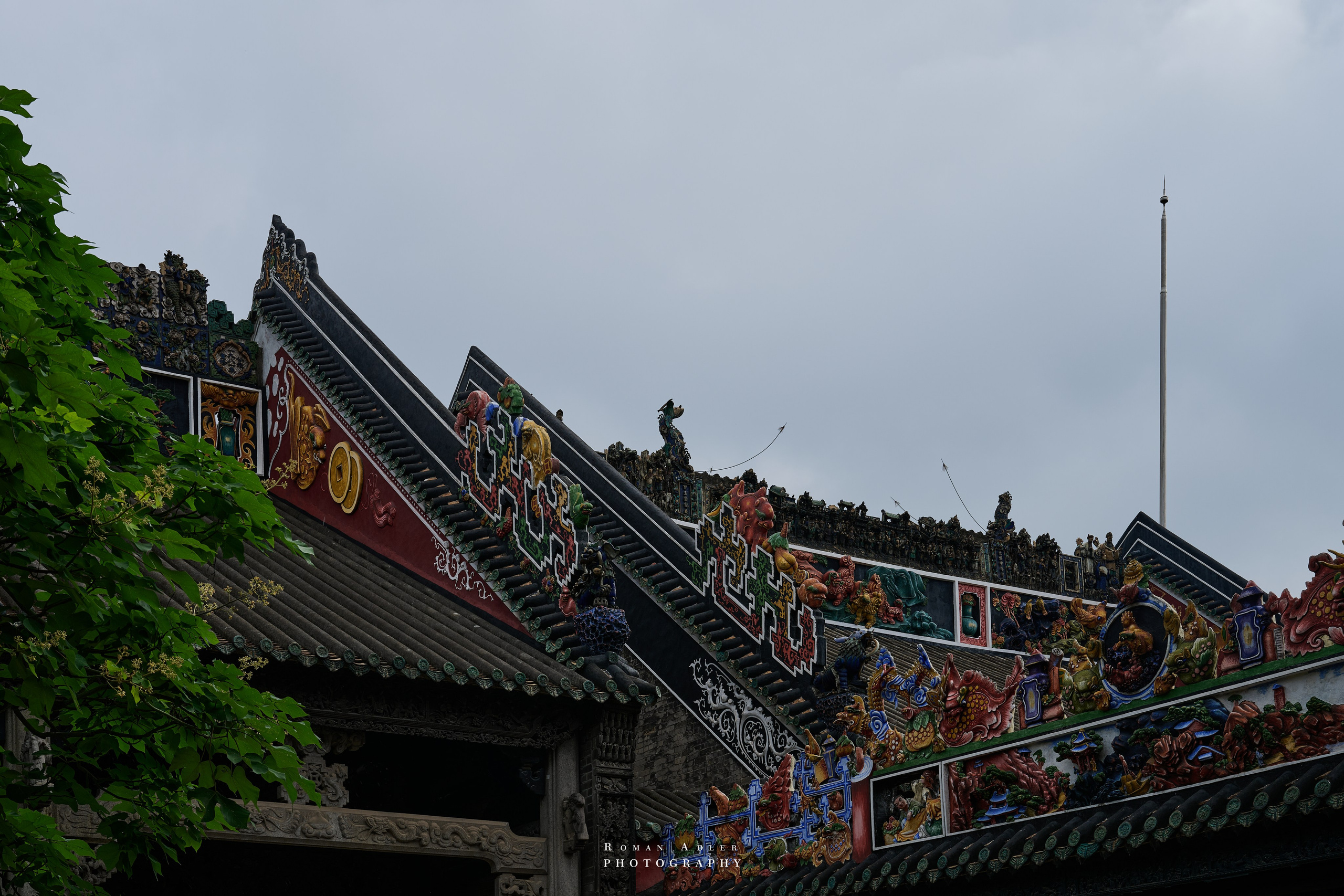
Architecture is theatre
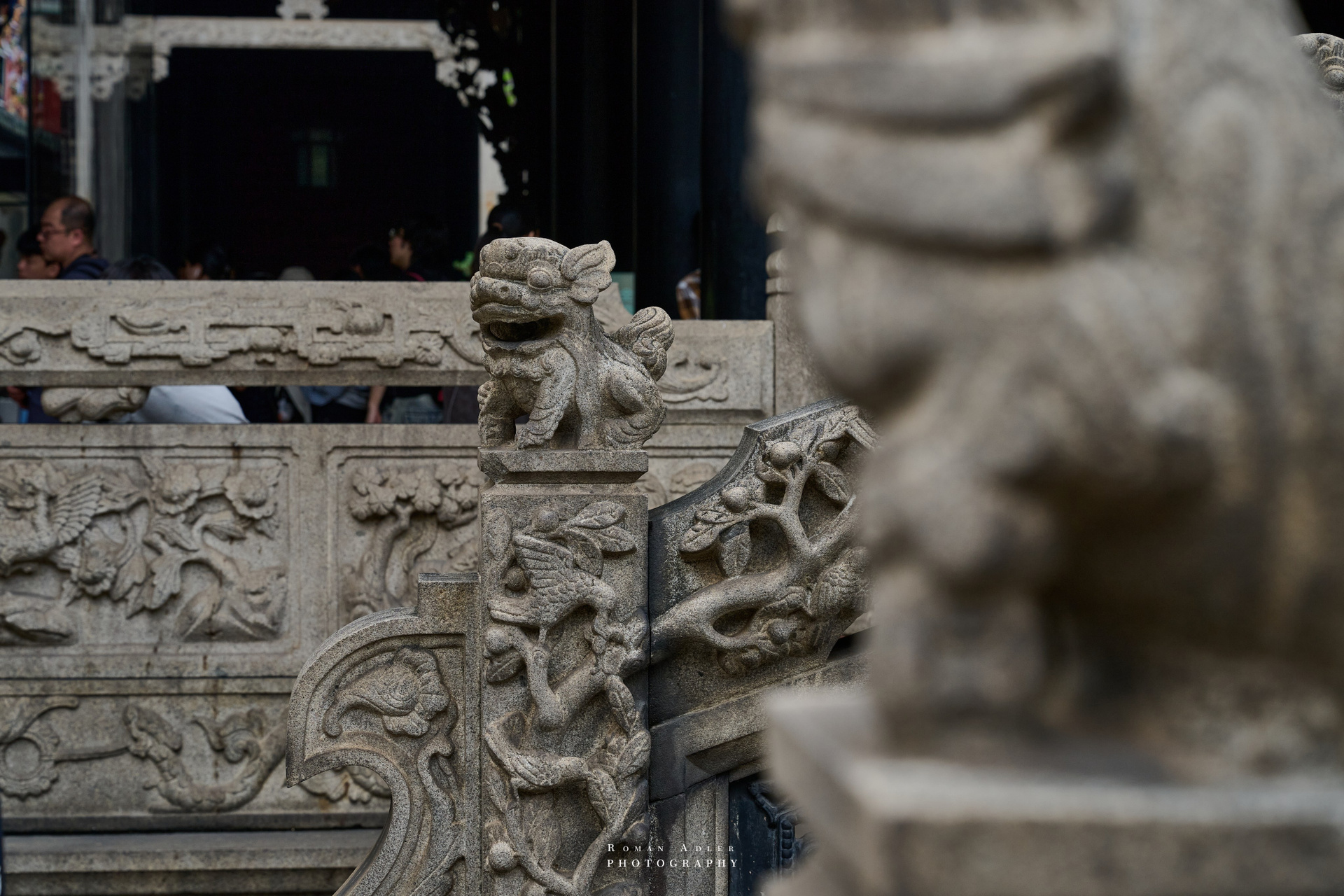
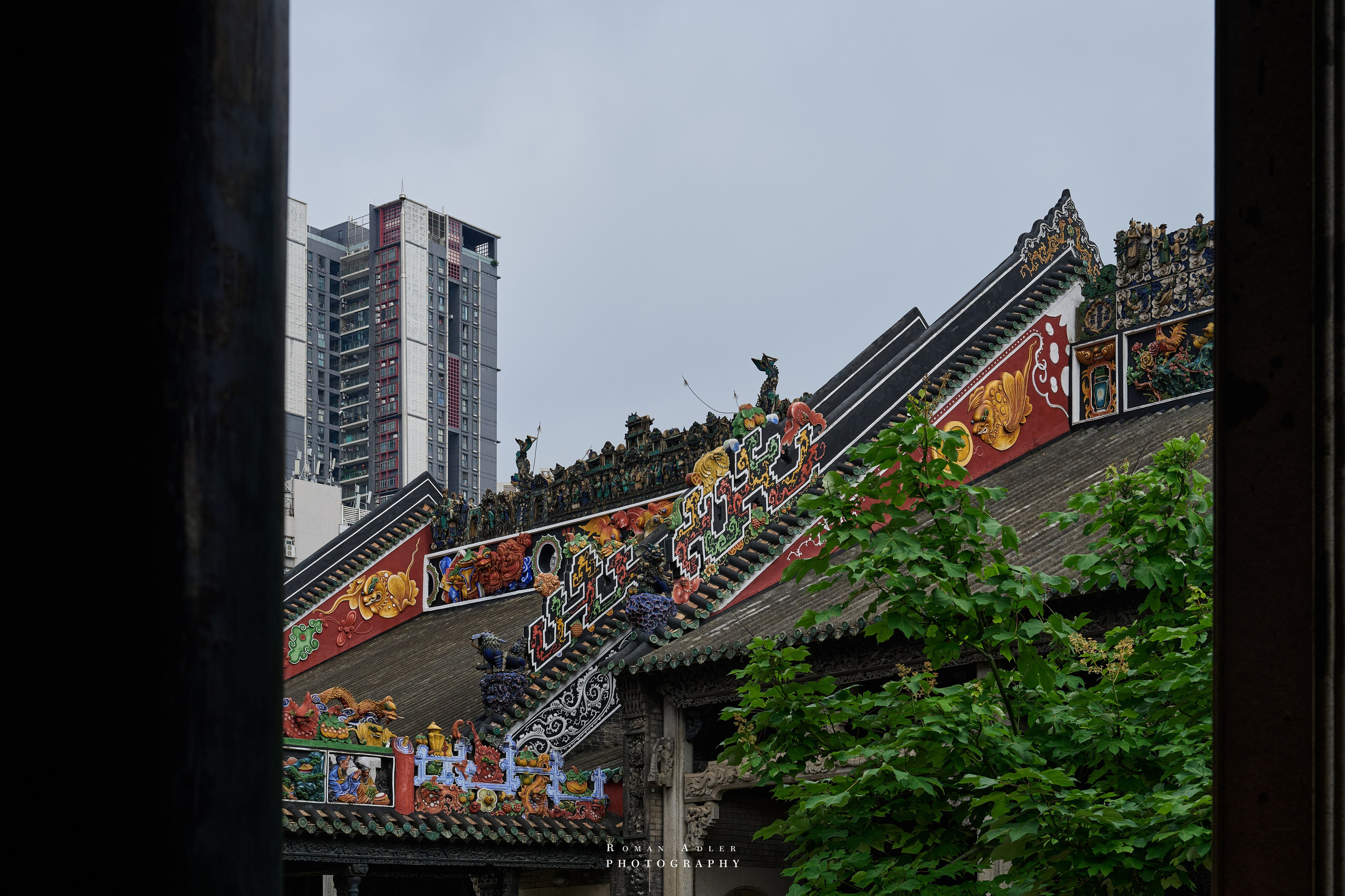
The temple was built according to the canons of feng shui — strictly symmetrical, following the “three halls and three rows” layout. It comprises 19 buildings, 9 courtyards, and 6 inner patios, with the central hall Juxiantang (Hall of Gathering the Sages) as the compositional heart. But the main point is not even the layout, but what adorns the walls and roofs. The entire Chen Clan Ancestral Hall is an open‑air museum, gathering the “seven arts of Lingnan”:
· wood, stone, and brick carving;
· terracotta (ceramic) sculptures;
· lime‑based stucco modelling (灰塑);
· copper and iron wares;
· and colour painting.
These techniques cover absolutely everything — from the massive entrance gates to the tiny load‑bearing beams.
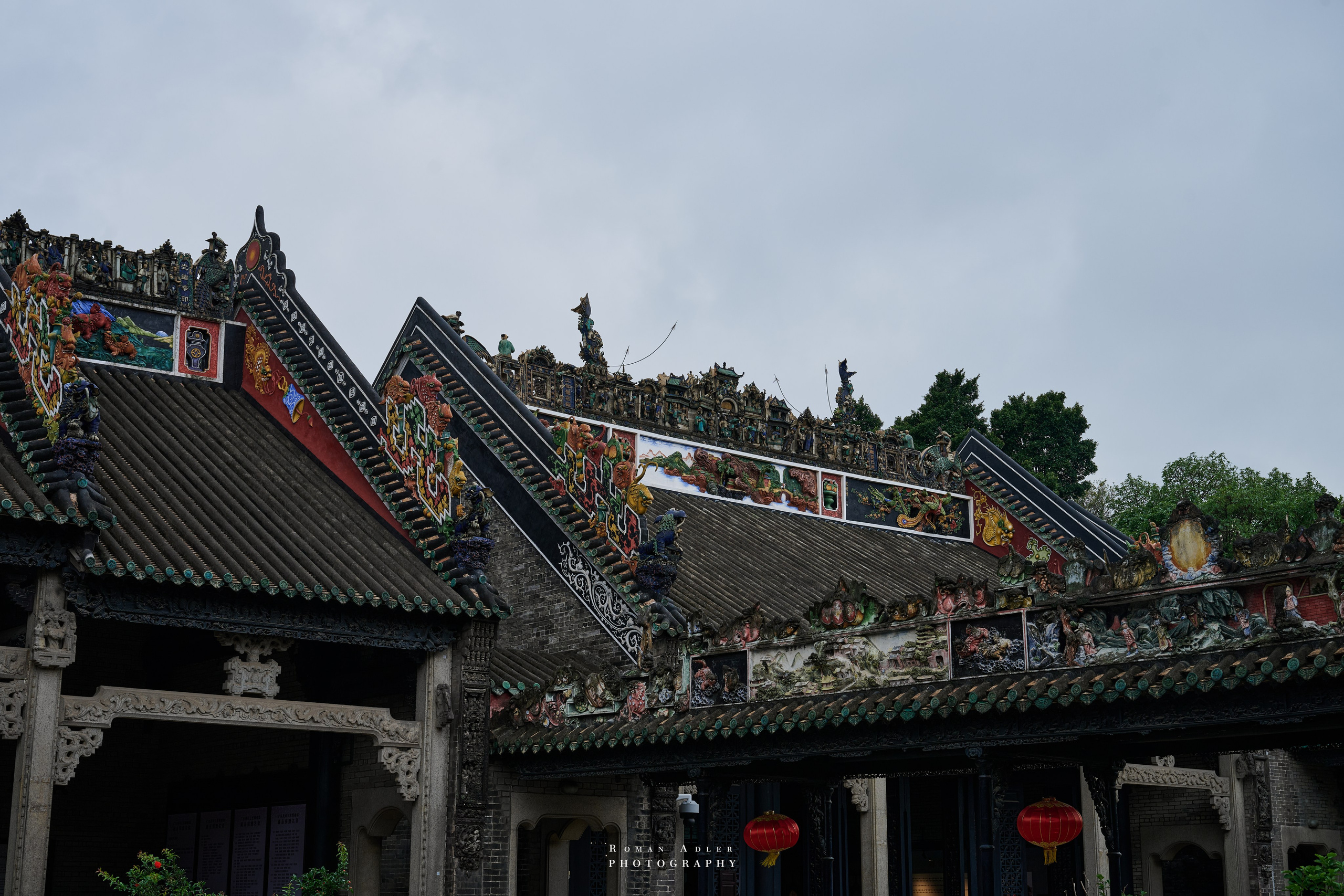
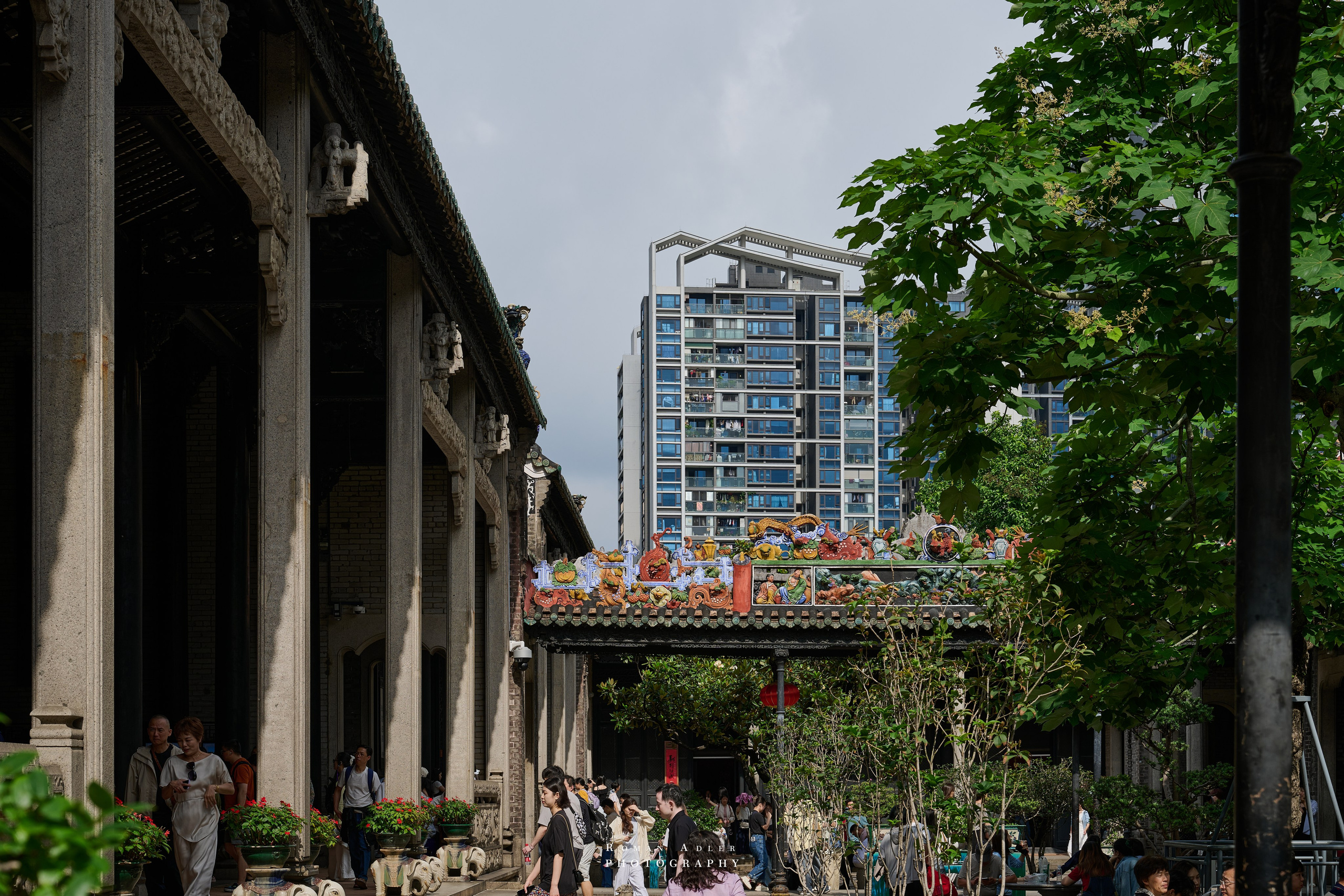
Easter eggs on the rooftops: in search of the “V-sign” and naked angels
The most captivating part of the Chen Clan Ancestral Hall is examining the details. They are everywhere and full of surprises. Start with the roofs. Along them run 11 ceramic ridges from Foshan — these are true theatrical performances drawn from dynastic sagas. Dozens of figures, dragons, flowers, and celestial beings. But among them there is an unexpected character: on the eastern rear slope of the roof sits the Sun Old Man, playfully flashing a “V‑sign” with two fingers! No one knows for sure whether this is a craftsman’s joke or a sign of a secret society, but tourists are delighted. And then, on the first level, in the brick relief “Little Angel”, another shock awaits you. Among Chinese clouds floats a Western cherub with chubby cheeks and wings. But he is fully dressed in a Chinese child’s costume and sports traditional “double buns” on his head. This is not just cute — it is living proof that as early as the 19th century, Guangzhou was open to Western influence, and the craftsmen freely mixed cultures.


Genius optics: two “Fu” and eight cranes.
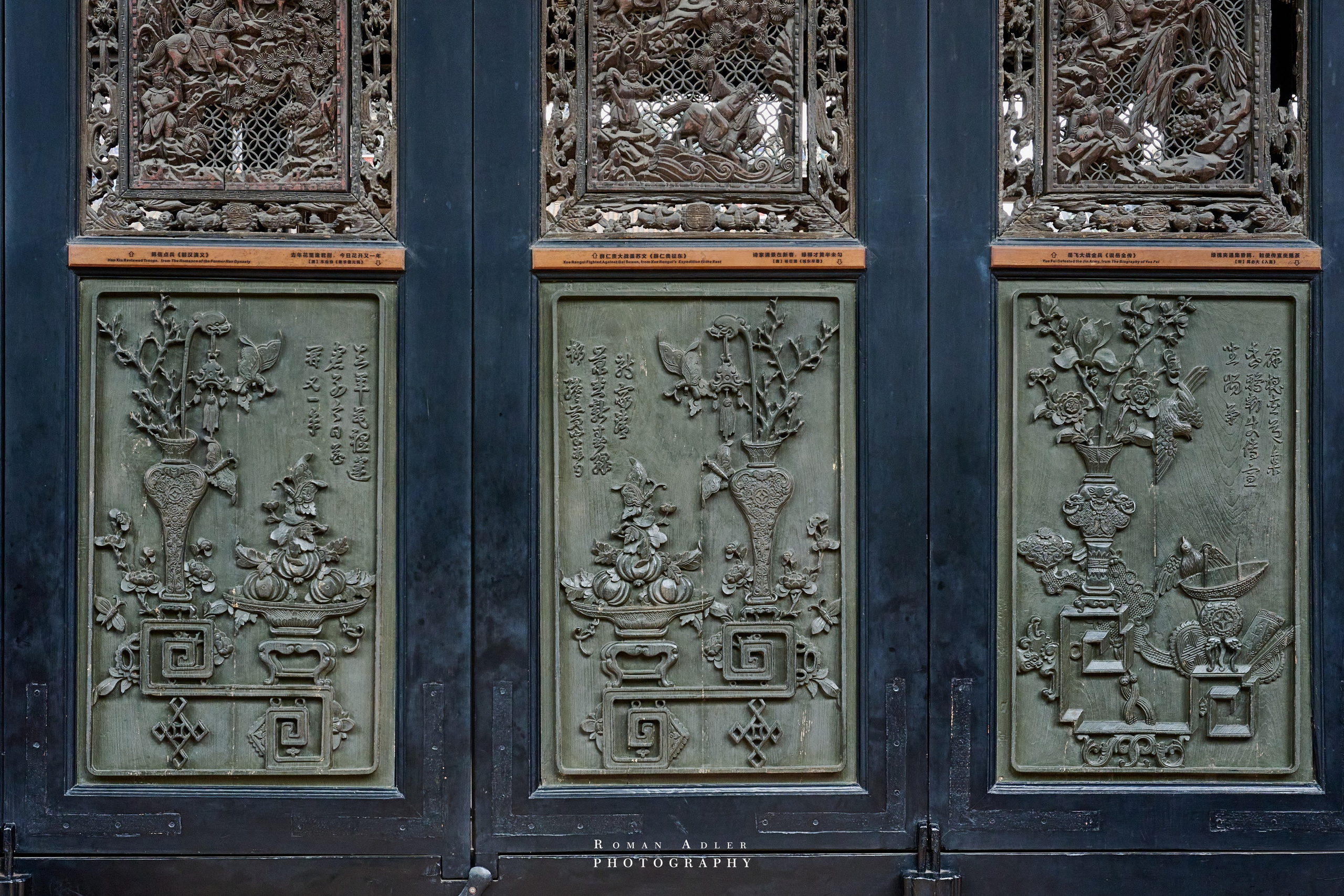
Pause at the carved wooden doors in the first hall. On them, bamboo branches are exquisitely carved. Look closer: the stems form two inverted characters of “Fu” (happiness) facing each other. And if you break this “Fu” apart, you get the characters for “many” and “longevity”. Meanwhile, eight cranes wander along the branches — a symbol of the Eight Immortals and a long career. Taken together, this reads as a message to descendants: “Youth and success will come, though not all at once.”
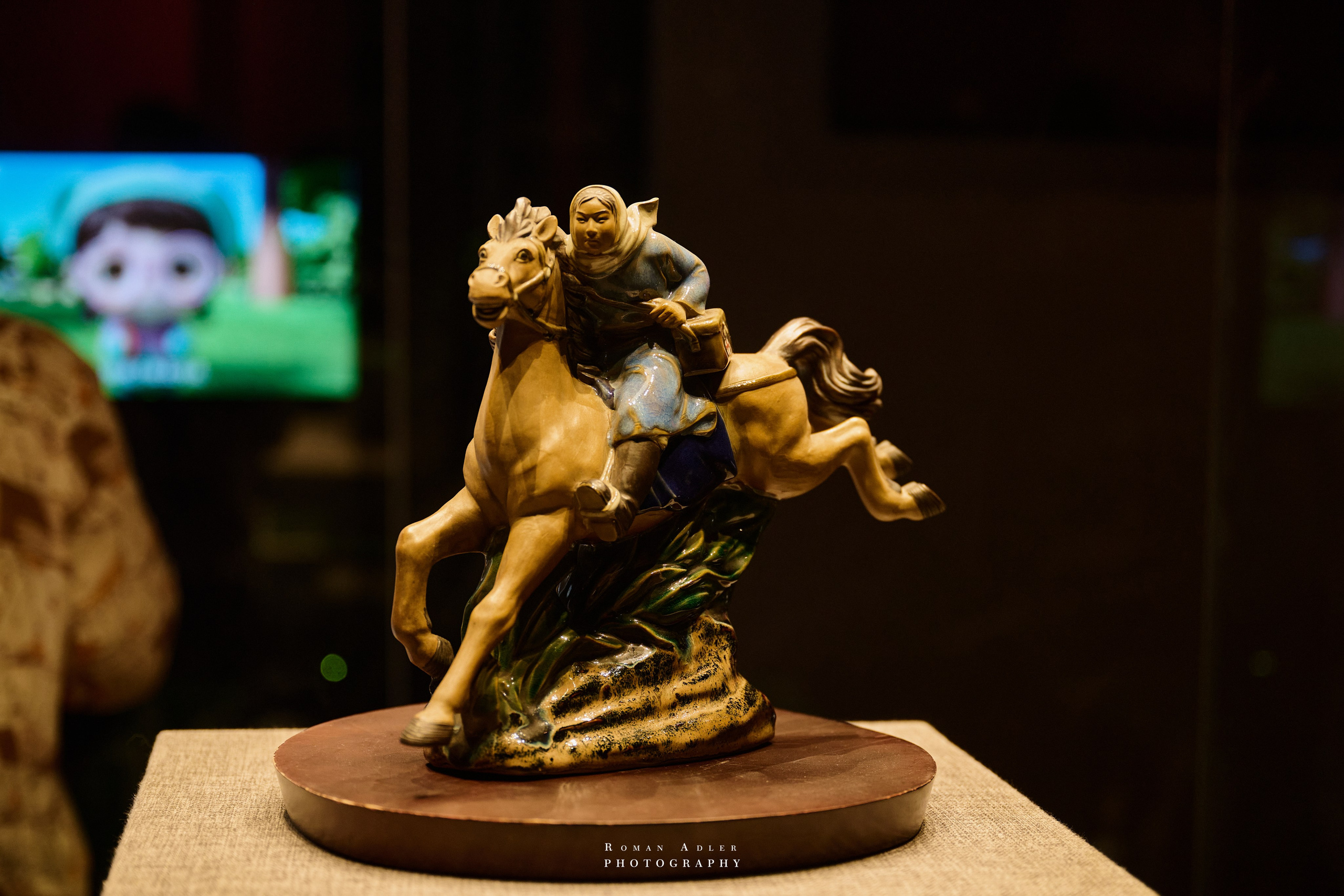
Life after the empire: from ashes to museum Olympus
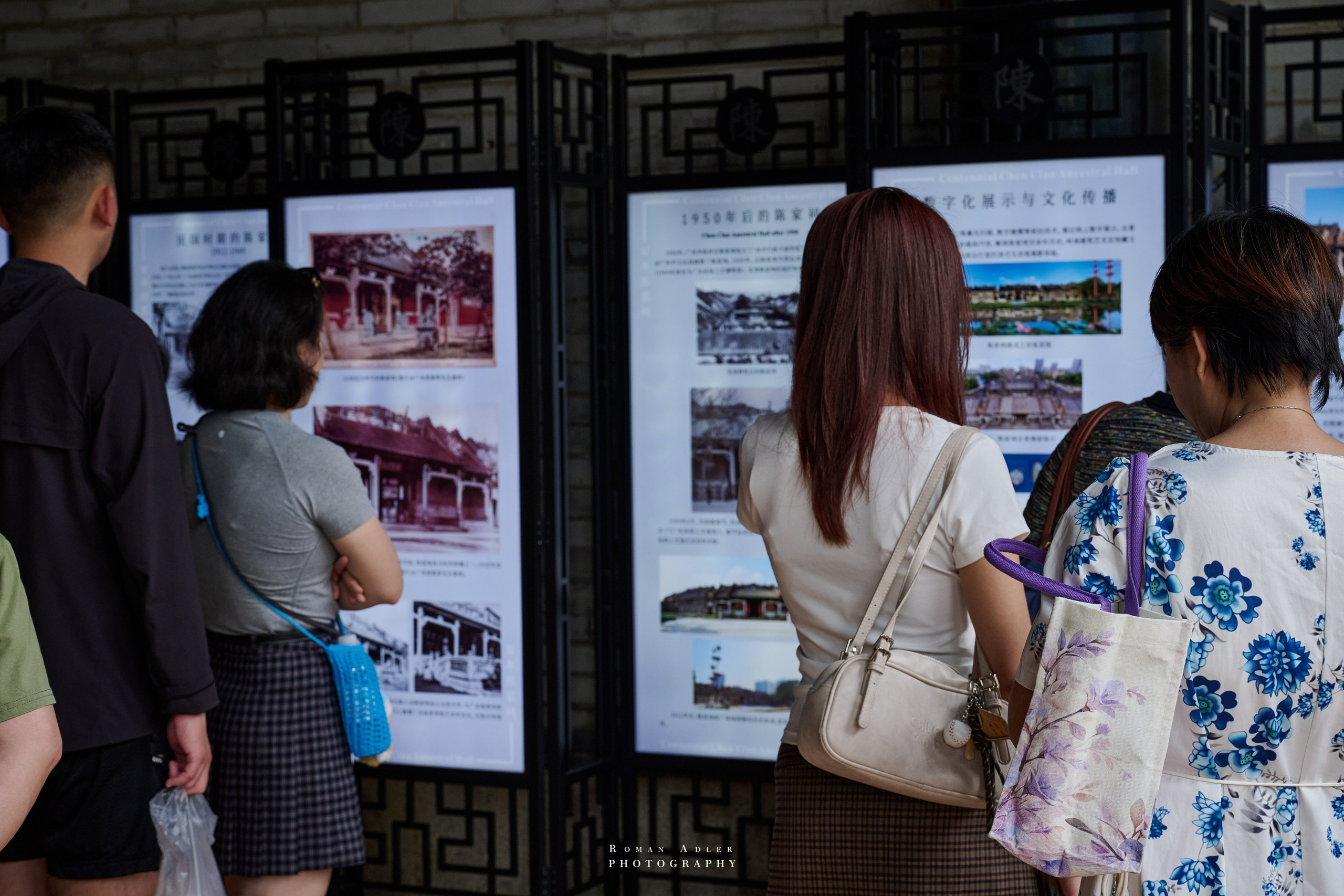
After the fall of the Qing dynasty, the temple went through everything: it housed a primary school, a sports technical school, and later administrative offices. The darkest year was 1966, when during the Cultural Revolution the ancestral tablets were burned and the ancient frescoes at the gates were ruthlessly hacked off. But in 1959, a miracle occurred: the Chen Clan Ancestral Hall was recognized as a museum of folk crafts. And in 1988, it received the status of a major protected monument of the People’s Republic of China. Today, it is a top‑tier state museum, housing nearly 3,000 exhibits of the highest class: ivory carving, Cantonese porcelain (guangcai), Chaozhou embroidery, and, of course, the famous Shiwan ceramics.
How to visit today and not miss the magic?
· Address: Guangzhou, Liwan District, 34 Zhongshan Qilu Street. Exit D from Chen Clan Academy metro station (Lines 1 and 8) — you come out right at the gates.
· Price: a ridiculous 10 yuan (about 1.5 USD), but official tickets are not always available — if needed, you can buy one from touts near the museum for up to 20 yuan.
· Opening hours: 9:00 AM to 5:30 PM, ticket office closes at 5:00 PM. Closed on Tuesdays (important — don’t get caught out!).
Pro tip: come not in the morning, but about an hour and a half before closing. During the day, it is noisy with school groups. By evening, the sun gilds the ceramic roofs, and in the back garden a light show turns on — the temple comes alive, shadows play on the carvings, and this is the most magical time.
How much time to allow: at least 2 hours. But if you love details — feel free to plan 3 hours or more. Bring water — it gets hot in Guangzhou even inside the courtyards.
Instead of an afterword
In the Chen Clan Ancestral Hall, nothing is accidental. Every curl, every figurine, even every crack in the stone — is a letter from the past. Here, family egoism and love for ancestors, fear of authority and pride in one’s lineage, canonical Chinese art and the first timid breath of the West — all are intertwined. When you stand under these roofs and listen to the wind playing with the bronze bells on the eaves, remember the words of Guo Moruo: “The hand of man here rivals nature itself.” And you will understand — this is no exaggeration. This is the pure truth.
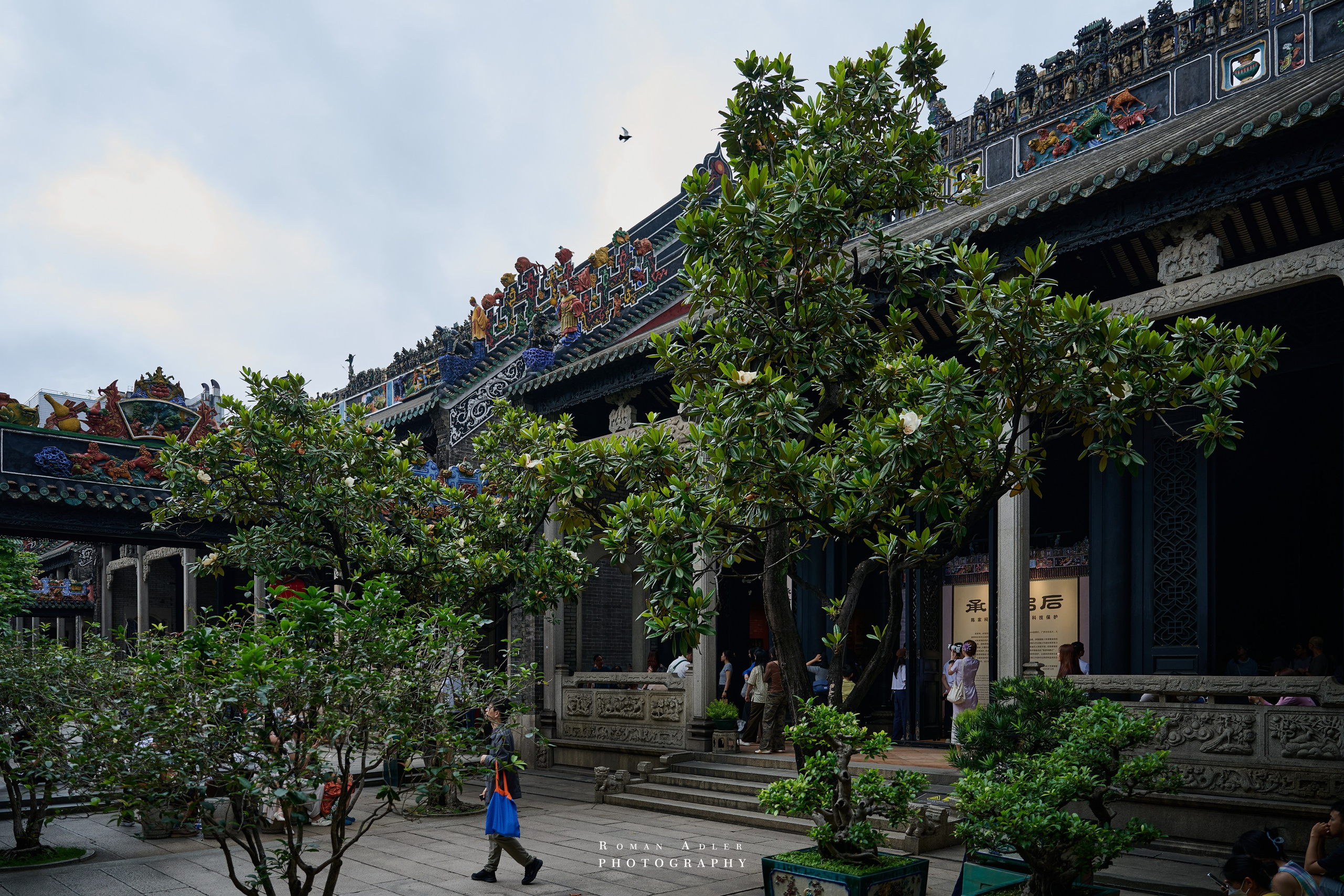
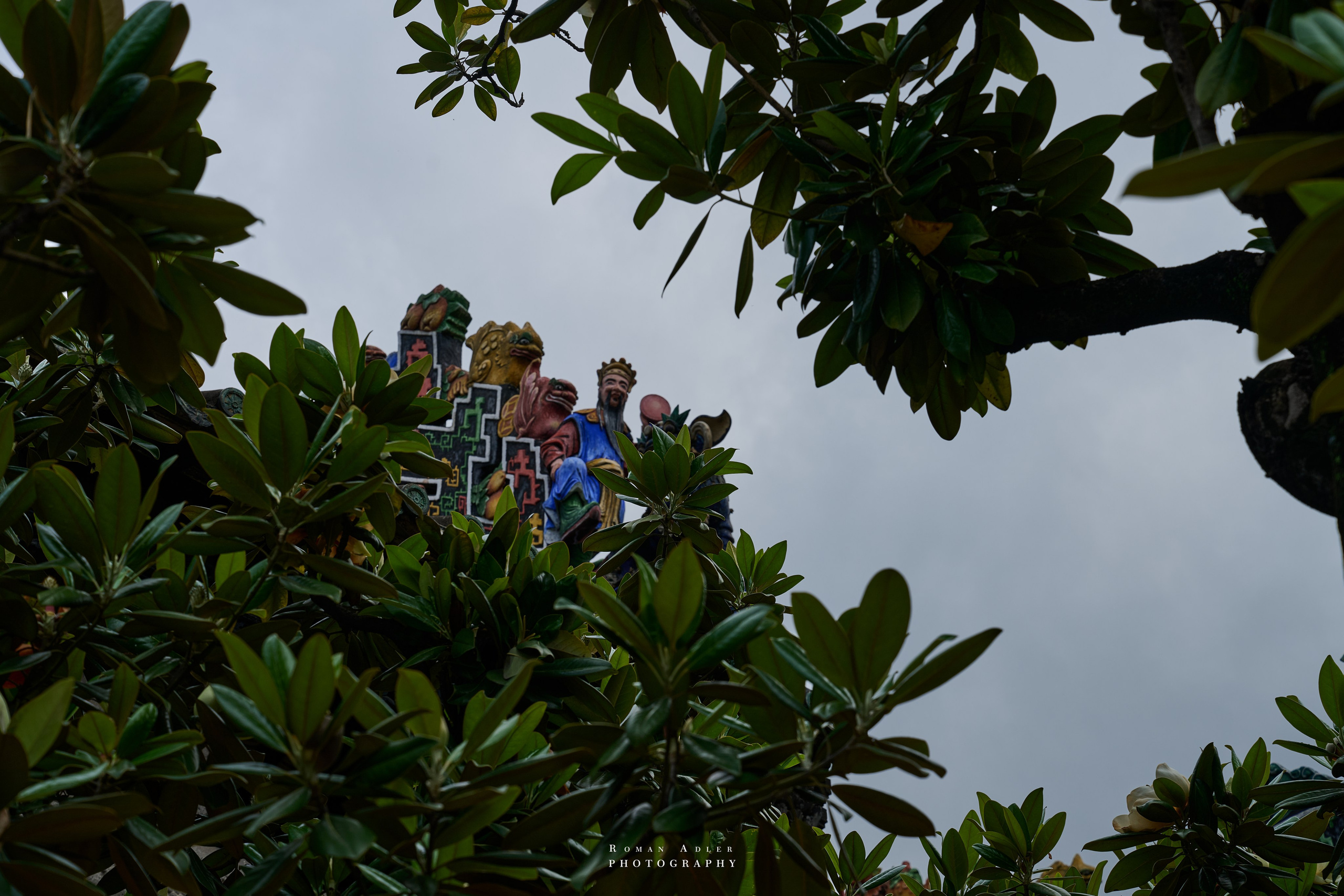
Chen Clan Ancestral Hall
All photos from the Chen Clan Ancestral Hall (陈家祠) are now in our gallery. Click the button below to explore every carved curl, every ceramic rooftop scene, and every stone inscription in detail.