Haifeng Red Palace and Red Square Memorial Museum (Shanwei, China): History, Symbolism, and Modernity
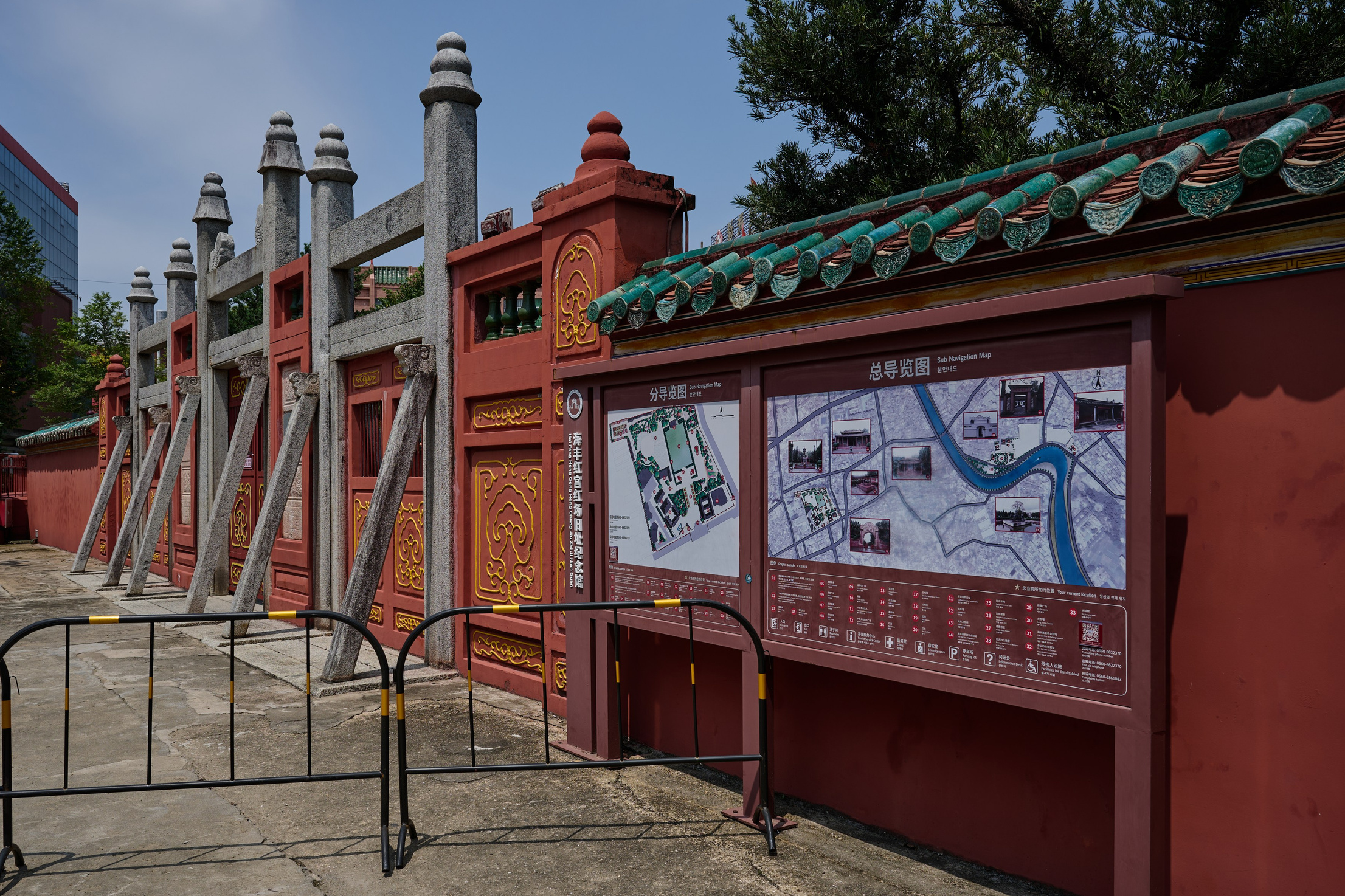
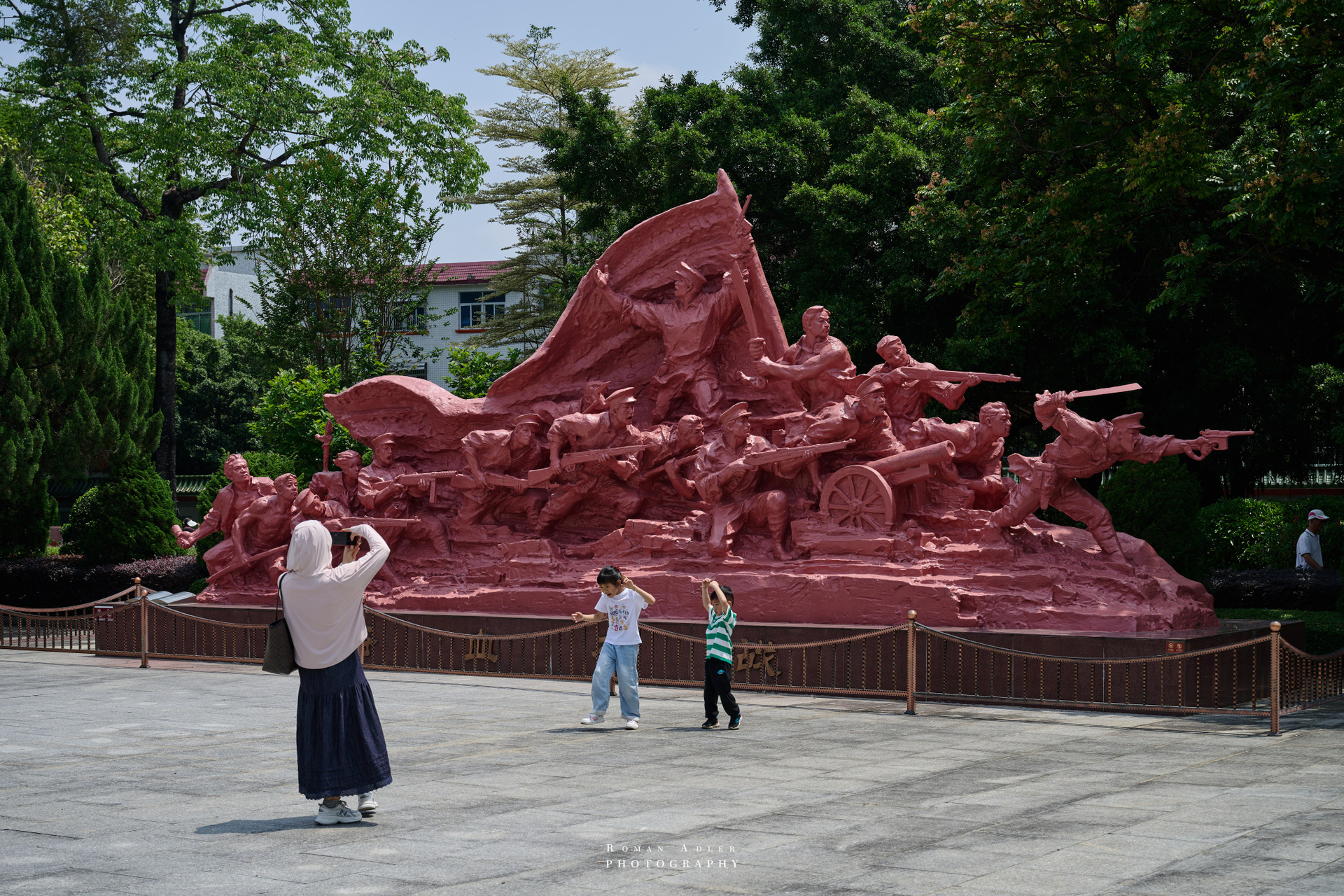
In southern China, in Guangdong Province, lies a remarkable site often referred to as the “eastern sister” of Moscow’s Red Square. This is the Haifeng Red Palace and Red Square Memorial Museum, located in Haifeng County (Shanwei City). Far more than a museum, it stands as a living witness to the revolutionary storms of the 20th century — the very place where China’s first Soviet regime was born. This article offers a detailed look at the history of this unique complex, tracing its journey from a medieval temple to a modern centre for patriotic education.
📍 Location
· Official name: Haifeng Red Palace and Red Square Former Site Memorial Museum
· Address: No. 13 Renmin South Road, Haicheng Town, Haifeng County, Shanwei City, Guangdong Province, China
· Coordinates: in the historical centre of the county
Important: do not confuse this site with Haifa in Israel. This is Haifeng, China — the hometown of the renowned revolutionary Peng Pai.
Chinese name: 海丰红宫红场旧址纪念馆 (Hǎifēng Hónggōng Hóngchǎng Jiùzhǐ Jìniànguǎn)
Category: thematic memorial museum of social‑science orientation, dedicated to revolutionary history
A Long Journey: From a Ming‑Dynasty Temple to a Revolutionary Epicentre
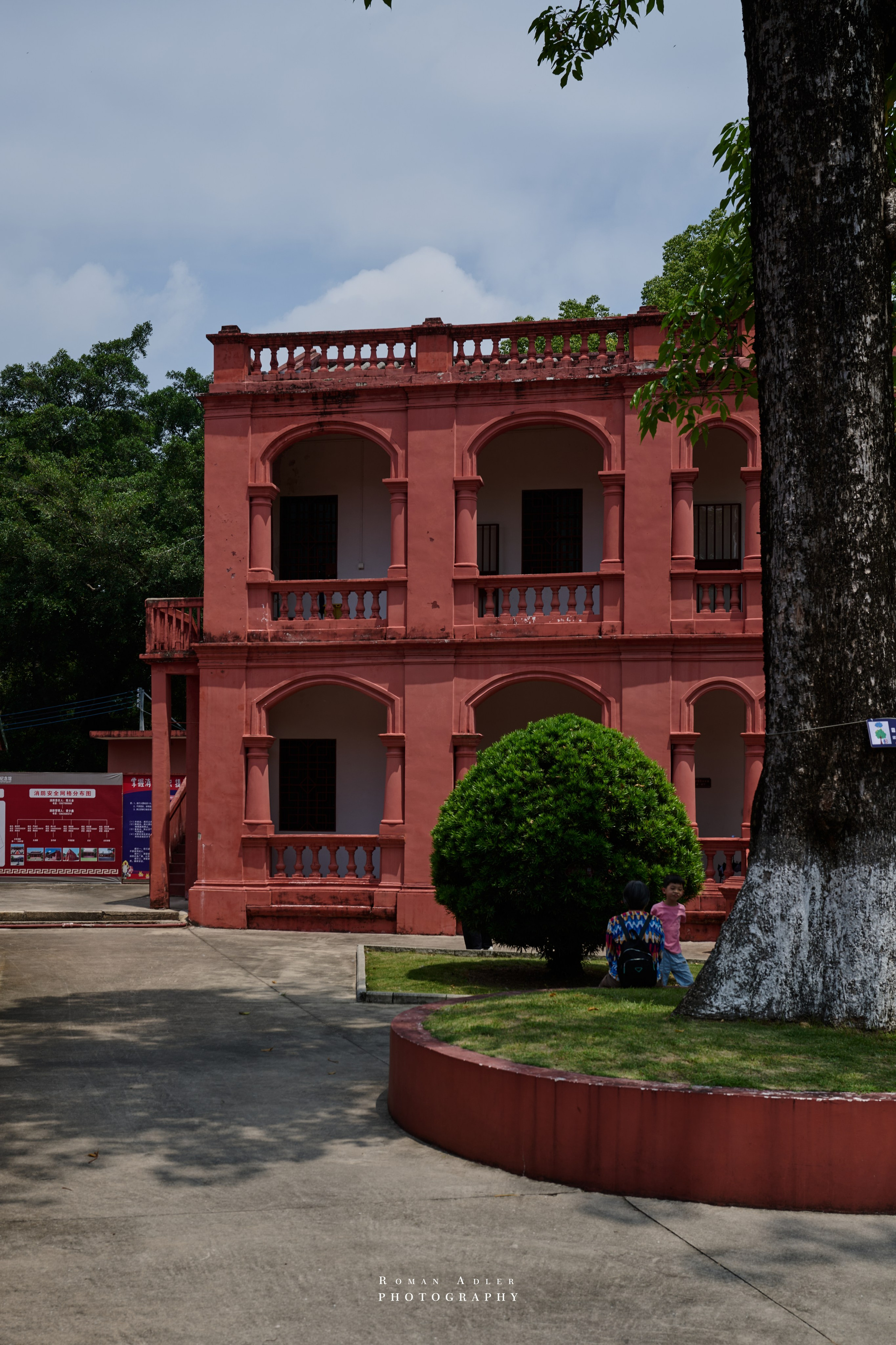
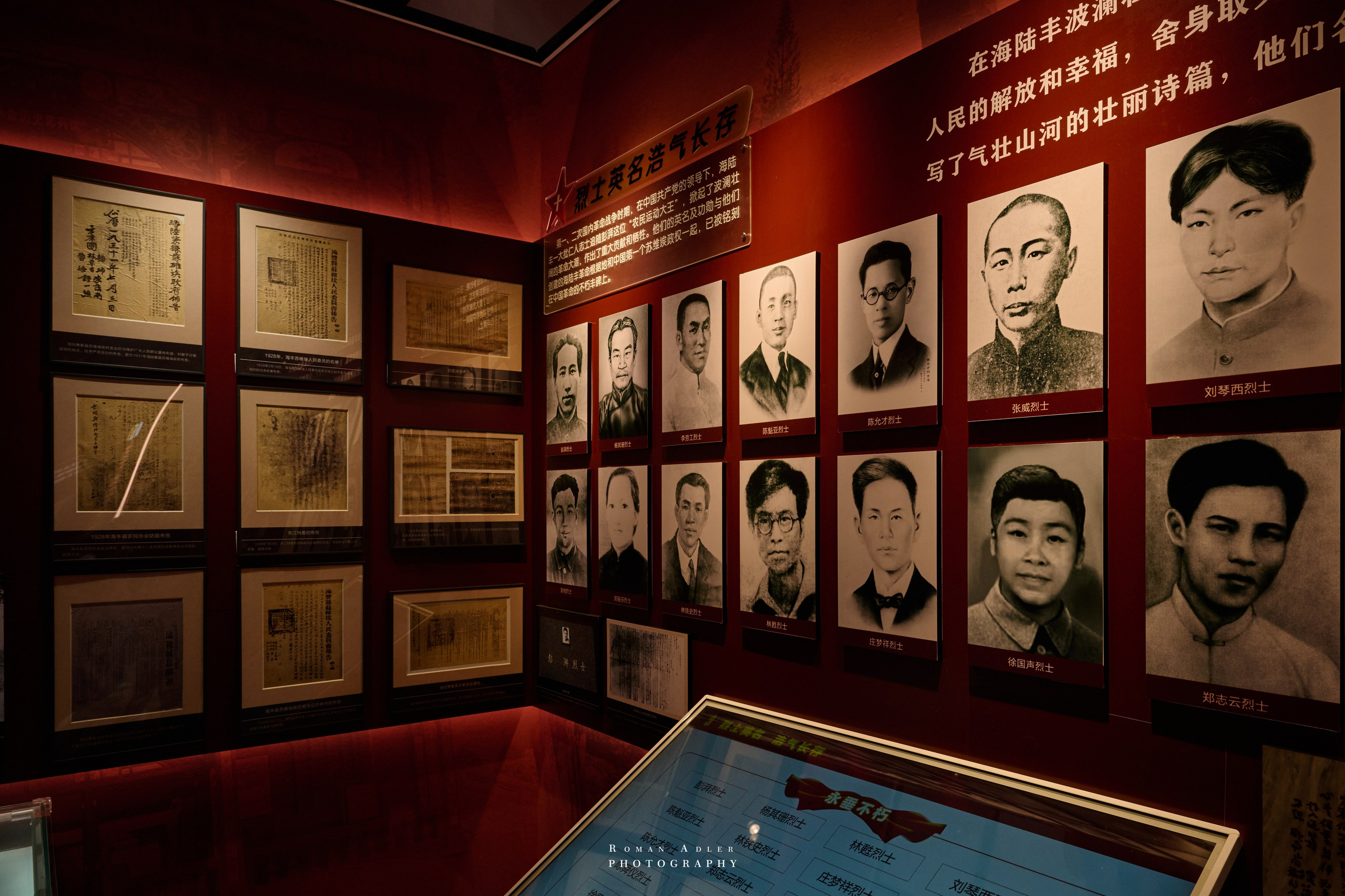
The history of this complex stretches back long before the 20th century. In 1379 (during the Ming dynasty), a Confucian temple (school) was built on this very site. For more than five centuries, it was a quiet place of scholarly pursuits and ritual ceremonies. But everything changed in the turbulent 1920s. Haifeng County was one of the strongholds of the Chinese peasant movement, and the leader of this movement was Peng Pai (1896–1929) — a man from a wealthy family who renounced his own class and devoted his life to fighting for the rights of peasants.

🚩 Key event: November 1927
In November 1927, at the height of the civil war between the Chinese Communist Party and the Kuomintang government, an event of national significance took place in Haifeng.
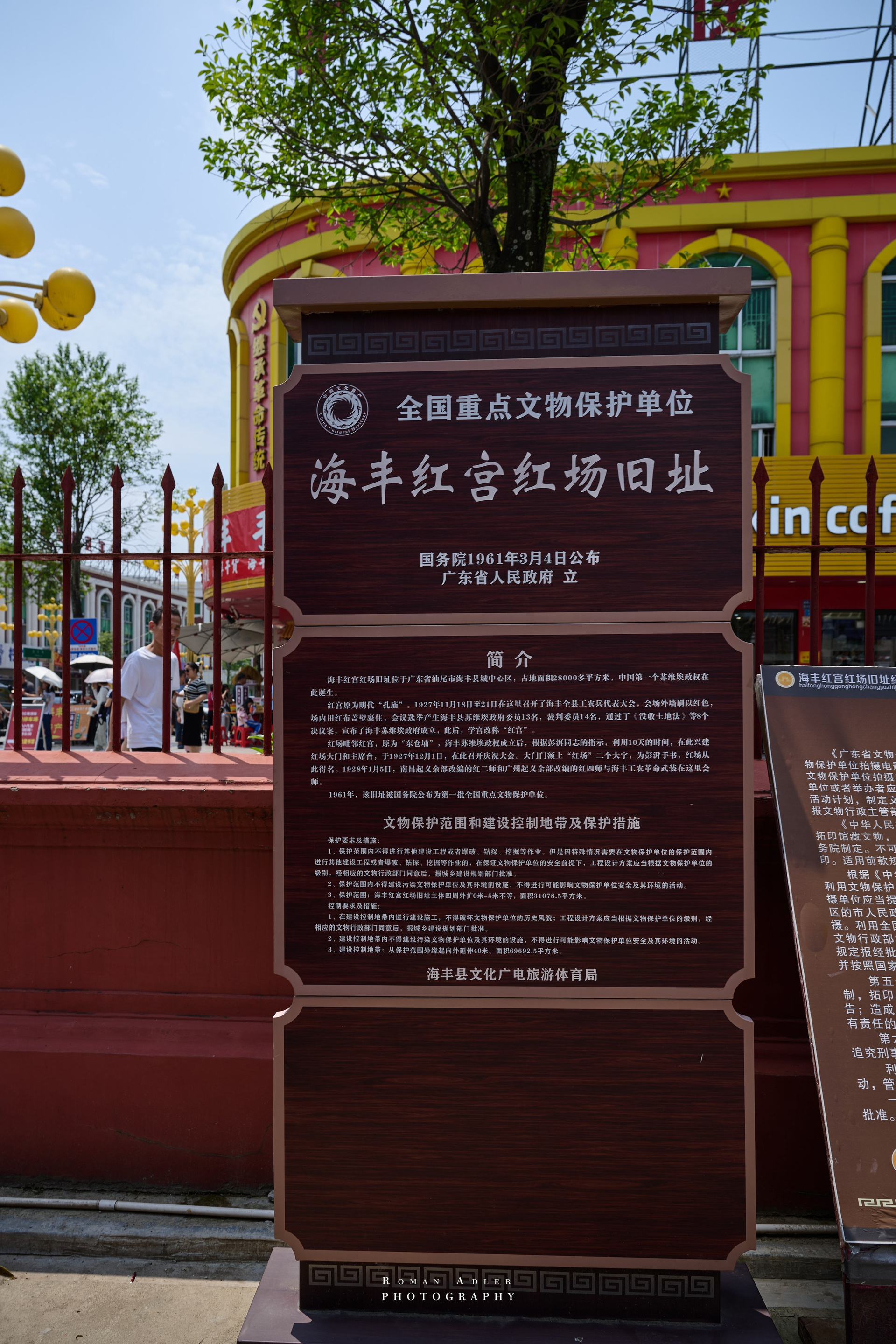
· From 18 to 21 November 1927, the First Congress of Soviets of Workers, Peasants and Soldiers of Haifeng and Lufeng counties was held in the former Confucian temple (school).
· At this congress, the first peasant‑worker Soviet government in Chinese history was proclaimed.
· Peng Pai was elected chairman of the government.
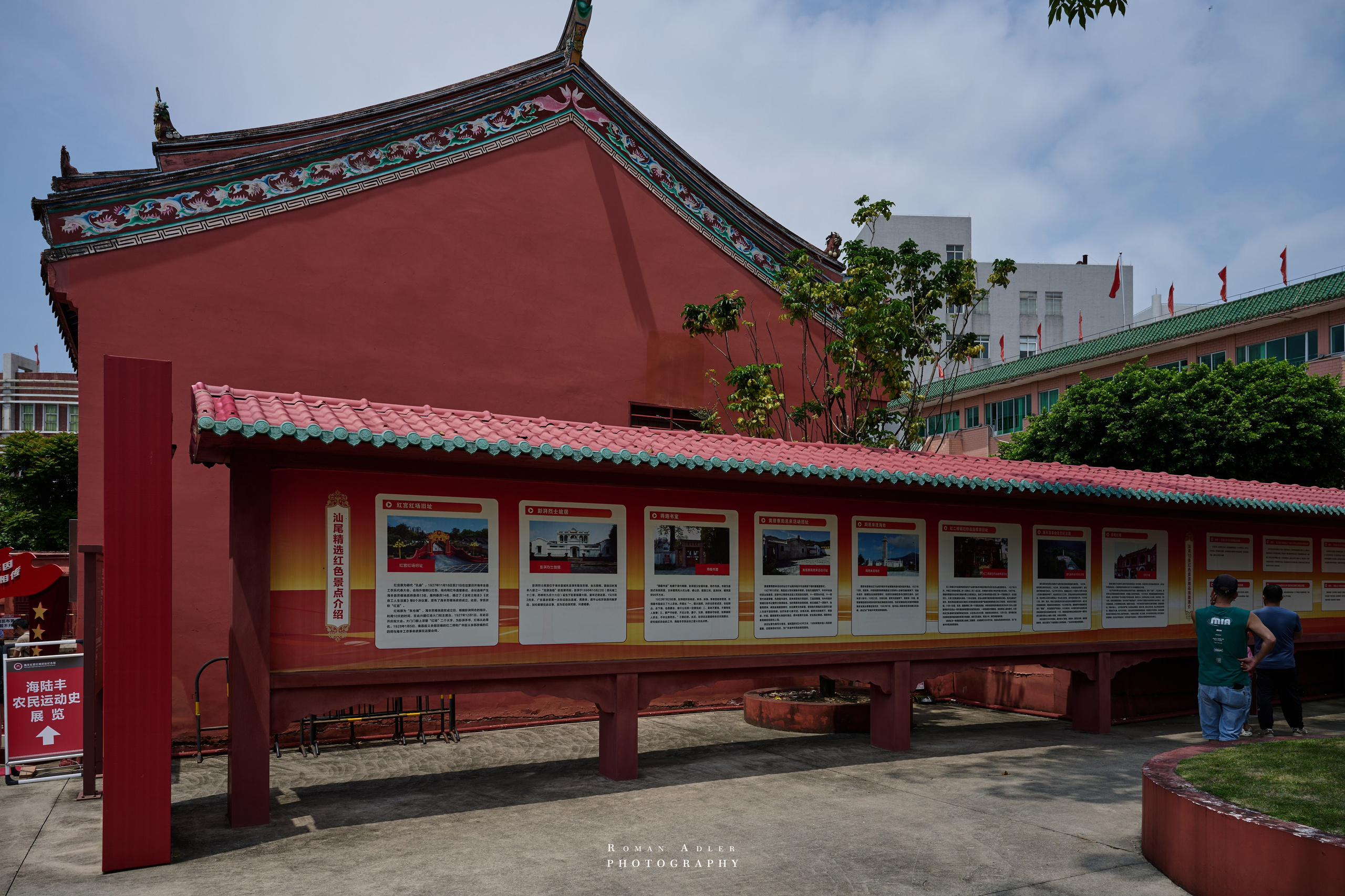
In honour of this historic event, the temple building was painted red — the symbol of revolution. Thus, the Confucian temple was transformed into the Red Palace (红宫).
🟥 The Birth of Haifeng’s Red Square
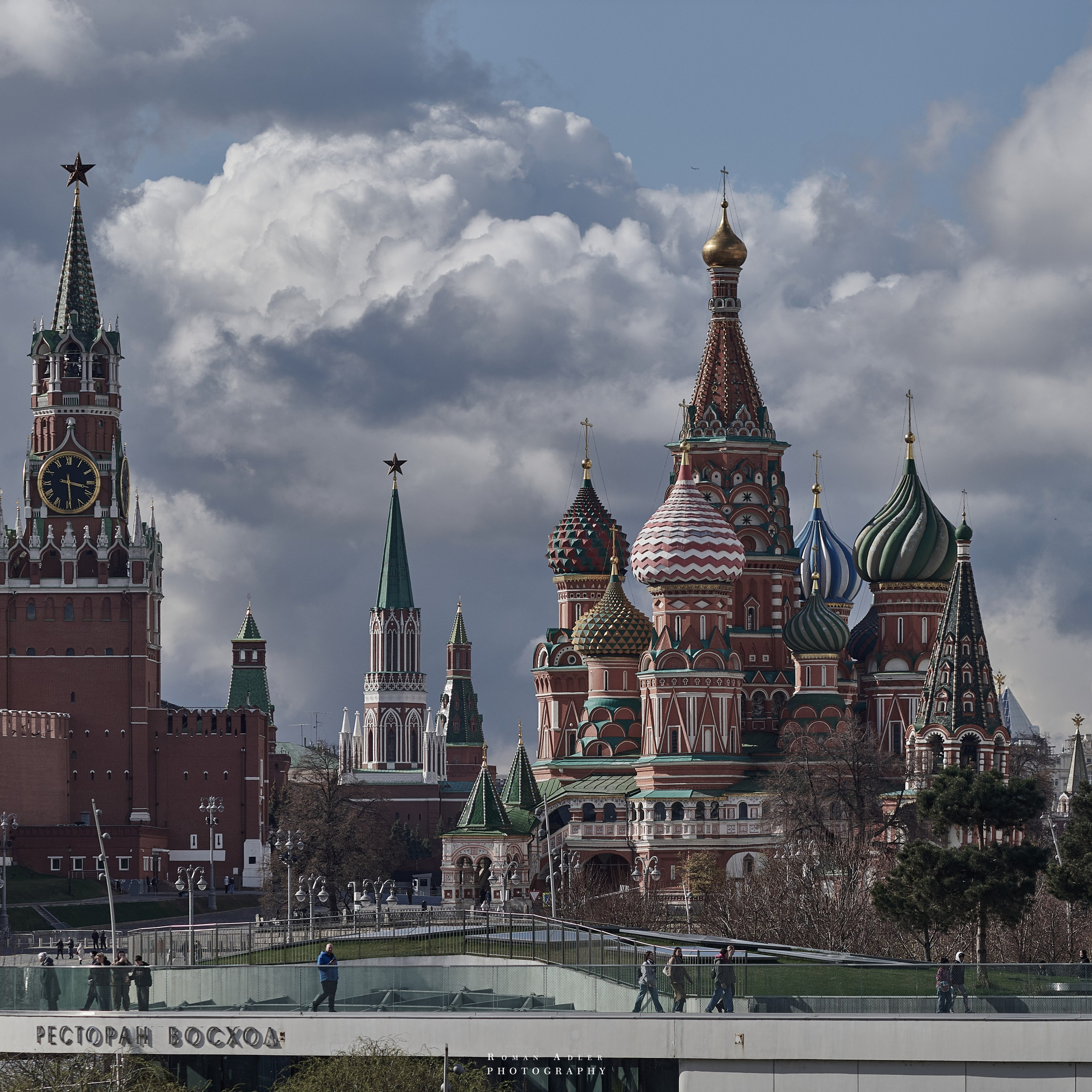
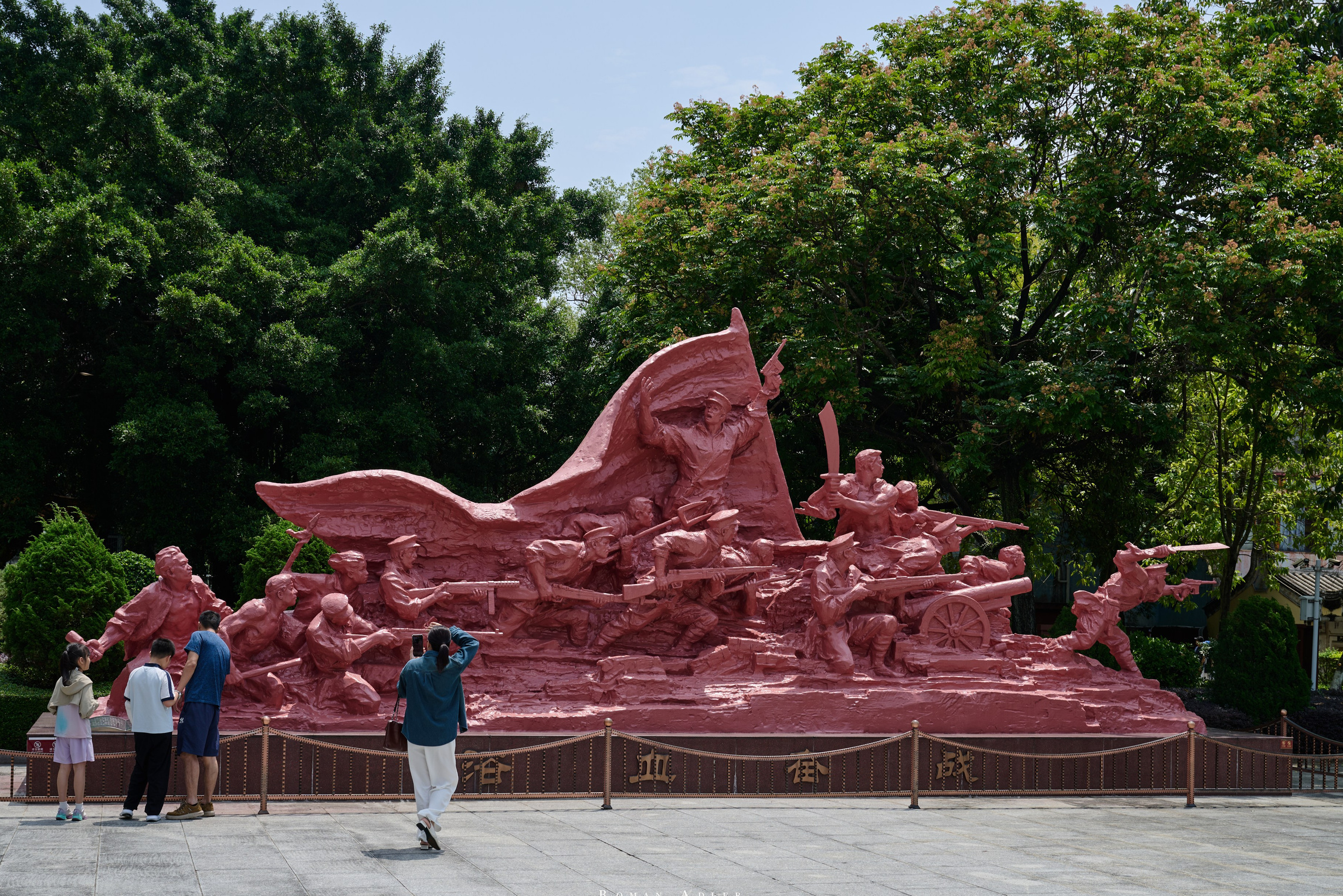
Immediately after the congress, a grand mass rally was held on the open ground adjoining the palace. According to various sources, up to 50,000 people took part — peasants, workers and soldiers from surrounding villages. It was on that very occasion that Peng Pai personally proposed naming this square “Red Square” (红场). He inscribed the two characters “红場” with his own hand on the square’s gateway. That moment marked a turning point: from then on, the world has had two Red Squares — one in Moscow, and the other in China’s Haifeng.
Years of Neglect and Ruin: The Trials of the 20th Century
The revolutionary upsurge proved short‑lived. As early as 1928, Kuomintang troops launched an offensive against “Red” Haifeng. The Soviet government lasted only a few months. Repressions followed, and many participants were executed. Peng Pai himself was arrested and executed in Shanghai in 1929.
· 1928–1949: the complex fell into disrepair. The red paint peeled off, the buildings decayed. The square was used for agricultural and other everyday purposes.
· 1949–1965: after the founding of the PRC, the site regained national attention. In 1956, the state allocated the first funds for its restoration.
· 4 March 1961: a landmark date. The State Council of the PRC included the former site of the Red Palace and Red Square in the first list of national key cultural relics protection units — the highest level of heritage status.
The Tragedy of the “Cultural Revolution” (1966–1976)
During the Cultural Revolution, the complex suffered significant damage, like many historical sites associated with “bourgeois” or “old” elements. Some relics were destroyed, and the buildings were vandalised. However, unlike many other sites, the Red Palace and Red Square were not completely demolished — their symbolic significance to the Chinese people was simply too great.
Revival and Official Museum Status
After the Cultural Revolution ended, systematic restoration work on the complex began in earnest.
· 1975: a second large‑scale restoration was launched. The original historical layout was reinstated, and the walls were repainted.
· 1977: the restoration was completed, and the complex was opened to the public.
· 1978: the Haifeng Red Palace and Red Square Former Site Memorial Museum was formally established. Professional staff were appointed, and scholarly work on the collections was initiated.
1986: The Monument to Peng Pai
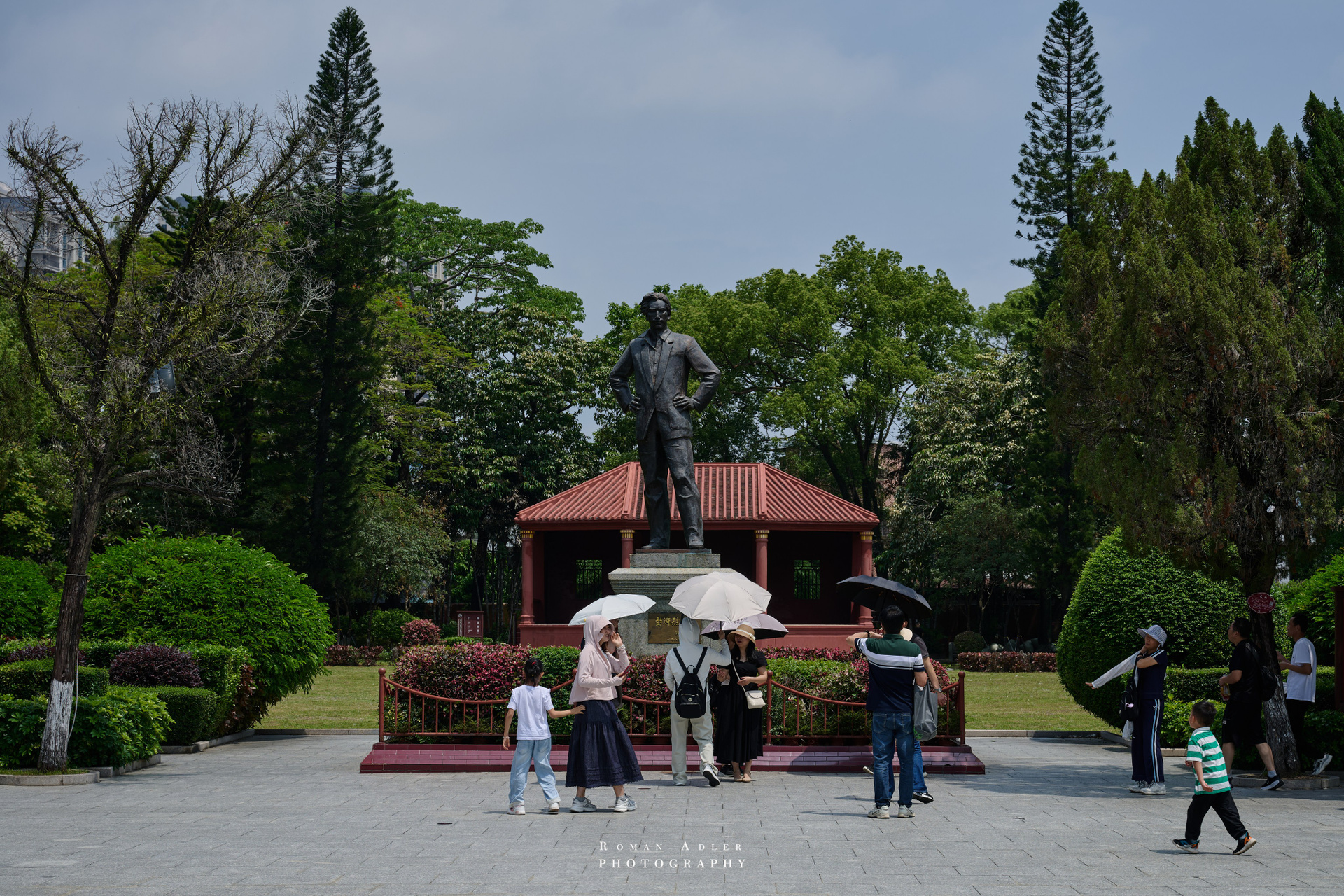
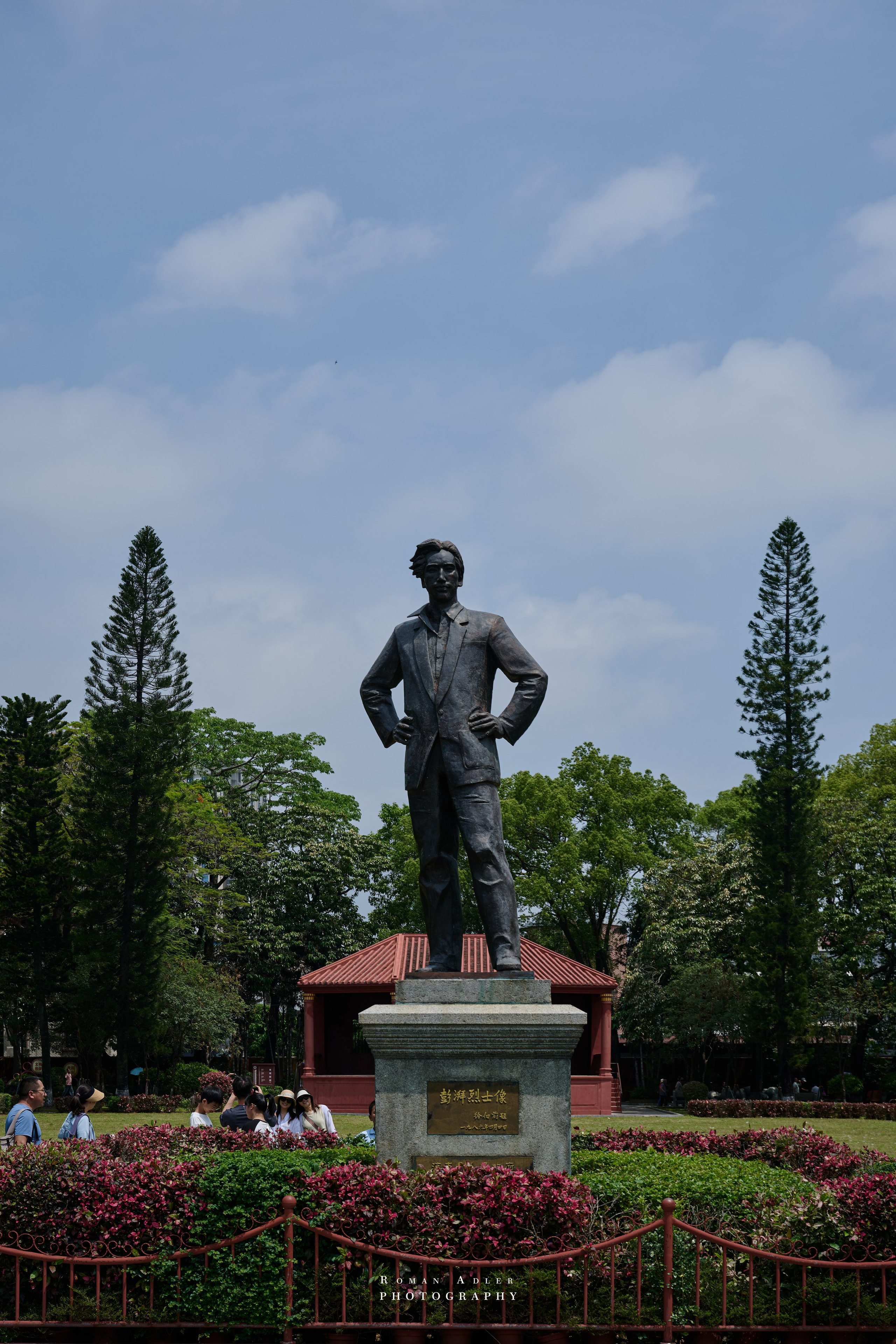
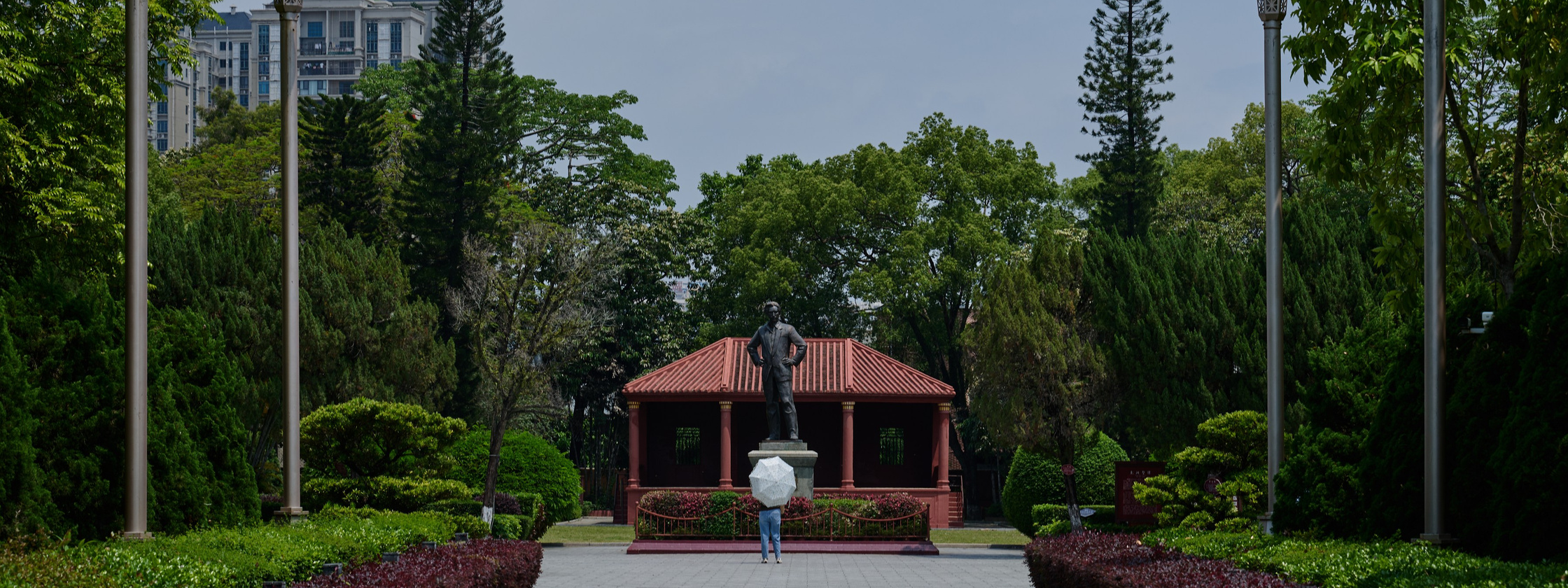
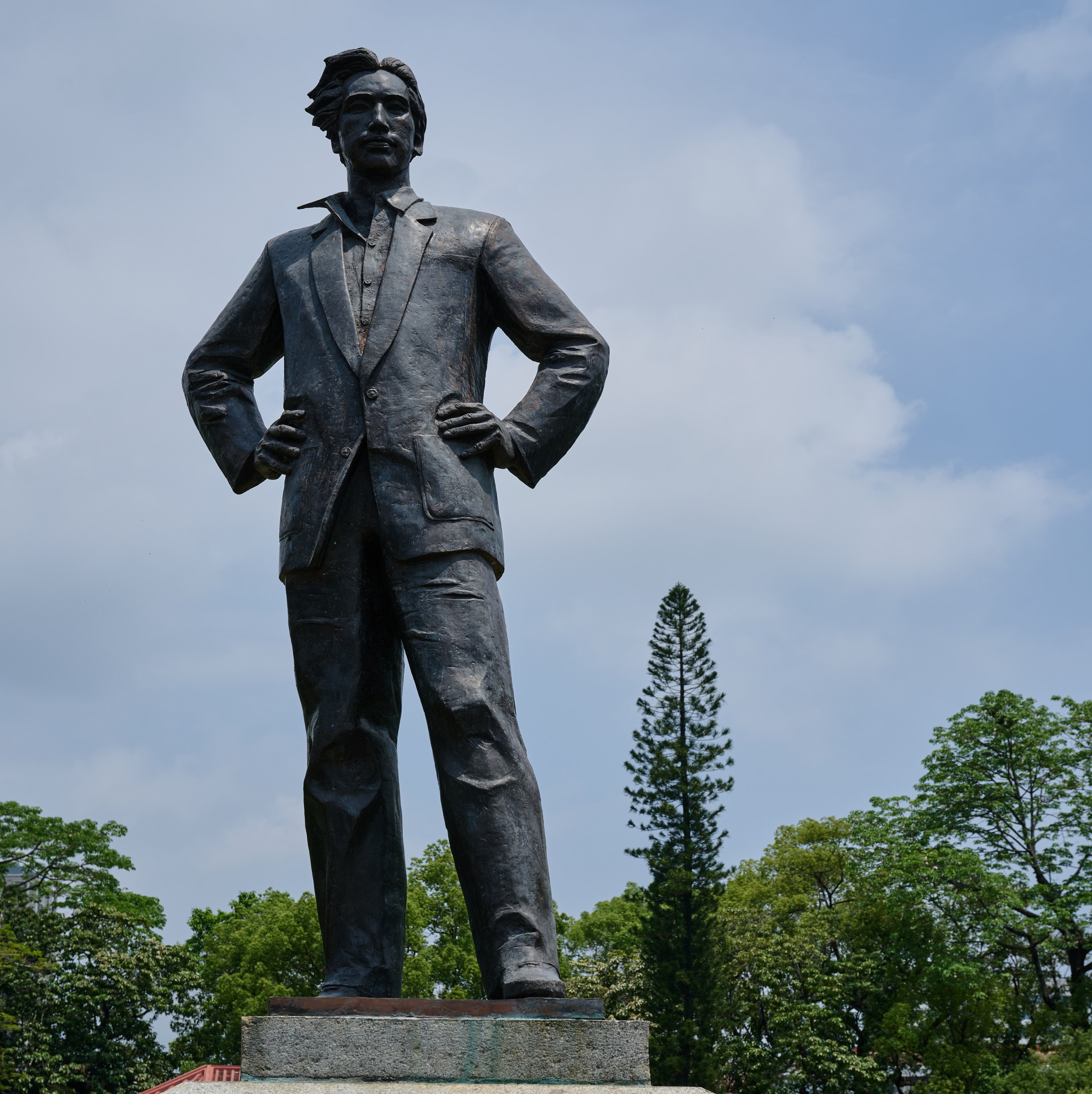
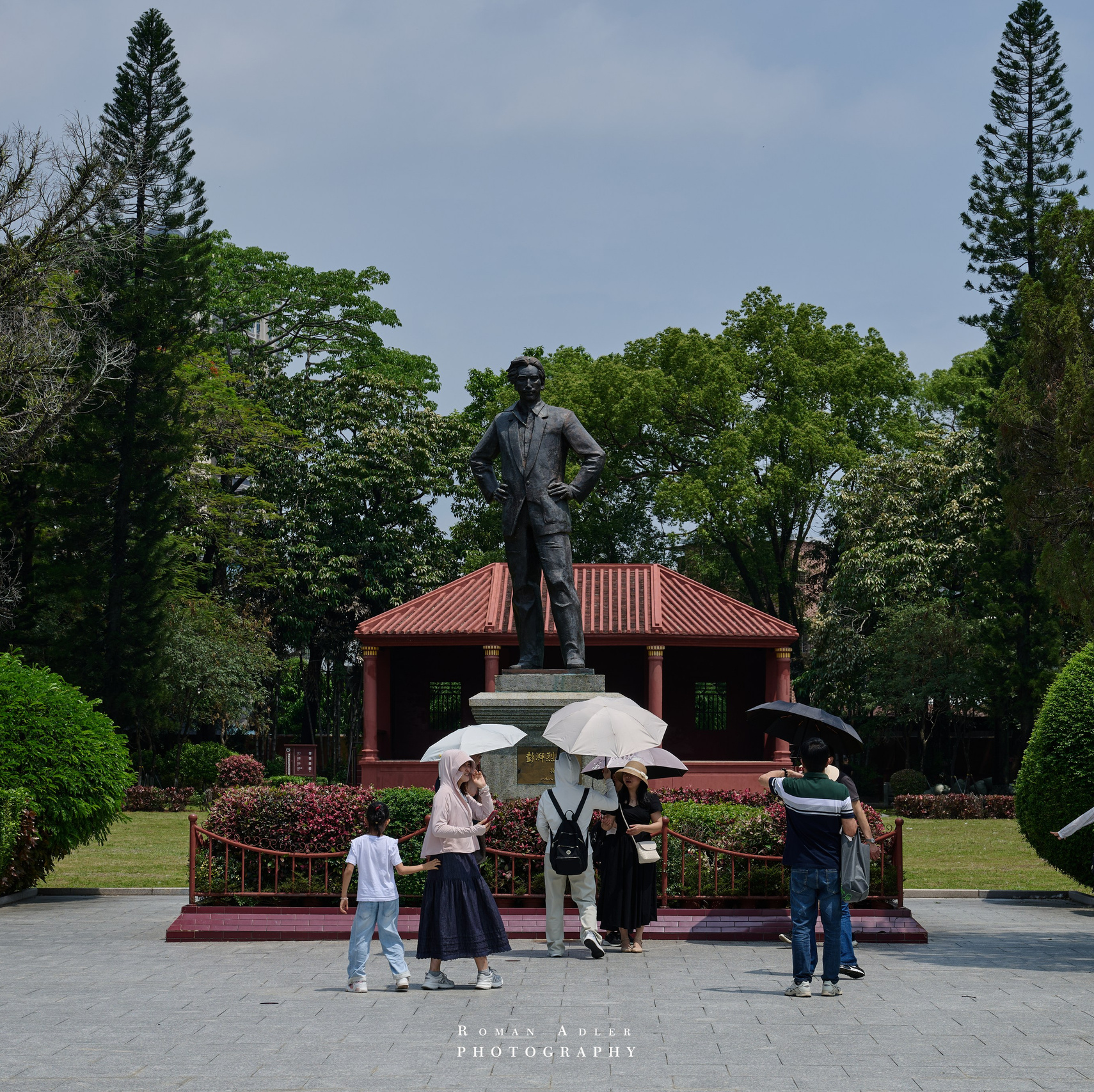
In the year marking the 90th anniversary of Peng Pai’s birth, a bronze memorial statue of him was erected on Red Square. The sculptor was the renowned Chinese artist Pan He.
· Height of the statue: 5.5 metres
· Weight: approximately 2 tonnes
· The granite pedestal bears an inscription by Marshal Xu Xiangqian (a participant in the historic events): “Eternal glory to Comrade Peng Pai”
From that day on, the statue has become the main focal point for visitors. Every year on 18 November (the anniversary of the founding of the Soviet government), solemn commemorative ceremonies are held here.
The Museum Today: Figures, Exhibitions and Status
Today, the memorial complex is not only a historical site but also a modern museum of world‑class standard. It holds the title of “National Base for Patriotic Education” (awarded in 2005) and is a candidate for the highest tourism rating — 5A level.
Size and Structure
· Total area of the complex: approximately 2.4 hectares
· Floor area of the Red Palace: 862 m²
· Area of the Red Square: 22,000 m²
Museum Collections
· Total number of items in the collections: 684 units (sets)
· Of which first‑grade cultural relics (highest category): 54 items (sets)
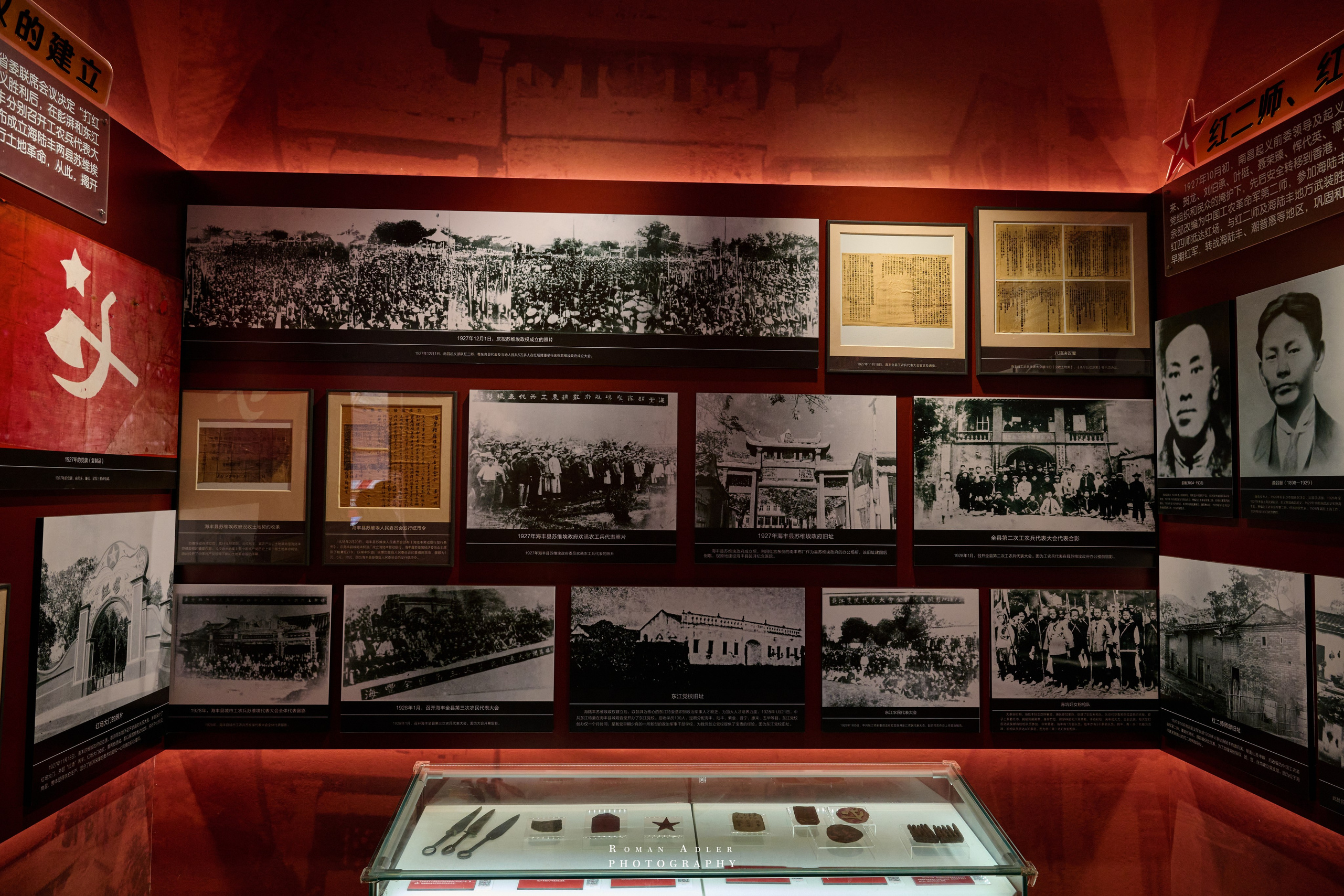
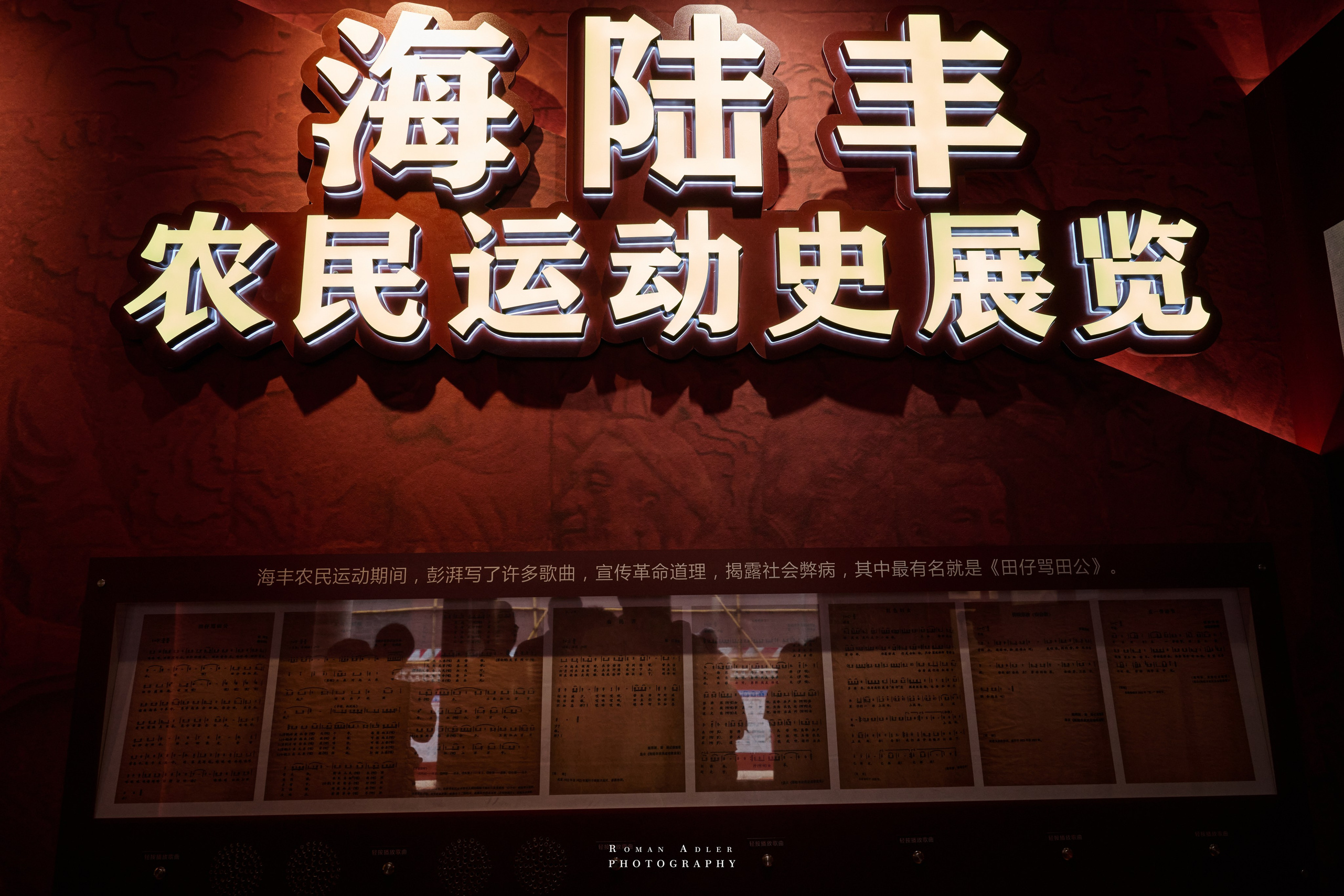

What Can Be Seen in the Exhibition?
1. A recreated meeting hall of 1927: long tables, wooden benches, red flags, slogans. The atmosphere immerses you in that very day.
2. Personal belongings of Peng Pai: glasses, a pen, a field bag, manuscripts.
3. Weapons and armaments of the era: rifles, cold‑steel weapons used by peasant detachments, hand grenades.
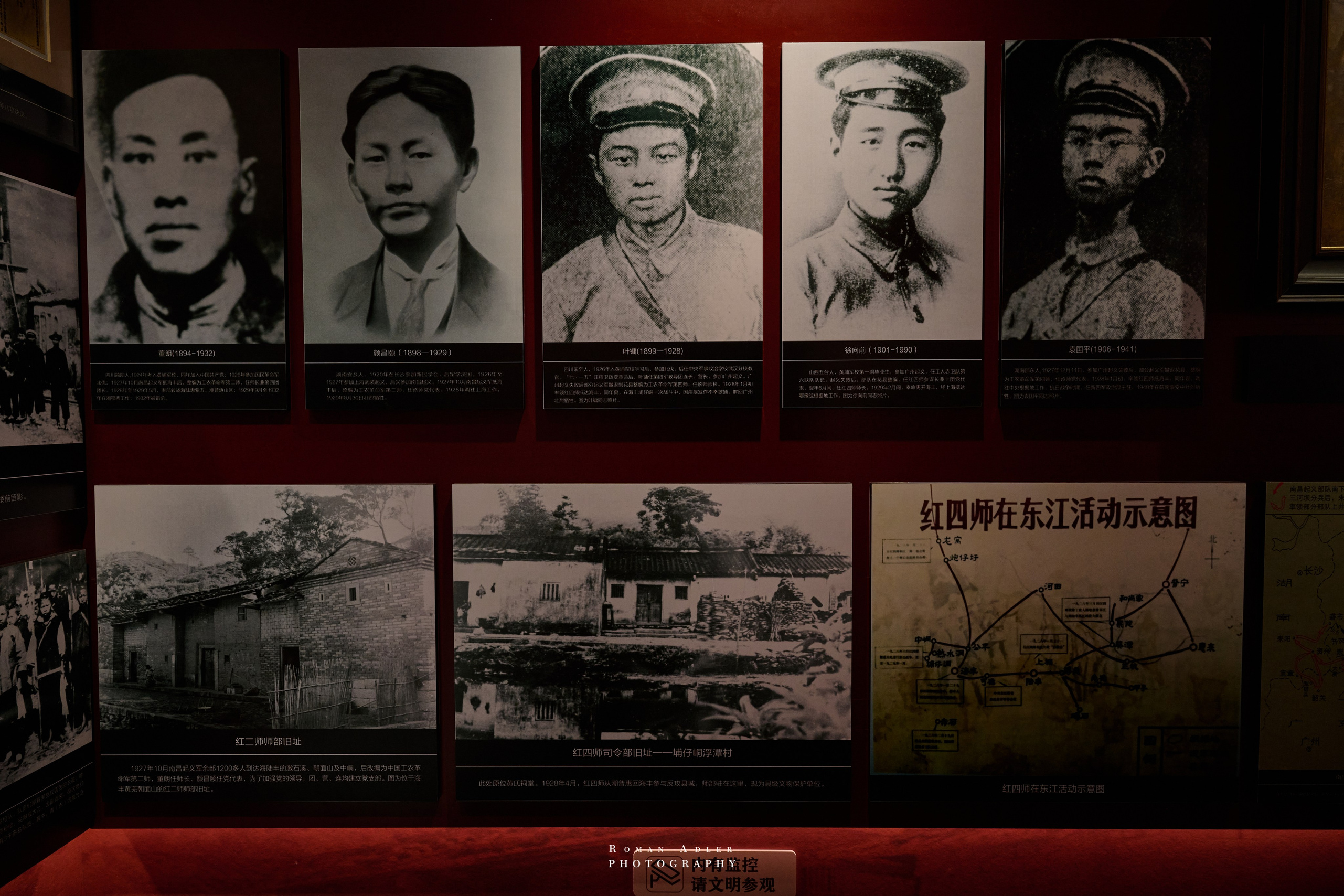
4. Historical documents and photographs: original newspapers of the time, decrees of the Soviet government, delegate lists.
5. Rare posters and leaflets: propaganda materials from 1927–1928, many of which are unique.
Modern Technology
The museum is actively adopting digital solutions:
· Interactive screens featuring a detailed timeline of events.
· VR headsets that allow visitors to “be present” at the historic 1927 congress.
· Audio guides in multiple languages (Chinese, English, and Russian descriptions available via QR codes).
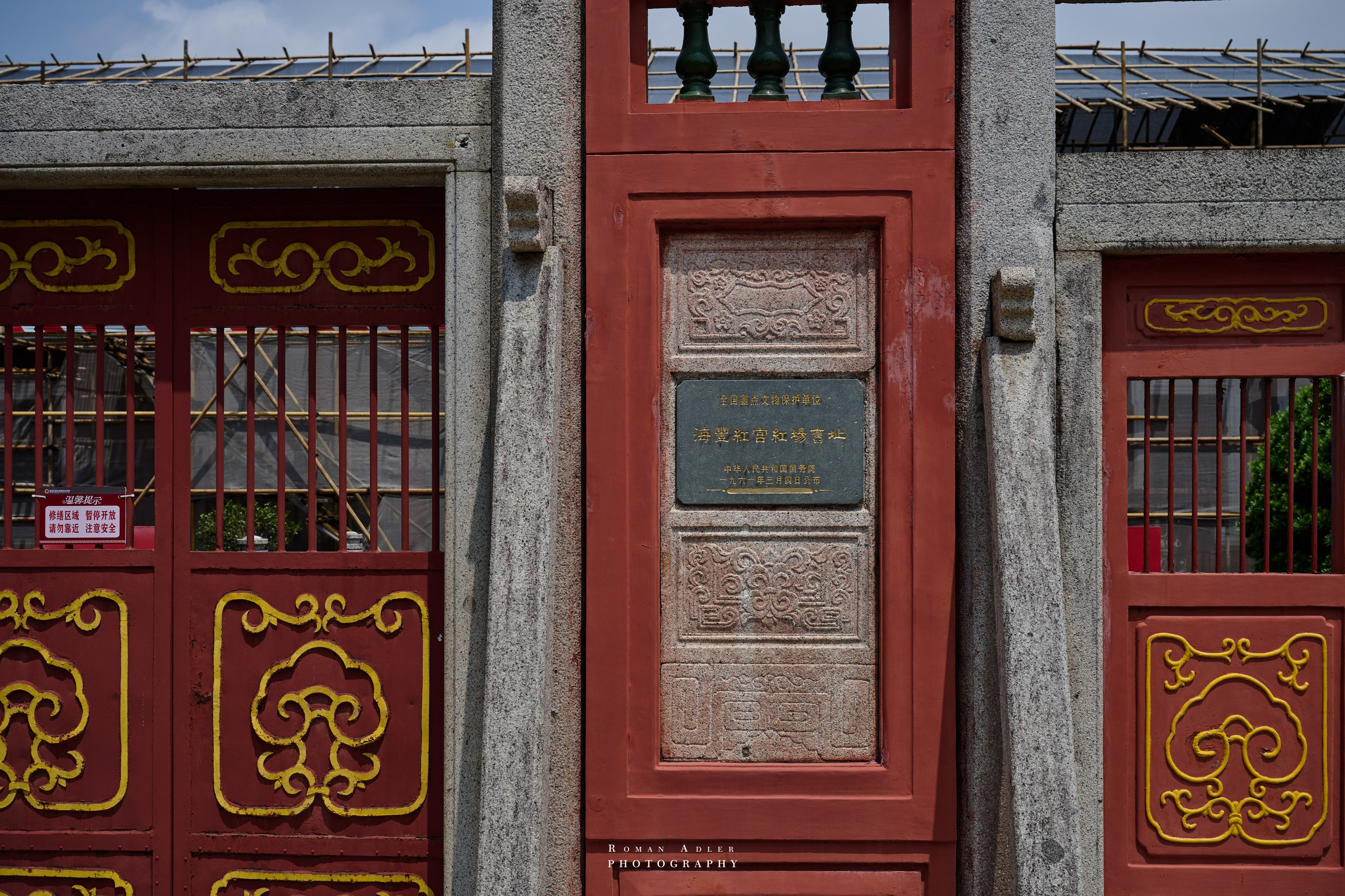
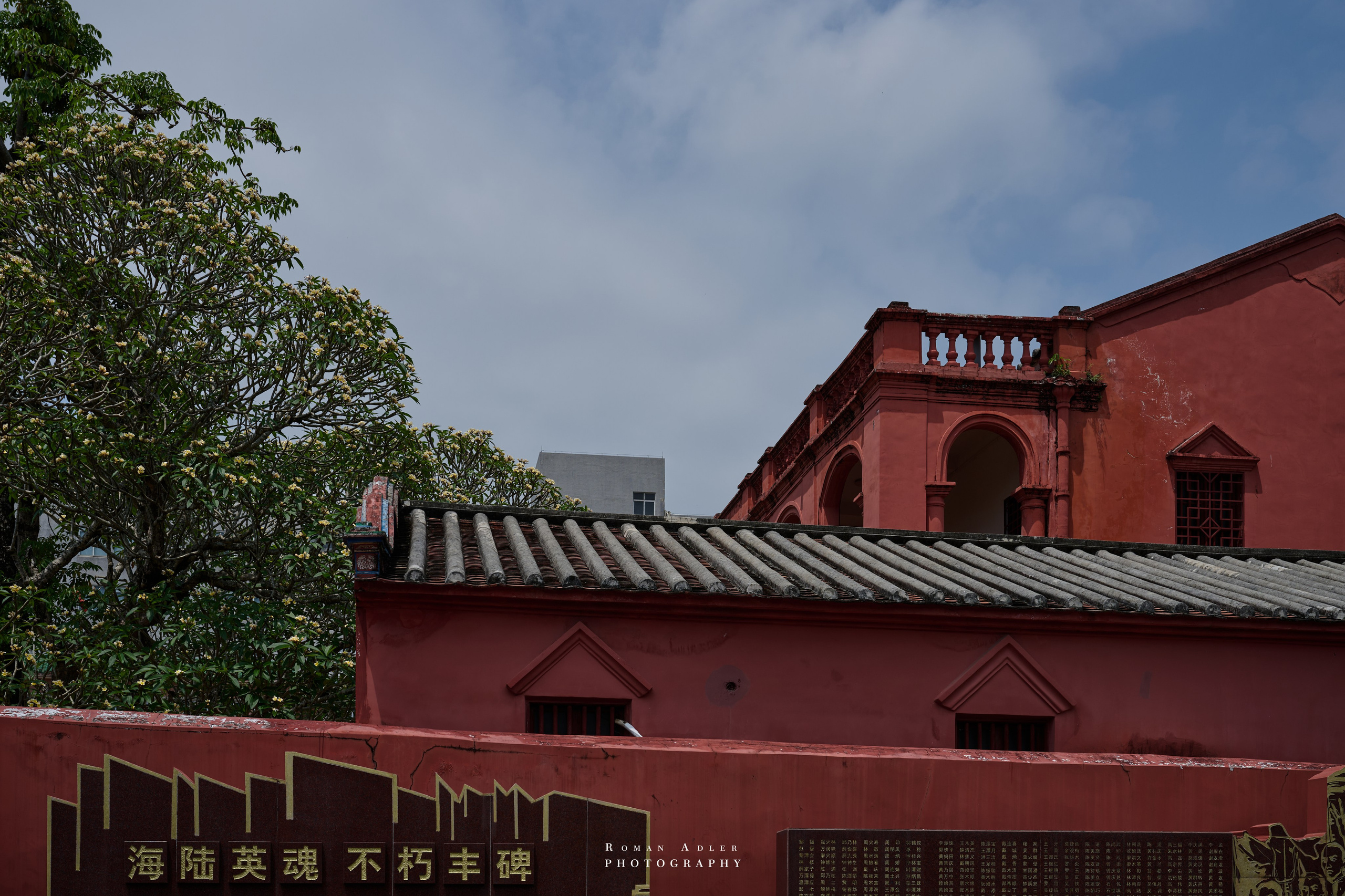
What’s New in 2026?
In 2026, the museum announced the launch of a new phase of large‑scale restoration and modernisation. Plans include:
· A complete restoration of the Red Palace roof using authentic traditional techniques;
· Expansion of exhibition space underground (the “Red Underground” project);
· Upgrading of multimedia equipment.
Thus, the museum continues to live and evolve, remaining a living testament to history.
Practical Information for Visitors
If you decide to visit this unique site, here’s what you need to know:
· Opening hours: daily from 8:30 AM to 5:30 PM (ticket office closes at 5:00 PM). No weekly day off, but occasional technical closure days may occur — it is best to check on site.
· Admission: free (valid ID required; foreign visitors must present their passport).
· Address: Haifeng County, Shanwei City, Guangdong Province, China. Landmark: Hongchang (Red) Square.
· How to get there:
· By train: to Shanwei Railway Station (high‑speed trains from Guangzhou and Shenzhen). From the station, take a taxi or bus to Haifeng County (approx. 30 minutes).
· By bus: from Guangzhou (Tianhe Coach Terminal) direct buses to Haifeng (≈ 3 hours).
· Best time to visit: October to December, when Guangdong has dry weather and the summer heat has subsided.
Conclusion
The Haifeng Red Palace and Red Square Memorial Museum is far more than a mere collection of artefacts. It is a place of spiritual power, where every stone is steeped in the spirit of revolution. Having journeyed from a medieval temple through devastation and rebirth, this complex today serves as a bridge between the past and the present. For anyone interested in China’s history, the revolutionary movement, or simply wishing to see one of the world’s two Red Squares, a trip to Haifeng will be an unforgettable journey back through the centuries.
Additional Facts
In 1995, 1997 and 1999, the Haifeng Red Palace and Red Square Memorial Museum was awarded the title of “Civilised Unit of Guangdong Province” three times in a row by the Guangdong Provincial Party Committee and Provincial Government. In November 2017, the museum was conferred the honorary title of “Fifth National Civilised Unit” by the Central Steering Committee for the Construction of Spiritual Civilisation.