Chaozhou Inlaid Porcelain Museum
Roofs that tell stories, and a master who devoted his life to art
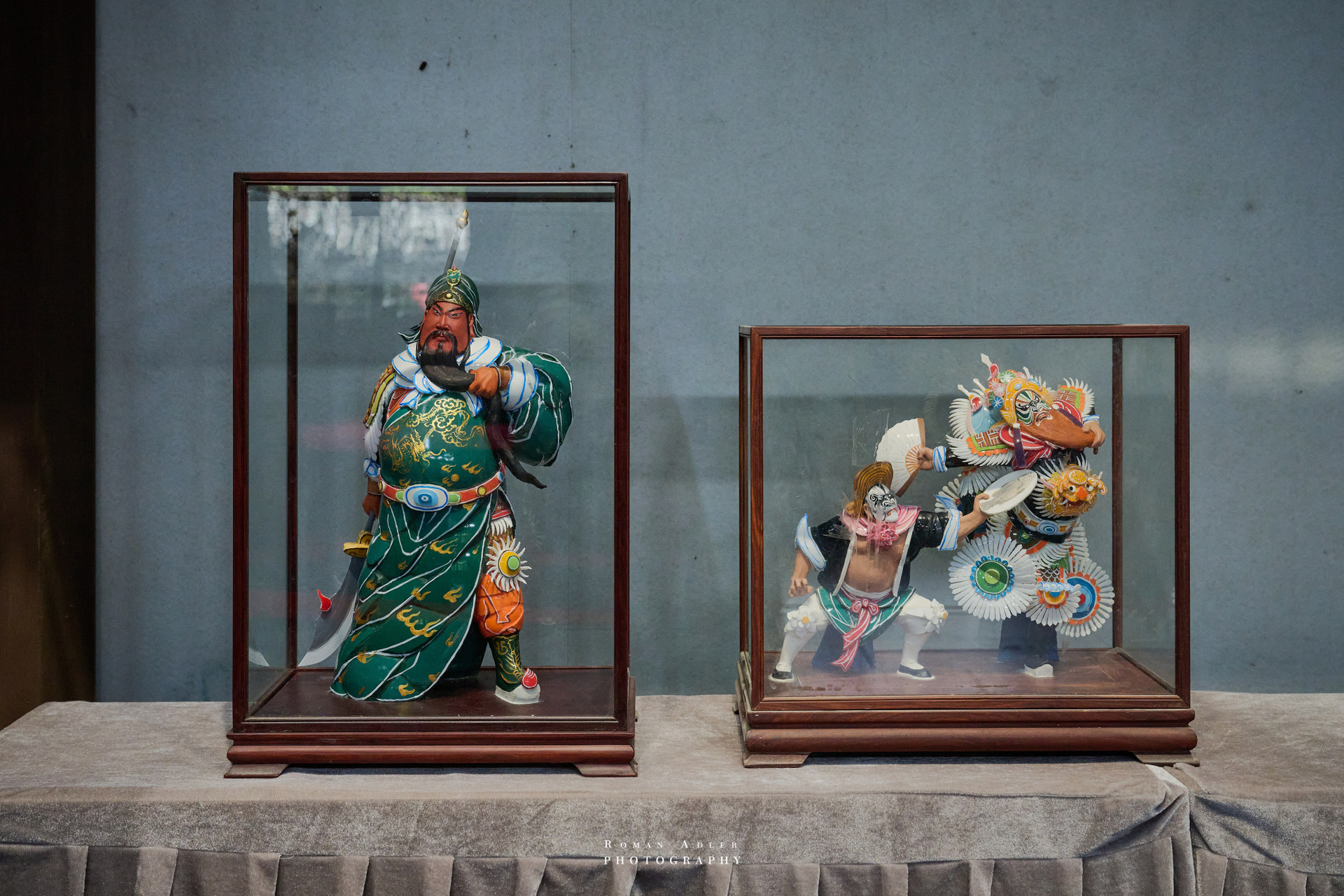
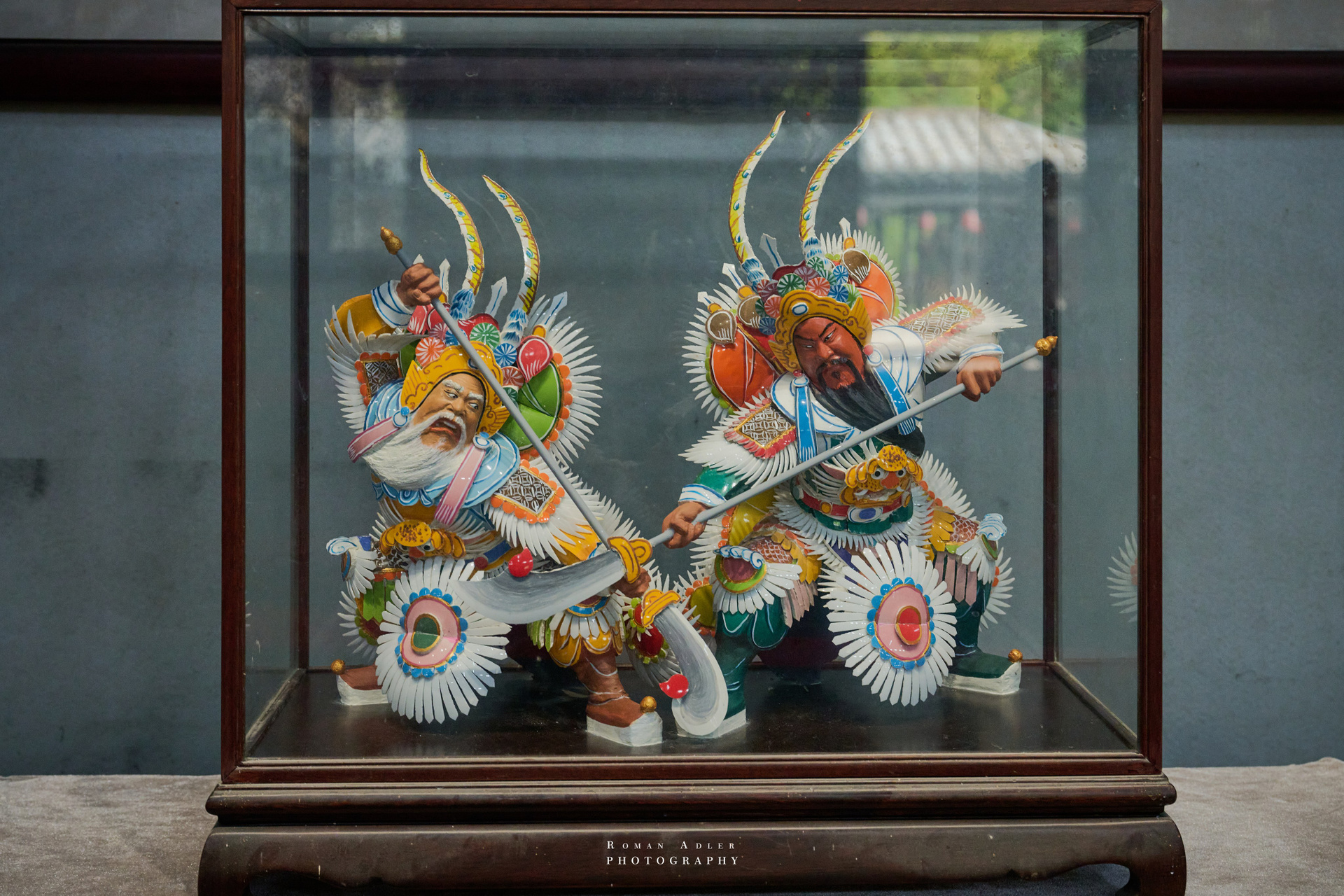
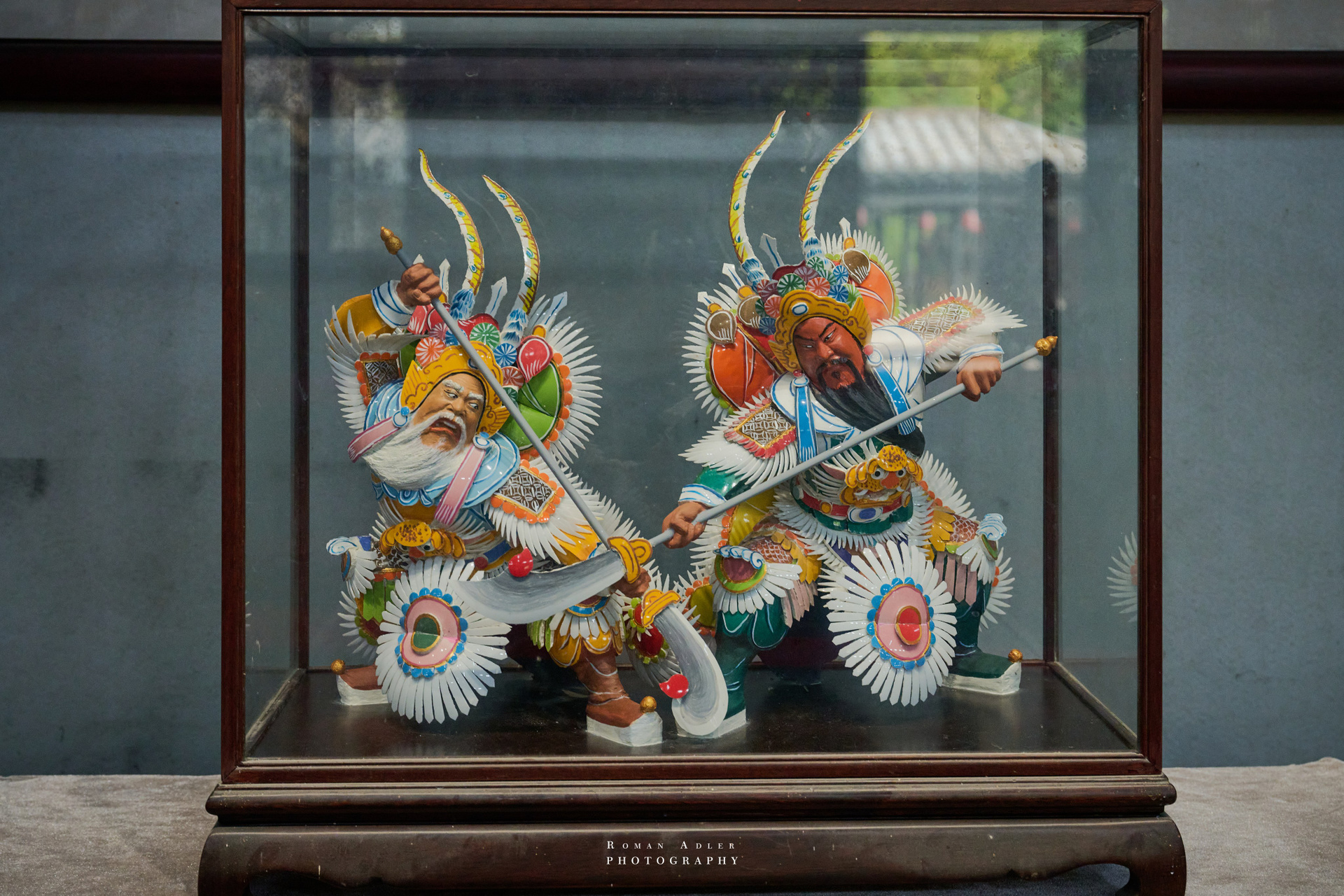
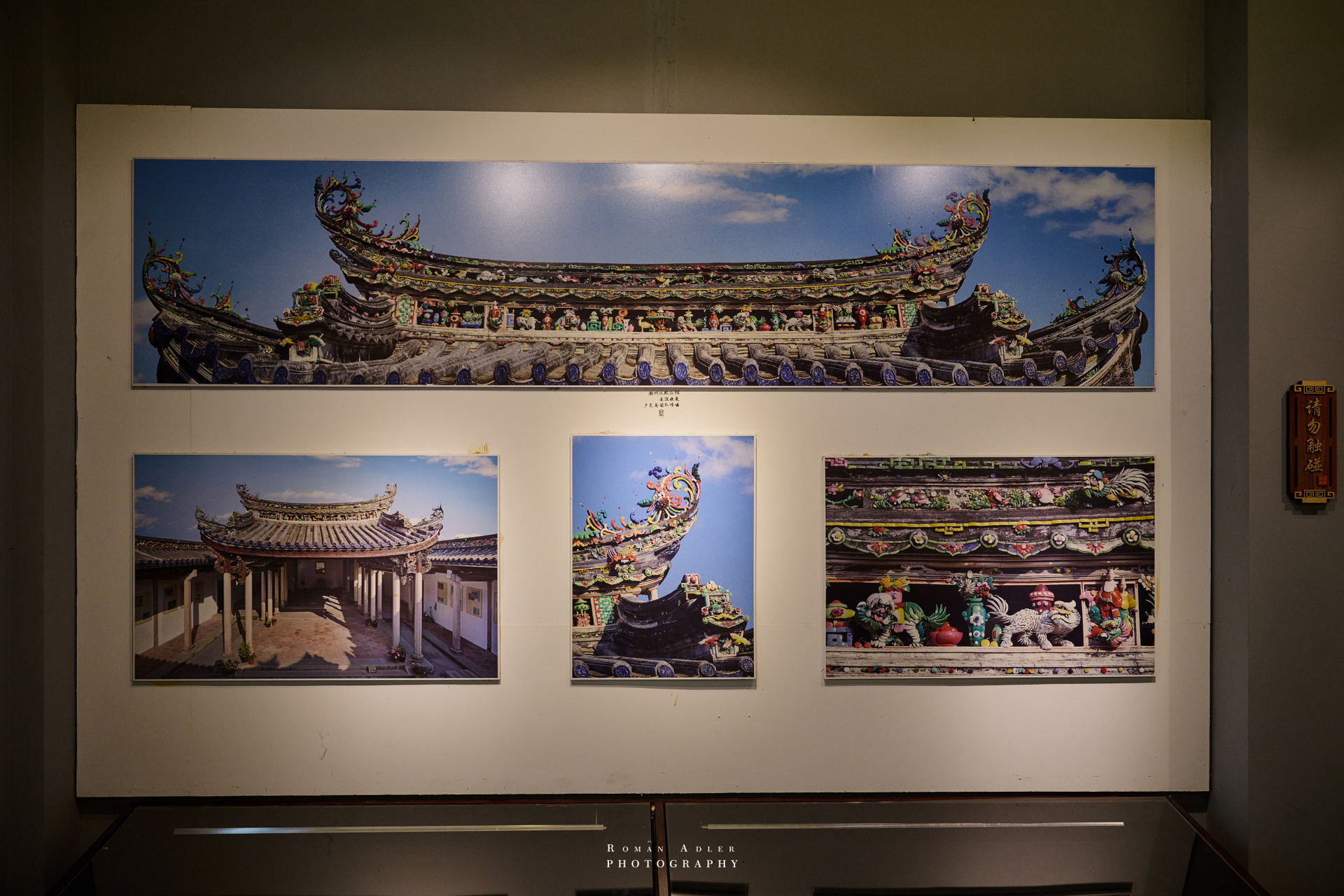
In the Chaoshan region (eastern Guangdong Province), there is a saying among the locals: “On the corner of the roof — a whole theater.” And indeed, if you look up at an old temple, an ancestral hall, or a wealthy mansion, you will see real scenes: heroic battles, lovers' trysts, soaring dragons and phoenixes. All of this is neither molded plaster nor painted murals — it is inlaid porcelain (嵌瓷, qianci), a unique decorative technique that is more than four hundred years old. And there is a place where this “rooftop art” can be examined in detail, touched with your own hands, and its soul understood. This is the Chaozhou Inlaid Porcelain Museum — the only museum in China dedicated to this craft.
🏛️ What is this museum and where is it located?
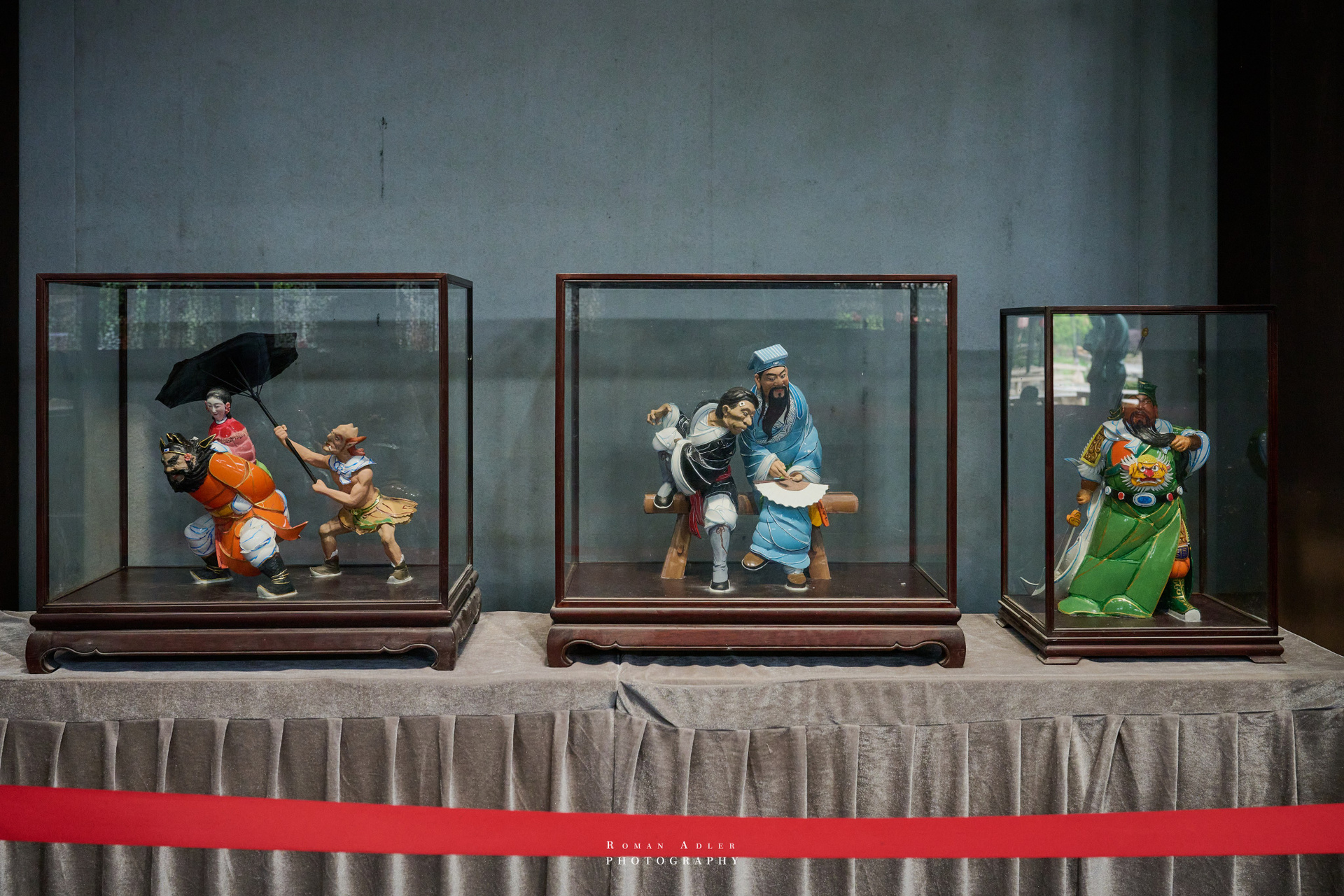
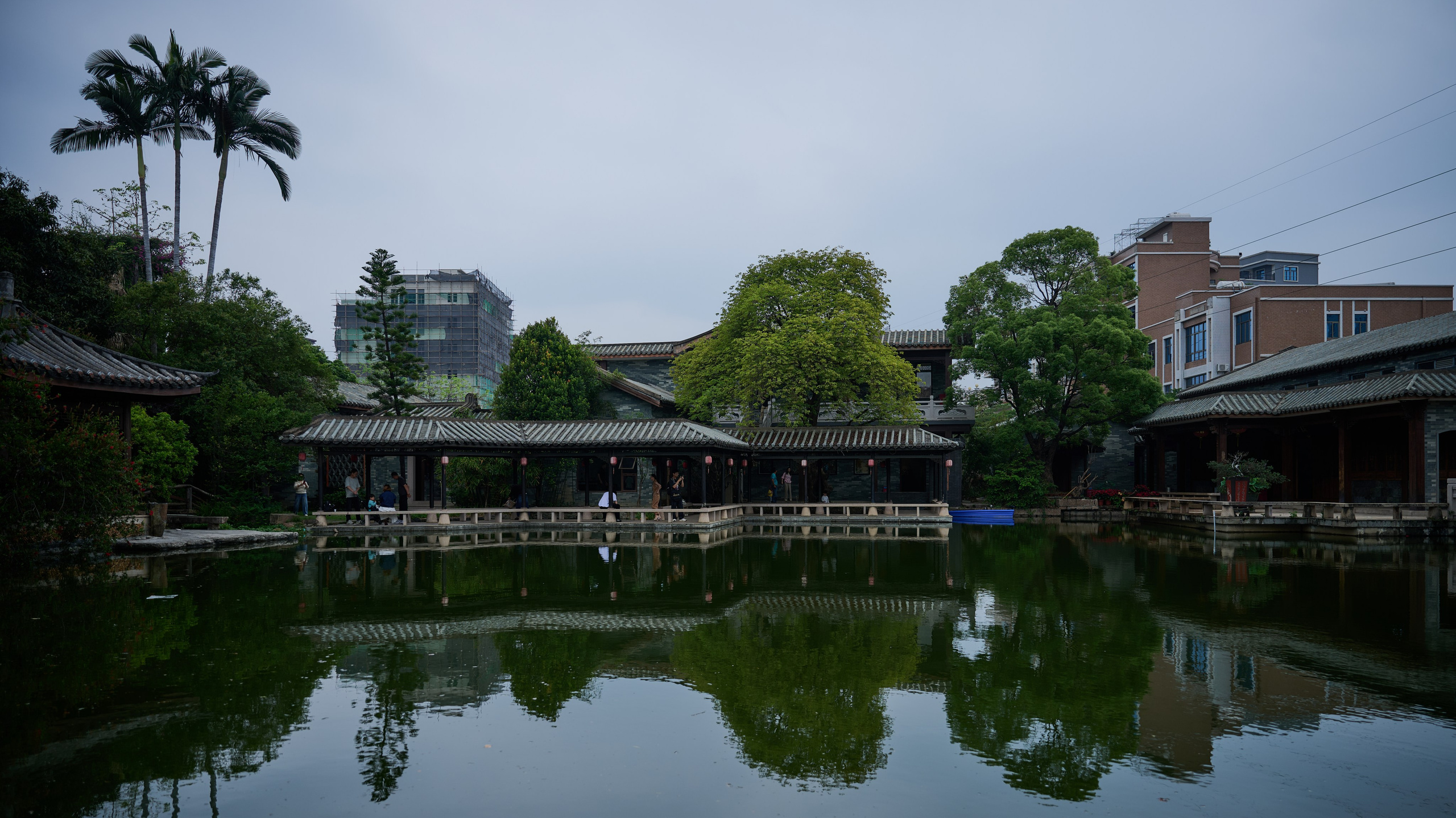
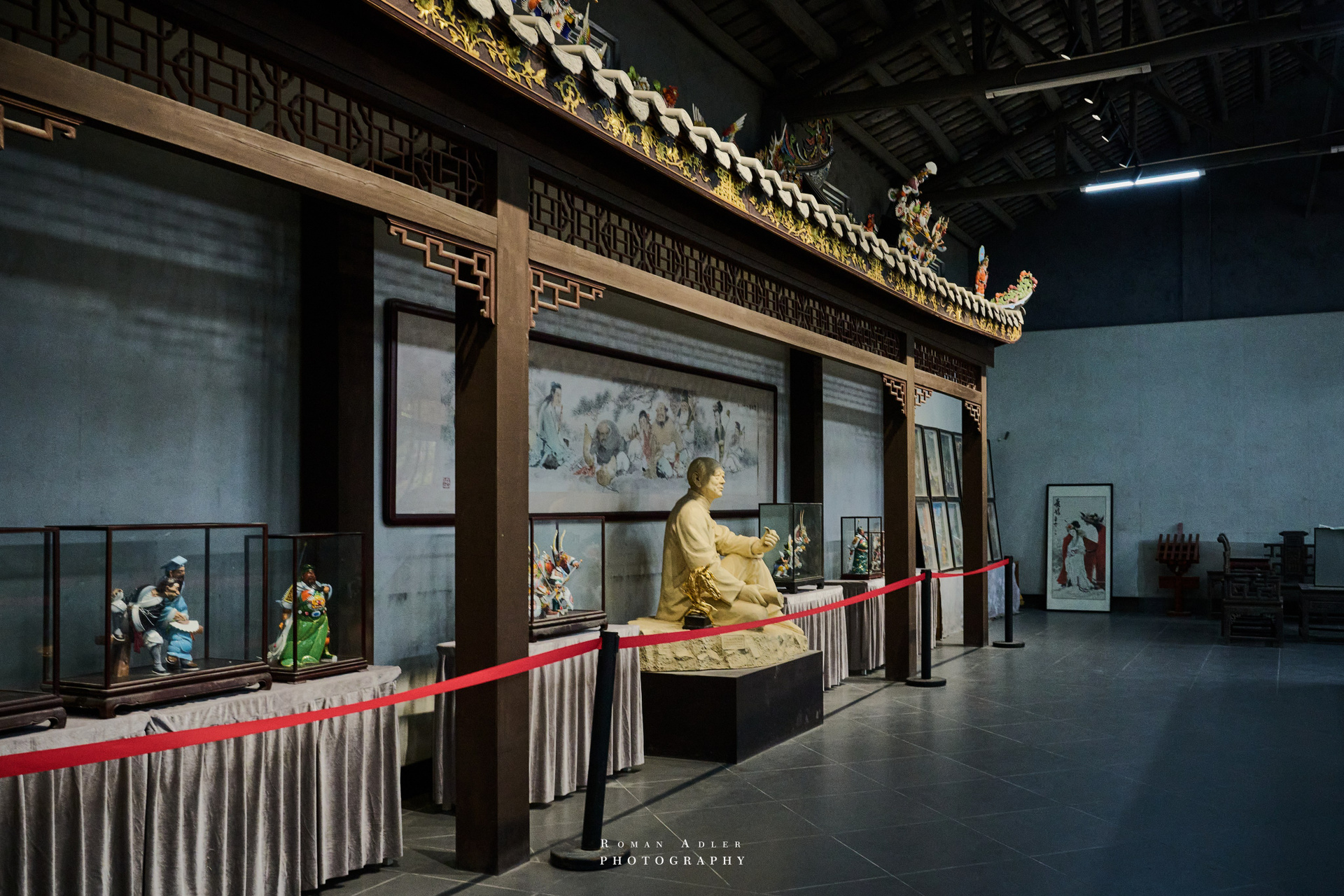
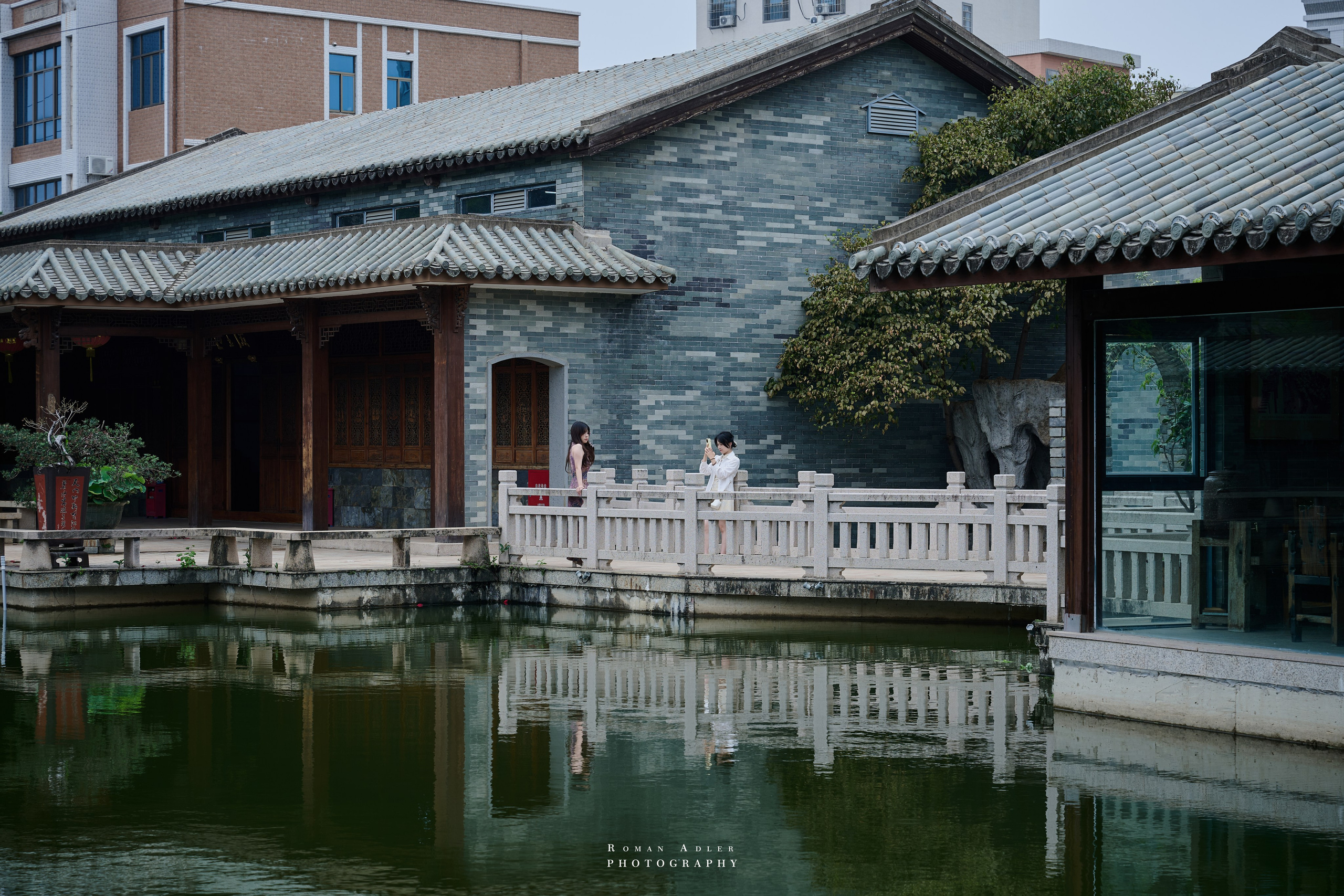
The museum is located in Humei Village, Jinshi Town, Chao’an District, Chaozhou City. It was founded in 2013 on the basis of a private estate called “Jinhuiyuan” and covers an area of about 4,600 square meters. It is not a state-run institution, but a personal project of a master craftsman who turned his home into an open cultural space. Inside, there are four exhibition halls, a history room, a workshop, and a cozy inner courtyard in the style of Jiangnan gardens. The collection includes 159 exhibits, and here you can also see how new works are created.
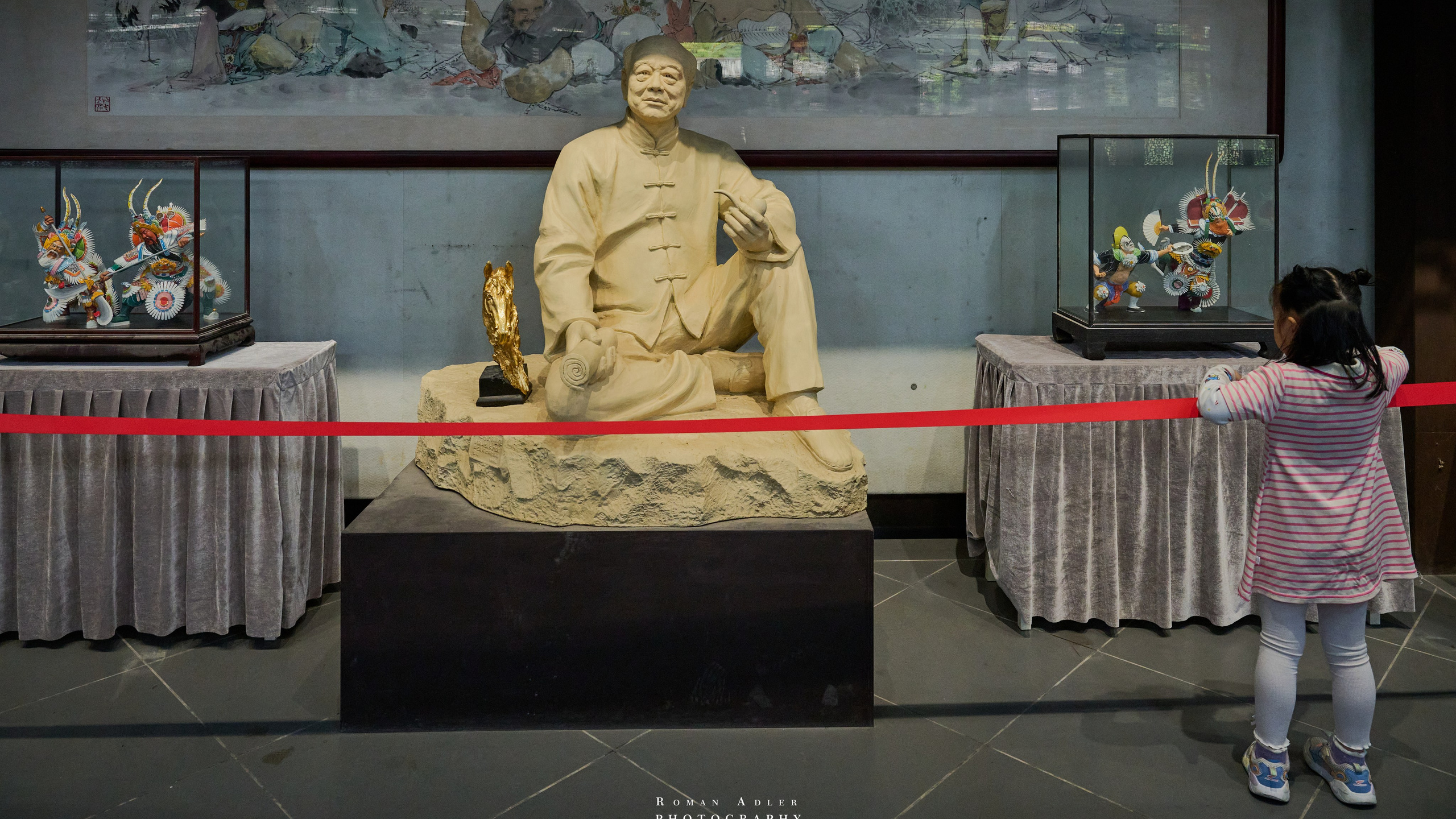
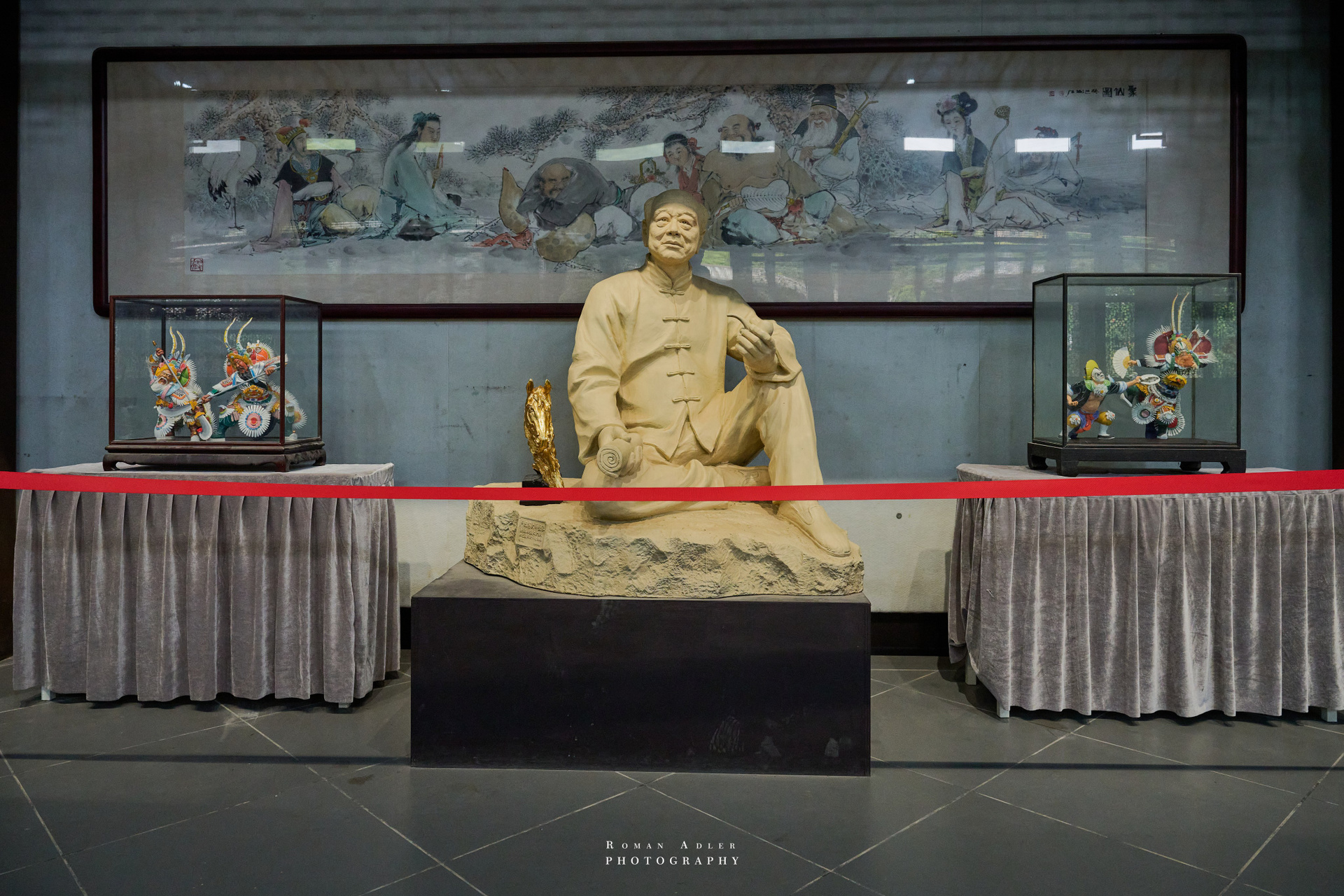
👨🎨 The founder — a living legend
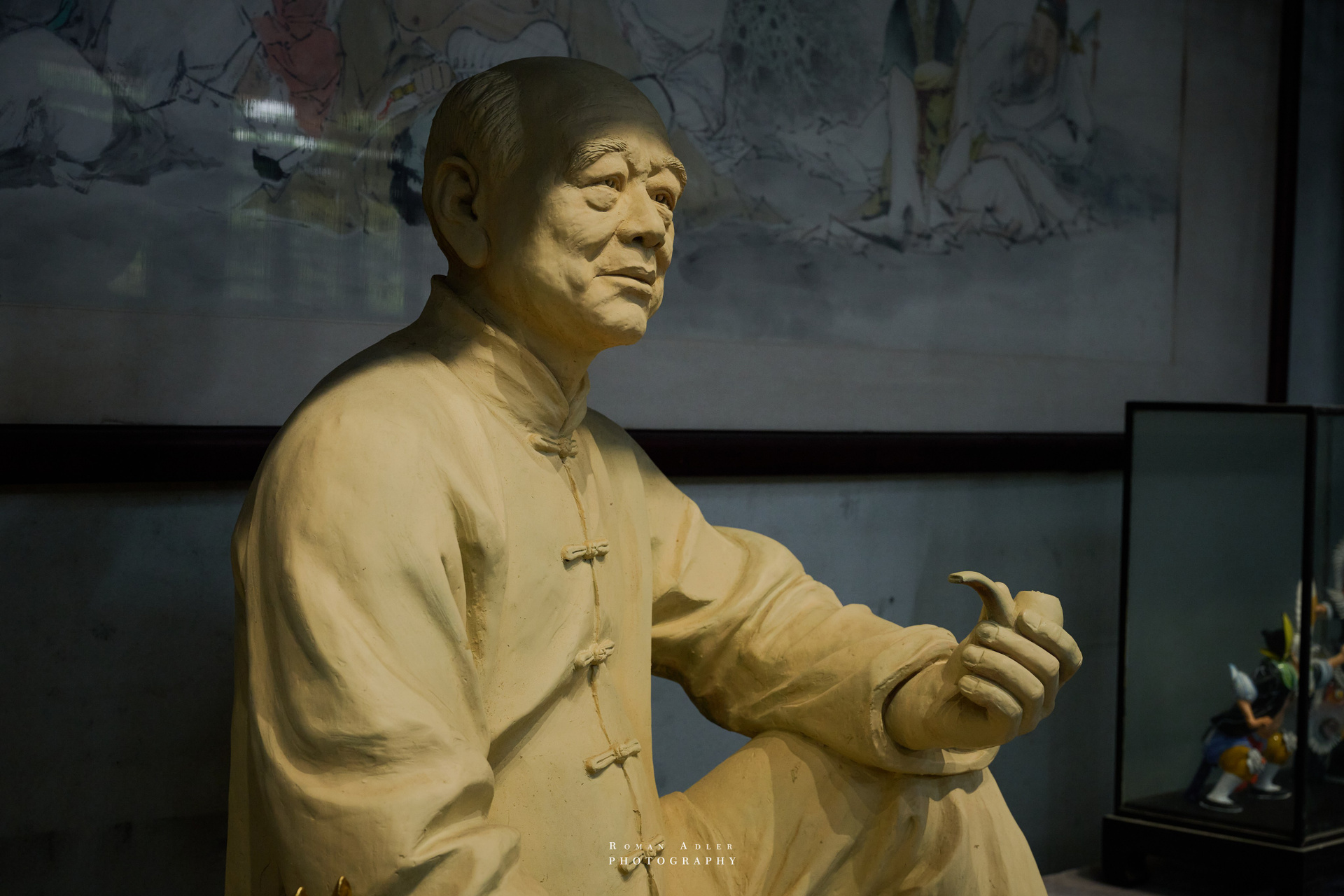
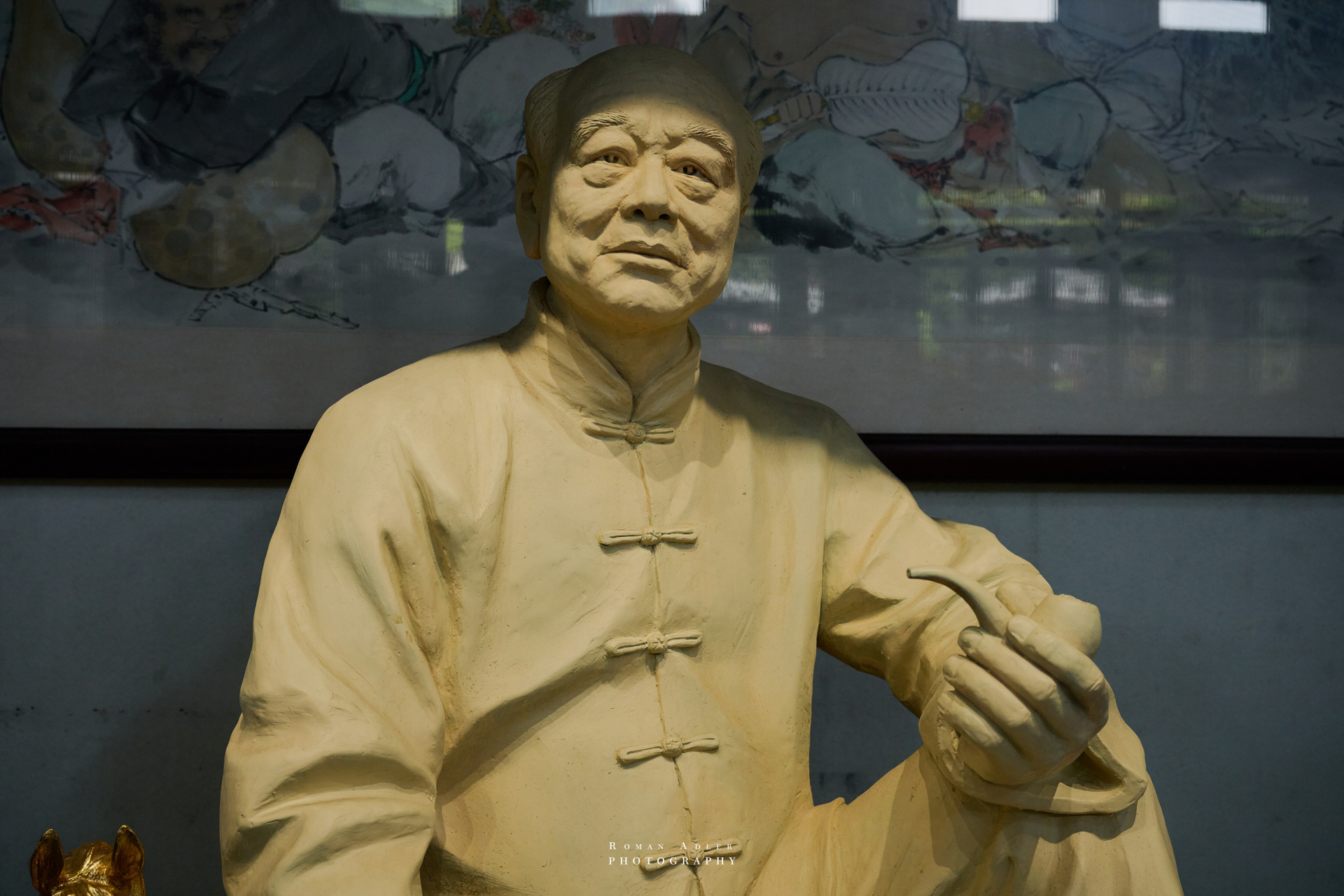
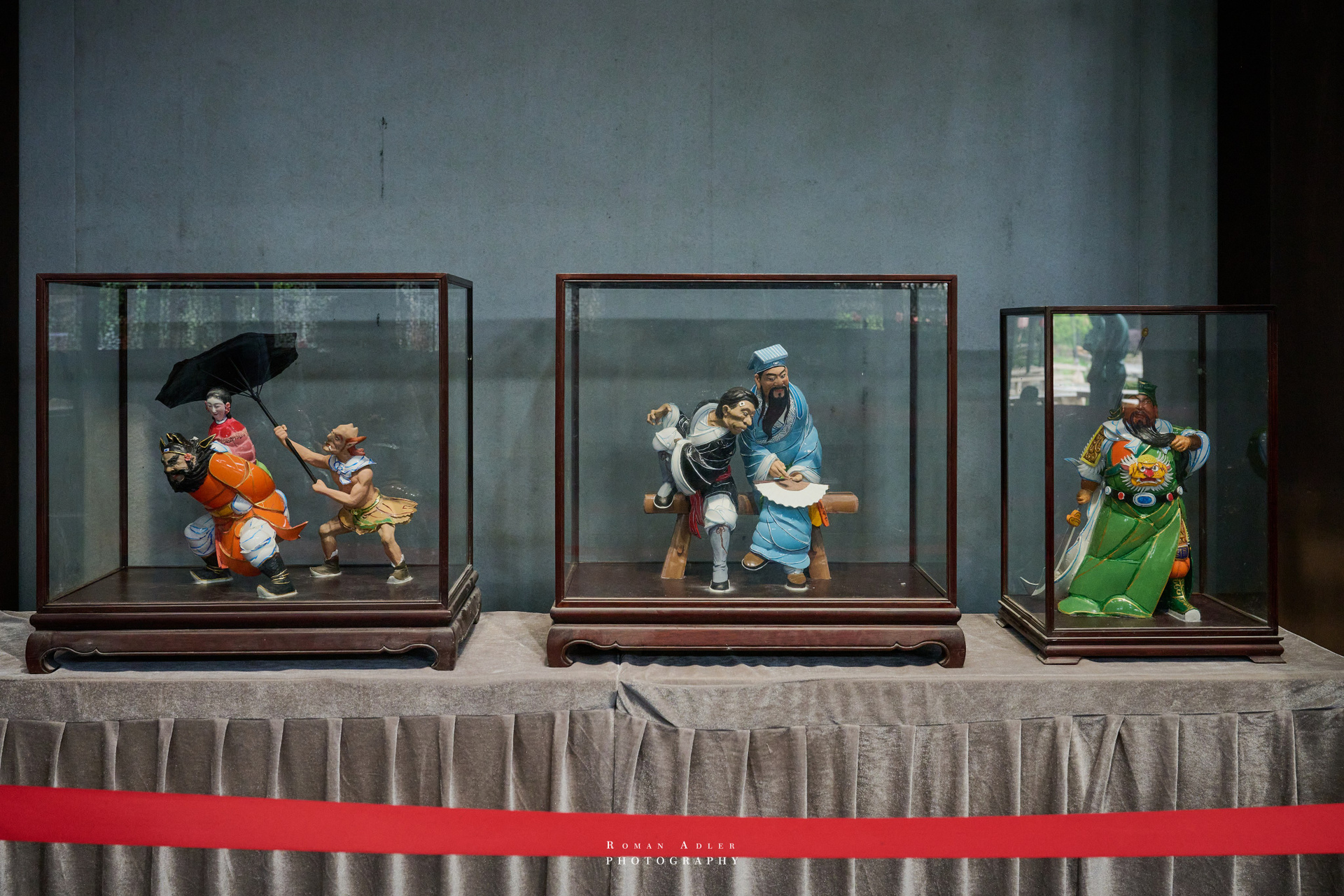
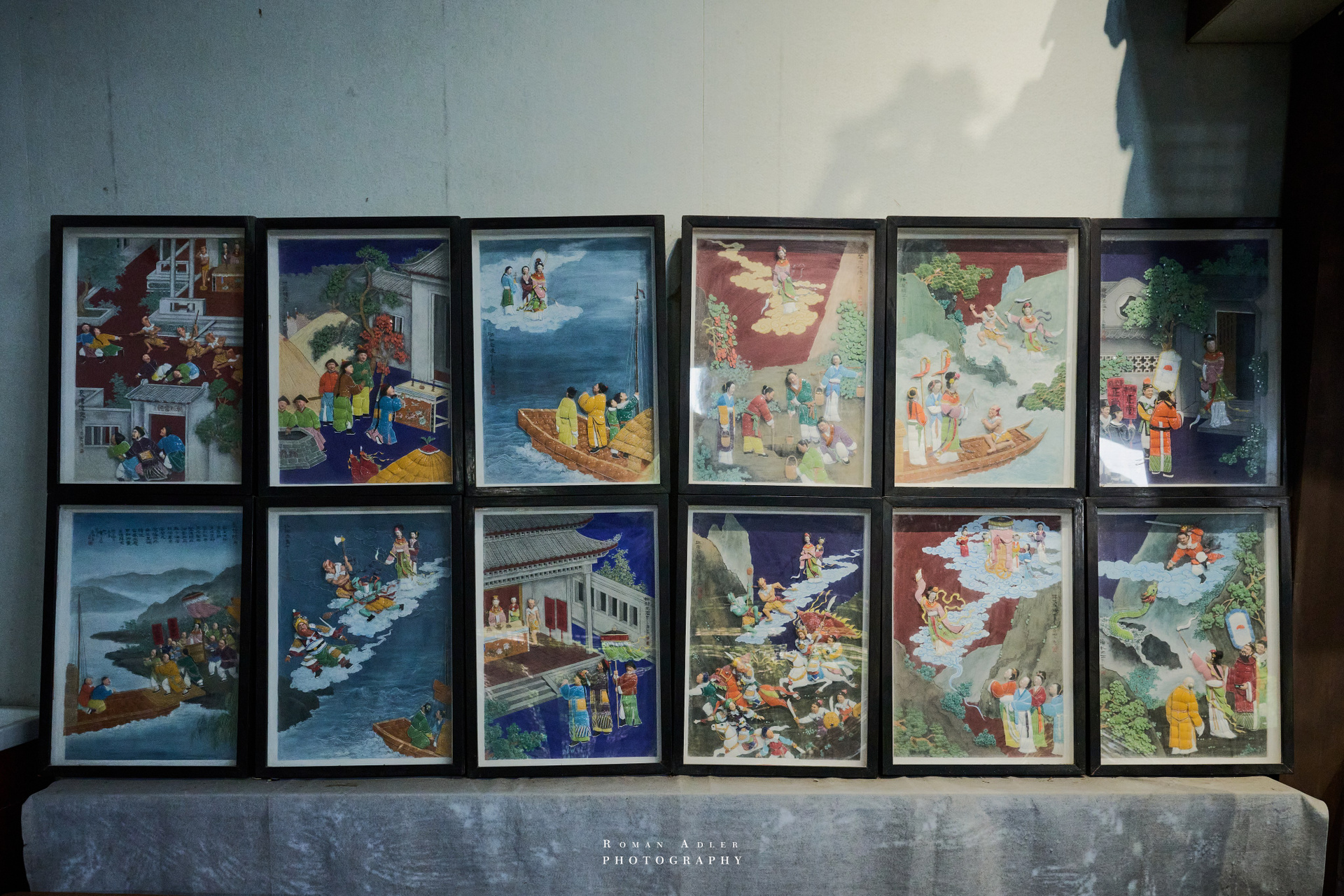
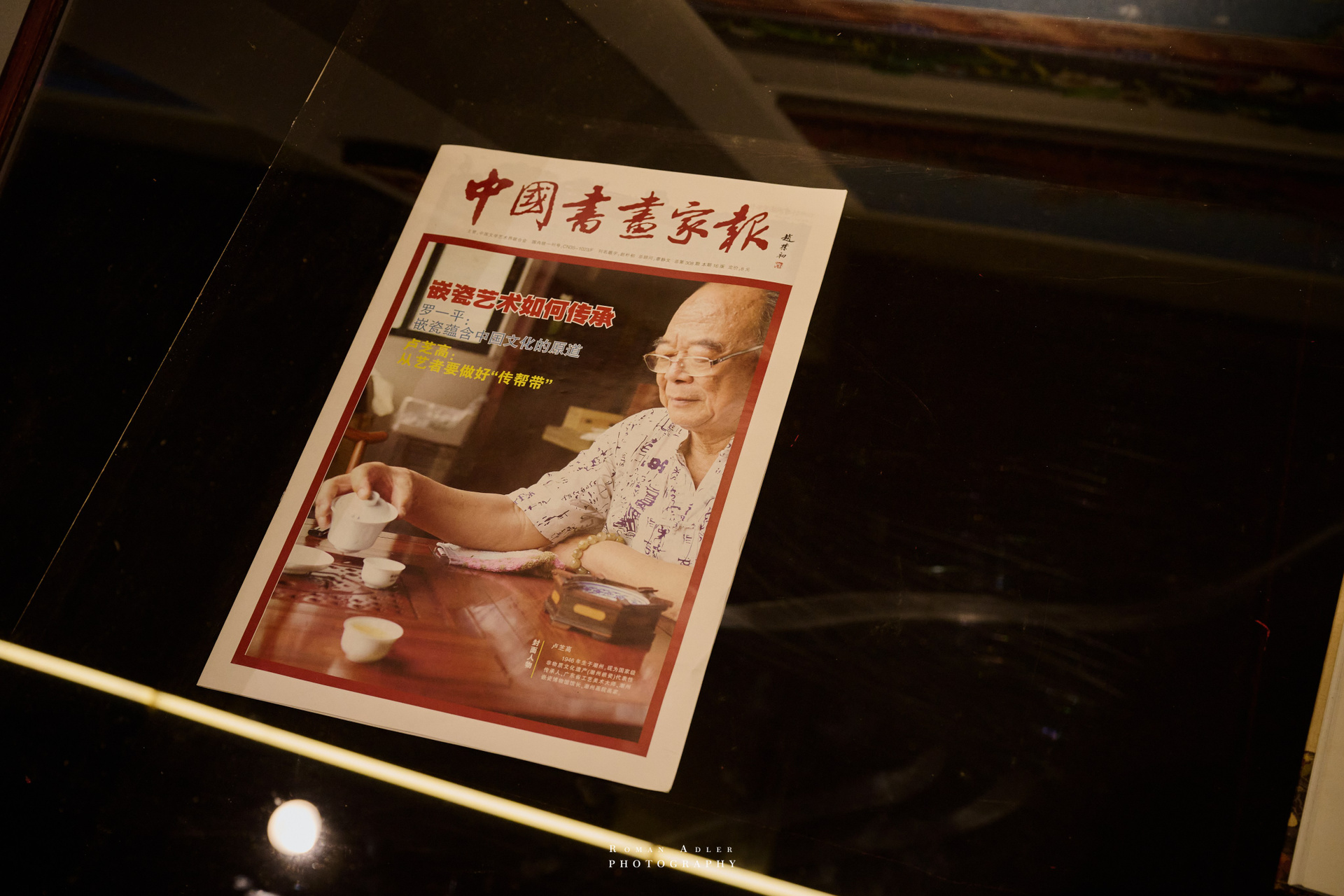
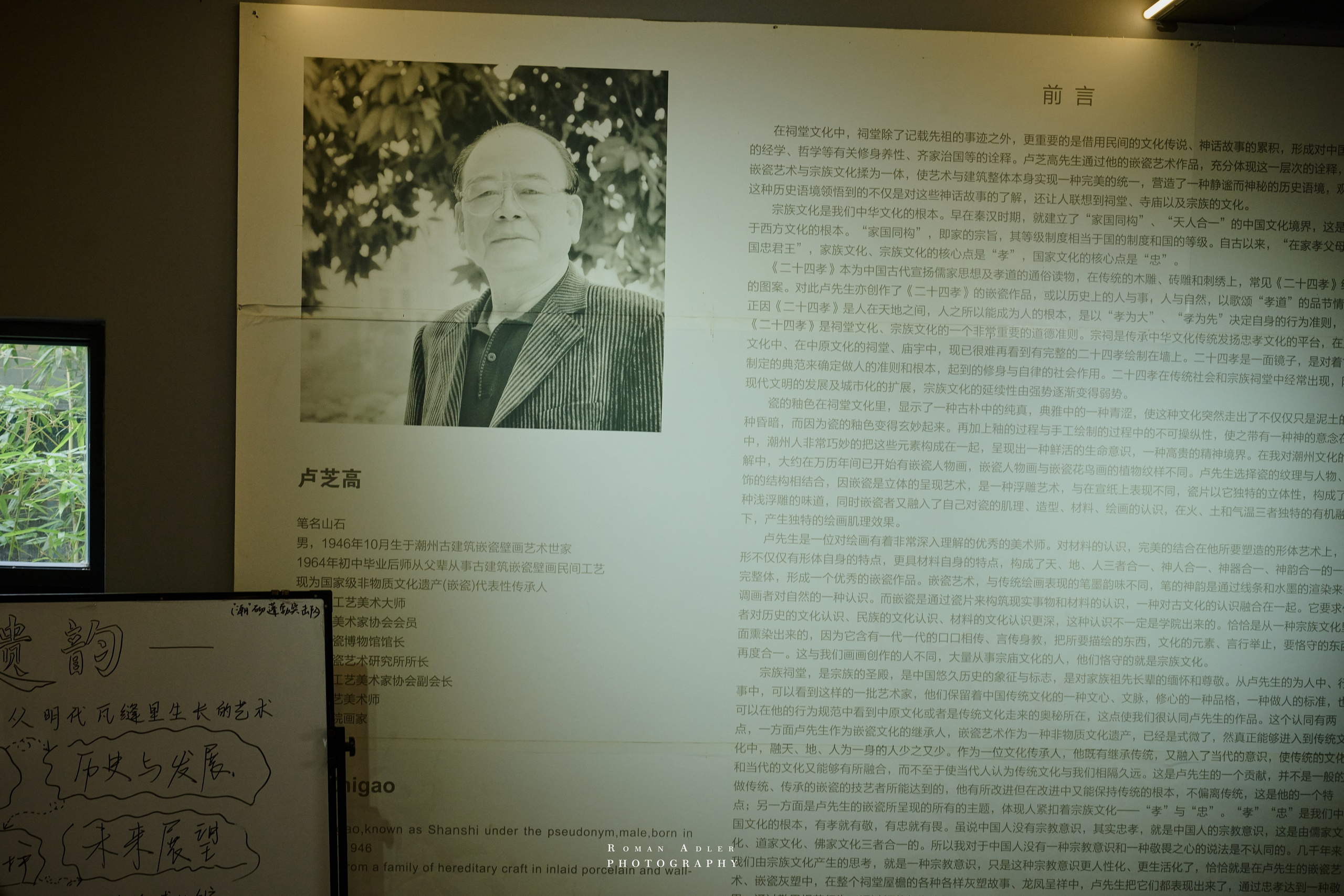
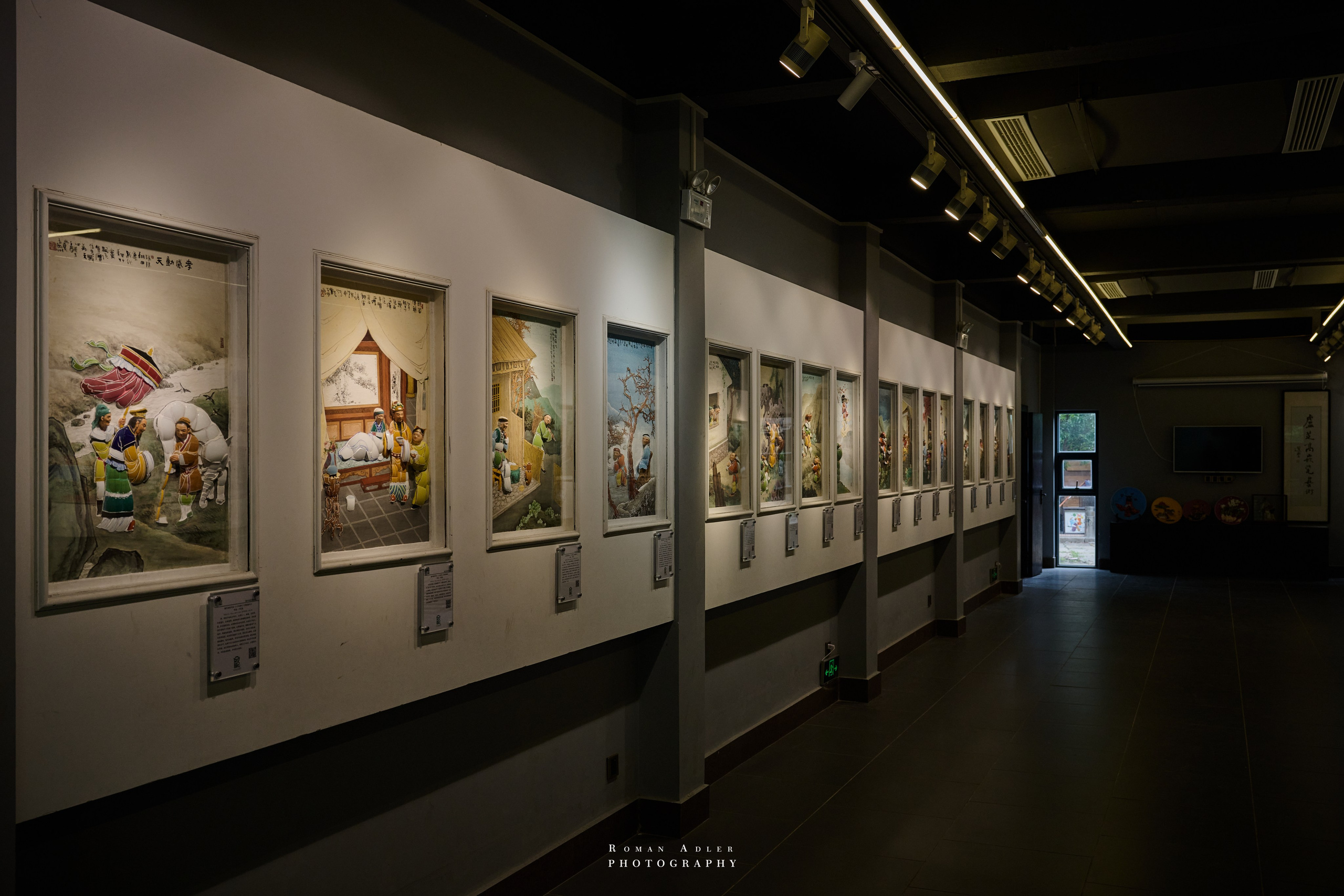
The museum was founded by Lu Zhigao (b. 1946), a fourth-generation master craftsman and a state-appointed guardian of intangible cultural heritage. He began learning the craft at the age of 16 and has devoted more than six decades to it. In the past, inlaid porcelain was used only to decorate high rooftops and pediments — viewers could only see it from afar, looking up from below. Lu Zhigao revolutionized the art: he brought the technique indoors, creating wall panels, three-dimensional sculptures, and decorative screens. In his own words, the museum exists to “show how far inlaid porcelain can reach when it descends from the heavens to the ground.”
🏆 The main masterpiece — the roof of the ancestral hall
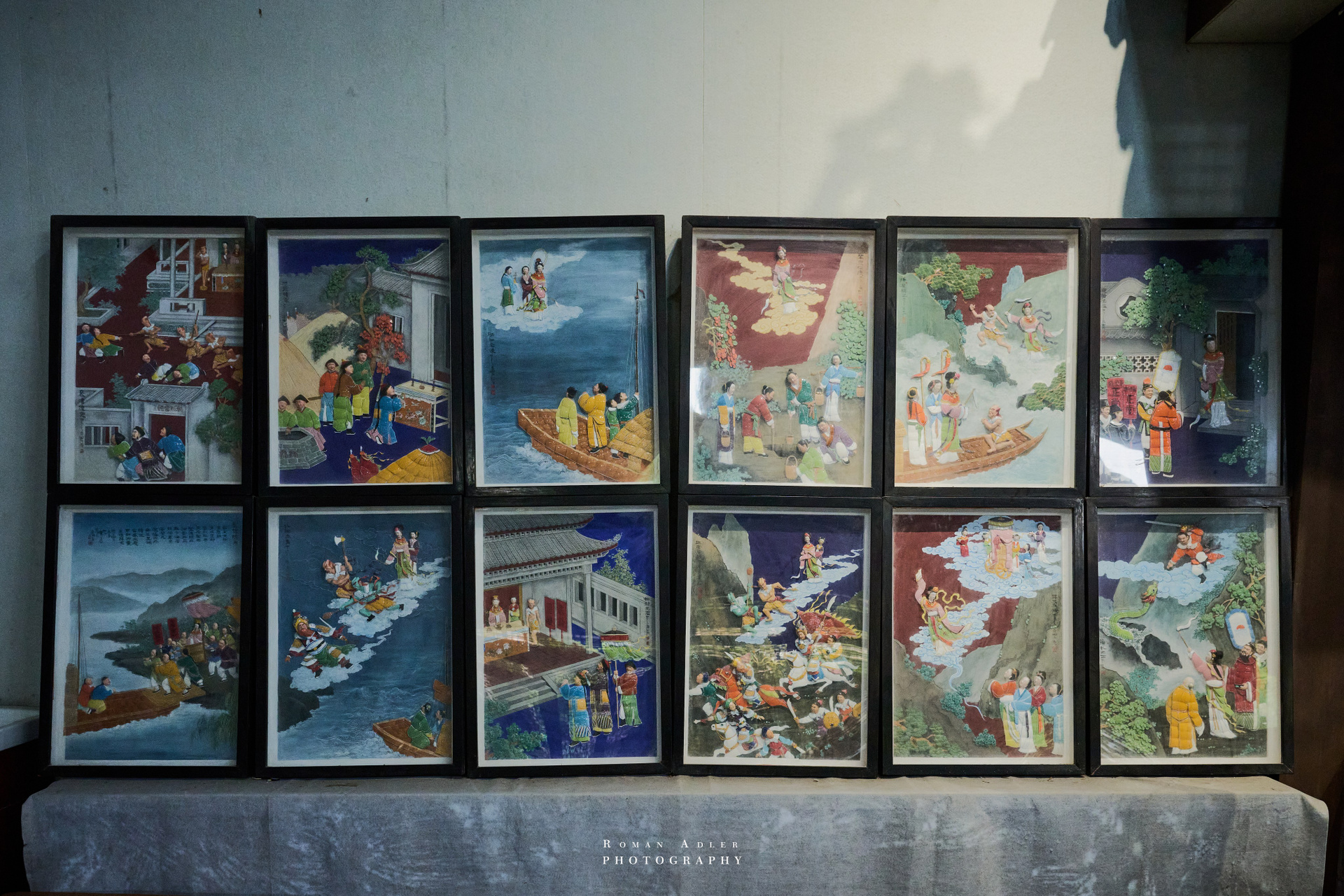
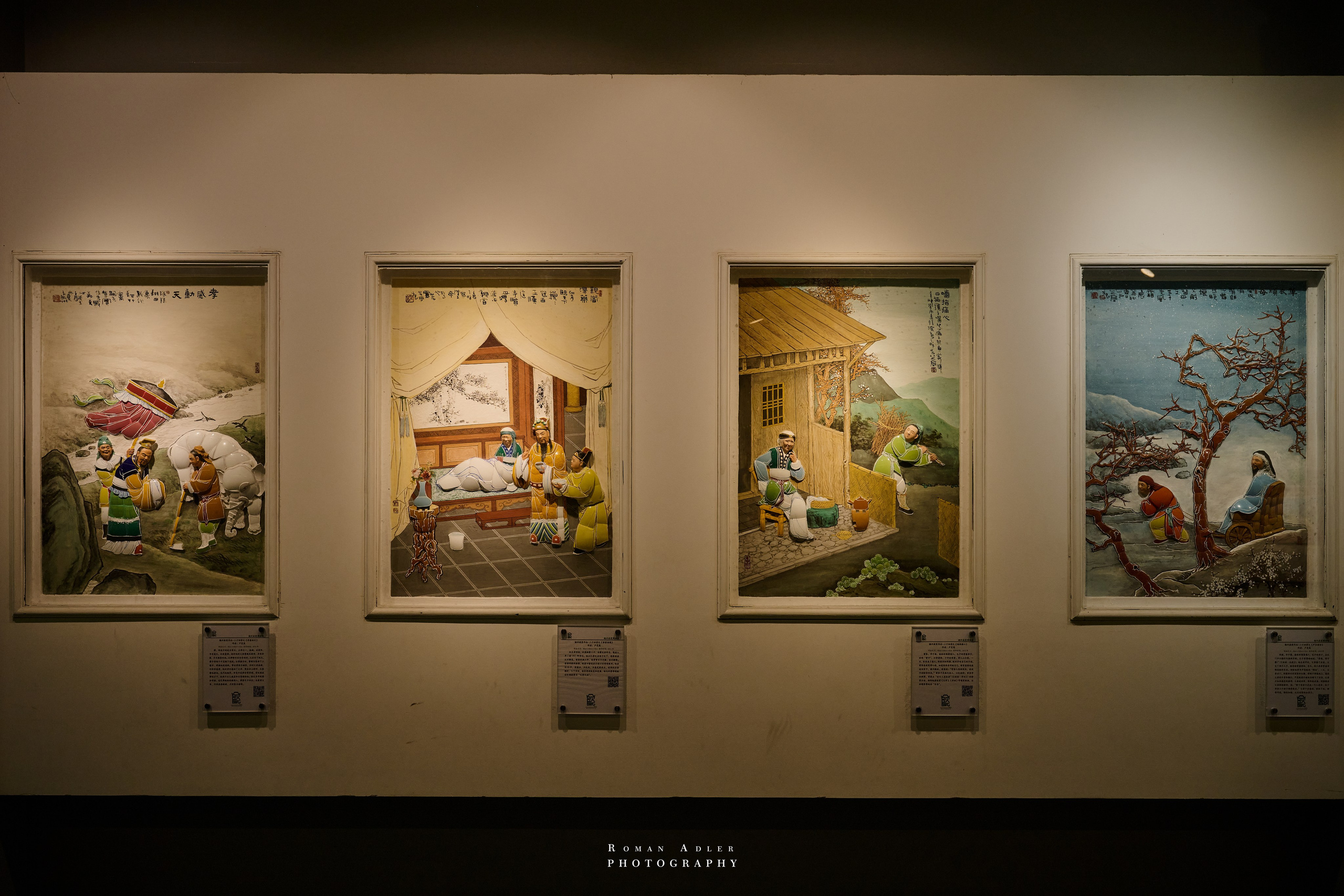
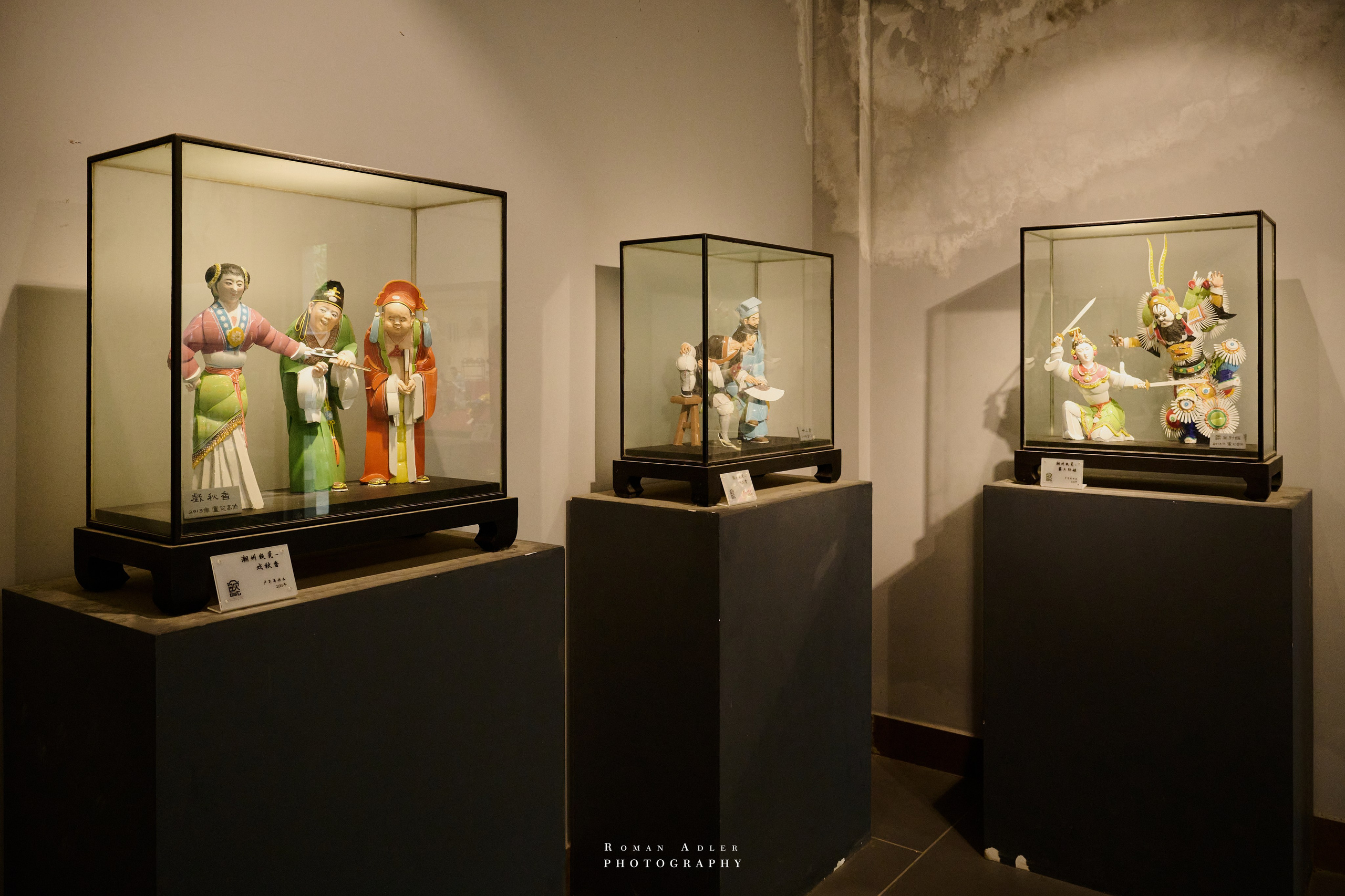
The most impressive work in the museum is the “Roof of the Chaozhou Clan Ancestral Hall.” It is an exact reconstruction of a traditional temple roof, relocated into the exhibition hall. It features dozens of figures, mythical beasts, and floral patterns crowded together. The master created it together with two apprentices over the course of 8 months, using nearly 100,000 ceramic shards. Each fragment was cut and fitted by hand. This work was exhibited at the Guangdong Museum of Art and caused a sensation among art critics. In addition, the museum permanently displays the series “24 Examples of Filial Piety” and “Stories of the Goddess Mazu” — these are classic themes of Chinese culture, rendered in colorful broken porcelain.


🎨 What is inlaid porcelain (the technique)
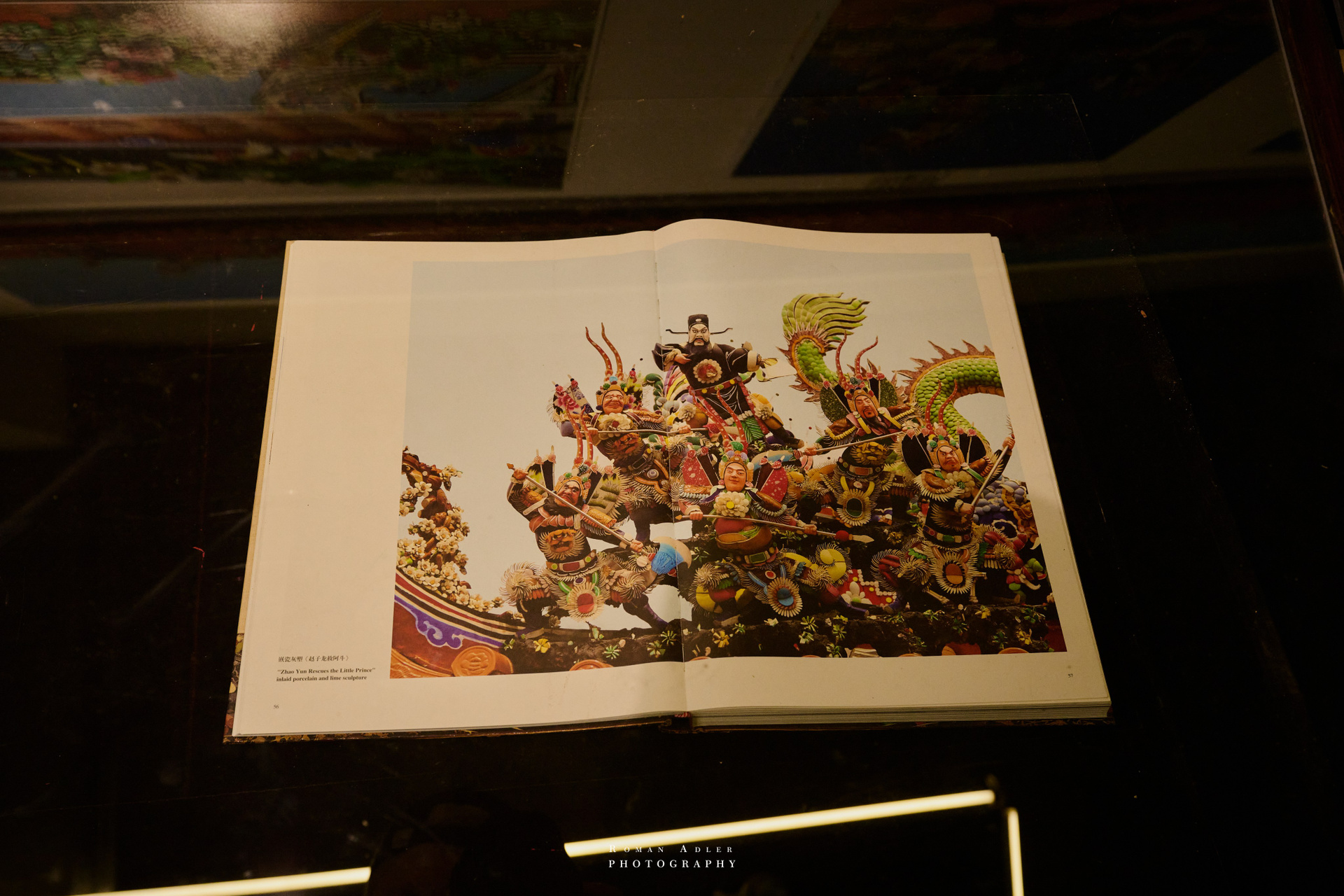
Inlaid porcelain originated in the late Ming Dynasty (16th–17th centuries) and became one of the three main decorative techniques of Chaoshan architecture — alongside wood carving and stone carving. The essence of the technique is simple, but it requires incredible virtuosity:
· Instead of paints, fragments of colored porcelain cups, plates, and bowls are used.
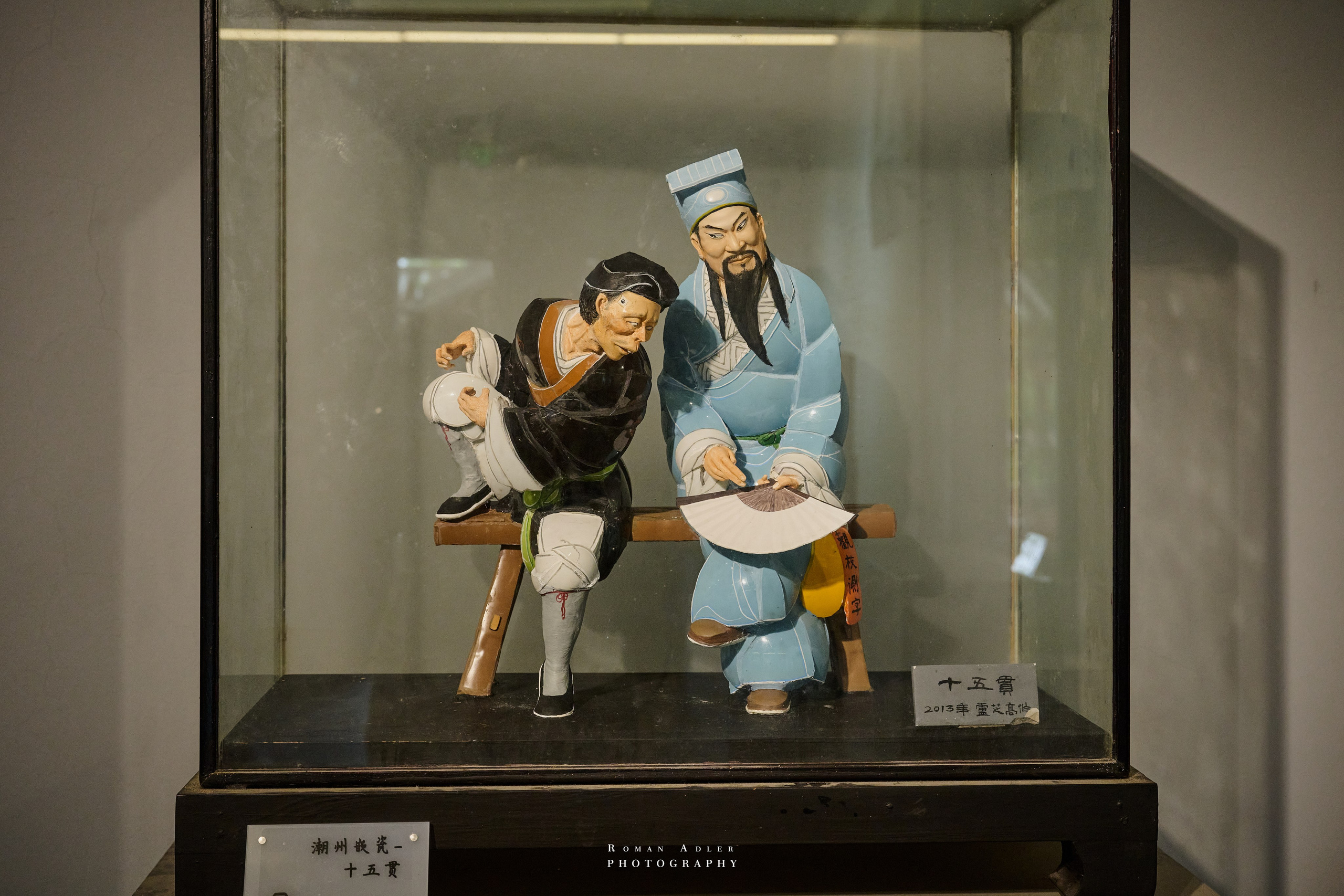
· Using special pliers and scissors, the master chips and cuts pieces of the desired shape — petals, armor, faces, feathers.
· These pieces are then embedded into a still-wet mortar based on lime, with the addition of sugarcane juice and other binding agents.
Three main types:
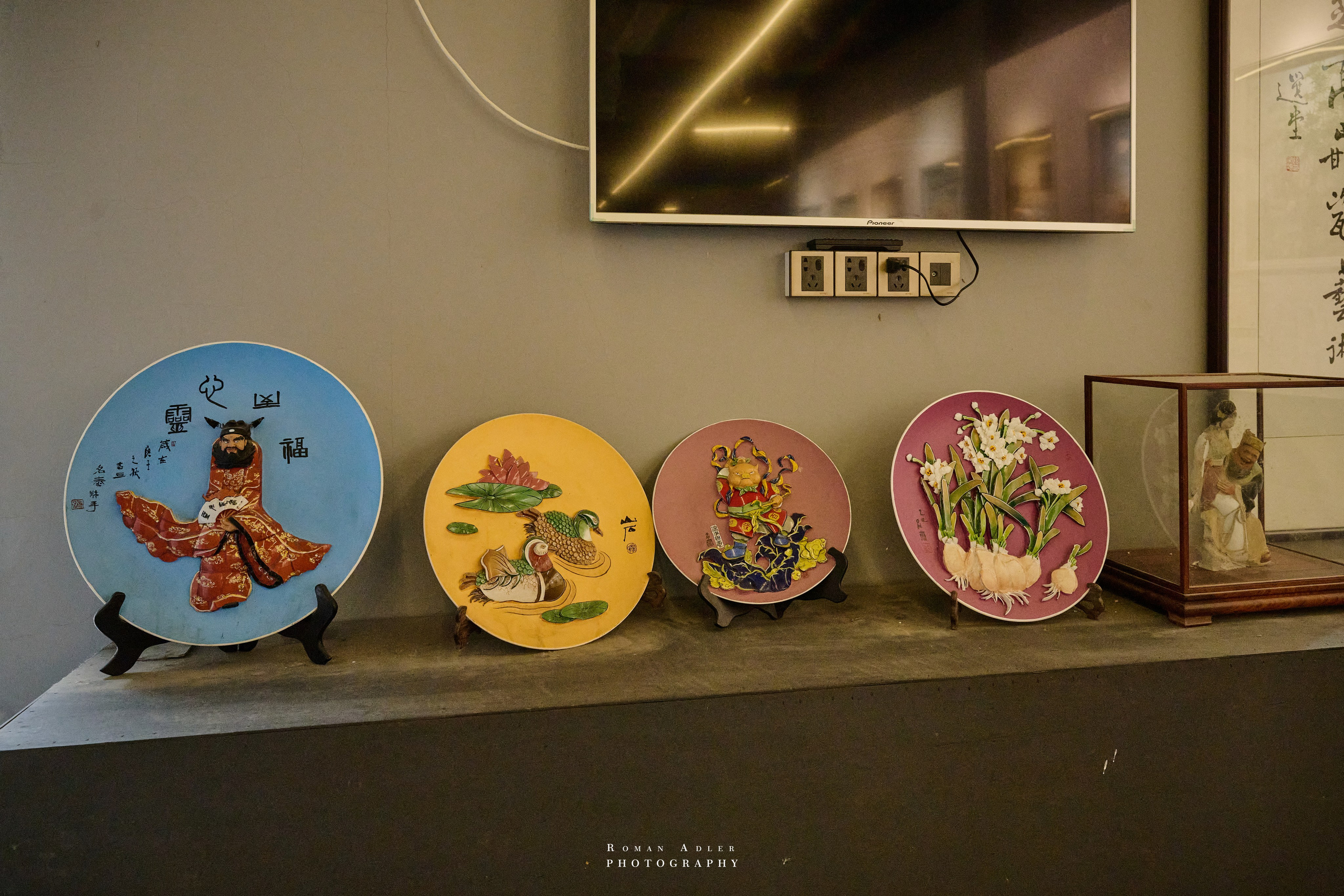
· Flat (平面) — patterns on a single plane.
· Relief (浮雕) — three-dimensional figures protruding from the background.
· Fully three-dimensional (立体) — freestanding sculptures, such as dragons on roof ridges.
The main advantage of glazed ceramics is their durability. They do not fade in the sun, are not damaged by rain or typhoons, which is why they are called “eternally bright art.”
📸 What interesting things can you do at the museum?
The museum is not just a repository of exhibits, but a living workshop. In a special area, apprentices and assistants work, and you can observe the entire process — from trimming shards to final assembly. Sometimes visitors are allowed to try their hand at it — cutting out a simple shape and embedding it into a small base. This is very popular with families with children and with school teachers who bring entire classes here. Photo tip: the best lighting for shooting the glossy glaze is in the morning (9–11 a.m.) or evening (3–5 p.m.), when the sun shines at an angle.
📋 Practical information for visitors
· Address: Humei Village, Jinshi Town, Chao’an District, Chaozhou City, Guangdong Province (landmark: Humei Middle School).
· Opening hours: Usually Tuesday to Sunday, 10:00 — 17:30; closed on Mondays (I recommend double-checking before your trip).
· Admission: Free.
· How to get there: The museum is about 3 km from Chaoshan Railway Station (high-speed train station). It’s best to take a taxi or use Didi.
· Recommended visit duration: 1–2 hours.
This museum is not just a collection of beautiful objects. It is the story of a Man who decided that his ancestors' craft should not die. Lu Zhigao has invested not only money in it, but his entire Life. When you stand before his works and see how a kitchen shard turns into a majestic dragon, you understand: true mastery knows no age and fears no time. If you find yourself in Chaozhou, find a couple of hours and step into this small village. There, behind an unassuming gate, a whole world awaits you, where every fragment tells its own story, and the roofs have been performing their plays for four centuries in a row.
---
The information about opening hours and tickets is current at the time of writing, but it is recommended to check with the museum’s official sources before your trip.
Interesting fact:
The museum’s largest exhibit — the reconstruction of a temple roof — is assembled from nearly 100,000 ceramic shards, each of which was cut and embedded by hand. This is the only museum in China where this “rooftop art” can be viewed from arm’s length.
Click the link below — a photo tour and details that words cannot capture await you.
Blog